Industrial baler machines span a wide price band on the open export market: horizontal hydraulic waste-paper / PET-bottle presses list from roughly US$20,000 to US$35,000 per set, while mid-capacity fully-automatic PET-bottle balers from Anhui manufacturers reach US$59,999 to US$83,333 per piece as of May 2026 [S2].
The 2026 export catalog is dominated by Chinese OEM and ODM suppliers — primarily clustered in Nantong, Jiangsu and Anhui — with MOQs fixed at 1 set / 1 piece and CE markings carried on the CE-rated SKUs [S1][S2]. Buyers looking at total landed cost need to look past the FOB number, because baler selection governs hydraulic system size, platen area, and downstream throughput.
Price bands by machine class on the 2026 export market
Three pricing tiers show up clearly in the Made-in-China.com and Gold Supplier catalogs published between May and July 2026 [S1][S2]. Entry-tier horizontal hydraulic carton / paper / PET compactors with single-ram architecture sit at US$20,000 to US$35,000 per set (Jiangsu Xutian Environmental Protection Machinery is a representative vendor) [S2]. Mid-tier fully-automatic horizontal presses with PLC control and CE marking list US$35,000 to US$59,999 per set, with most factory quotes returned as "Negotiable" rather than fixed tariff [S1]. Upper-tier automatic PET-bottle and continuous-feed balers from Diamond-Member Anhui factories list US$59,999 to US$83,333 per piece, with 1-piece MOQ [S2].
Vertical hydraulic balers and semi-automatic units — typically used for low-volume cloth, textile and small-rubbish streams — are quoted at the lower end of the same catalogs but often only on inquiry, not as published SKUs [S1]. Buyers should also reference a structured class, ram force, throughput selection map before locking a vendor, because price correlates strongly with ram tonnage and bale density spec.
What drives the US$20k-to-US$83k spread
Three technical variables explain almost all of the price variance in the 2026 catalogs: ram force class, automation level, and material stream [S1][S2]. A horizontal waste-paper / cardboard baler with 30-60 ton ram force and manual tying lands in the US$20k-US$35k band [S2]. Once the line is upgraded to a PLC-controlled full-automatic system with conveyor feed, auto-tying and CE conformity assessment, the same vendor class pushes into the US$40k-US$60k range [S1]. A fully-automatic horizontal PET-bottle press with shredder-integrated feed, hydraulic ejector, and bottle-specific chamber geometry accounts for the US$59,999-US$83,333 segment [S2].
Material stream matters as much as ram class: a 30-ton press rated for waste cotton, cloth or coir fiber bales costs materially less than a 60-80 ton unit rated for scrap steel chips, tire rubber or metal turnings [S1]. Nantong Jiabao Machinery, founded 2006, lists eight discrete product series covering paper, plastic, metal, cloth/textile, agriculture, marine trash, tire/rubber, and vertical-baler lines — each priced on inquiry rather than as a published SKU, which itself signals custom-engineering content [S1].
Comparing the three main baler architectures
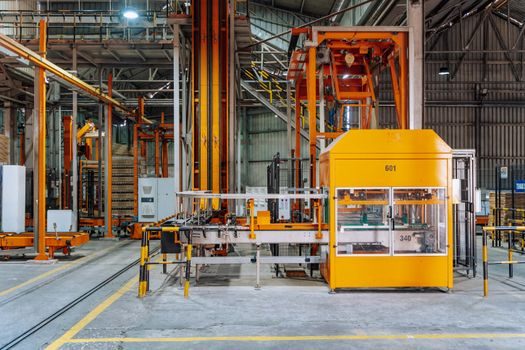
Selection against three criteria — typical price band, MOQ posture, and what each architecture is good for — lines up cleanly on the 2026 catalog data [S1][S2].
Vertical hydraulic baler: lowest published price (mostly inquiry-based, sub-US$20k for small-format units), 1-set MOQ, suited to retail back-of-house, supermarkets, and low-volume cloth / cardboard streams. Limited by small chamber and manual tying [S1].
Horizontal semi-automatic hydraulic baler: US$20k-US$35k band, 1-set MOQ, suited to MRF (material recovery facility) and warehouse-scale cardboard / PET compaction. Higher throughput than vertical; still requires operator tying [S2].
Horizontal full-automatic PLC-controlled hydraulic baler: US$35k-US$83,333 band, 1-set / 1-piece MOQ, suited to high-volume PET bottle, waste paper, tire, and scrap-metal streams. Auto-tying, conveyor feed, and CE-marked safety circuits drive the premium [S1][S2].
Sourcing-tier cost factors beyond the FOB line
The factory-quoted FOB number is the start, not the end, of a baler procurement budget — three other cost lines routinely dwarf the headline delta between a US$20k and a US$60k machine. First, the auxiliary equipment stack: industrial balers are commonly paired with conveyors, shredders, and downstream wrapping or strapping modules; for PET-bottle and packaging lines the closest analog on the 2026 market is the stretch wrapping machine cost band, which scales with pallet throughput rather than ram class. Second, electrical and control integration: PLC-controlled automatic balers add panel-build, sensor wiring and CE conformity documentation that single-ram semi-automatic units do not require [S1]. Third, spares and wear: hydraulic cylinder seals, shear blades, and PLC HMI replacements are stock SKUs at the larger Jiangsu and Anhui vendors, but the same parts are not interchangeable across brands — buyers consolidating multiple lines should pin the PLC platform at spec time [S1].
Where the 2026 catalog is thin — and what to verify
Two caveats apply to every number above. First, the published catalogs on Gold Supplier and Made-in-China.com are listing prices with MOQ = 1 set / 1 piece; actual OEM contract pricing for container-load orders is typically 10-25% below list, but that discount is not visible in the public SKU and is not documented in the research [S1][S2]. Second, the catalogs do not publish ram tonnage, bale weight, motor power, or chamber dimensions on the listing page — those specs are in the vendor datasheet behind the inquiry form, so a side-by-side cost comparison requires at least three datasheet pulls per shortlisted vendor [S1].
Buyers should also verify CE marking scope (machinery directive 2006/42/EC conformity, not just a CE sticker on the nameplate), and check whether the PLC platform is a named industrial line (Siemens S7-1200, Omron CP1E, Mitsubishi FX5U) or a generic clone, because long-term spares and programmer availability are governed by that choice [S1]. For buyers comparing baler lines against adjacent packaging equipment, the carton sealing machine cost map provides a useful throughput-tier benchmark, even though the underlying machine is not a baler.
Trackable signals to watch over the next two quarters: (1) whether Anhui Diamond-Member vendors move from "Price Range" listings to fixed-tariff SKUs as order book fills, and (2) whether CE-marked full-automatic PET-bottle presses break below the US$50,000 floor as more Jiangsu and Anhui suppliers enter the segment [S2].
For component-level specifications, see linear guide, crossed roller guide, and coding machine.