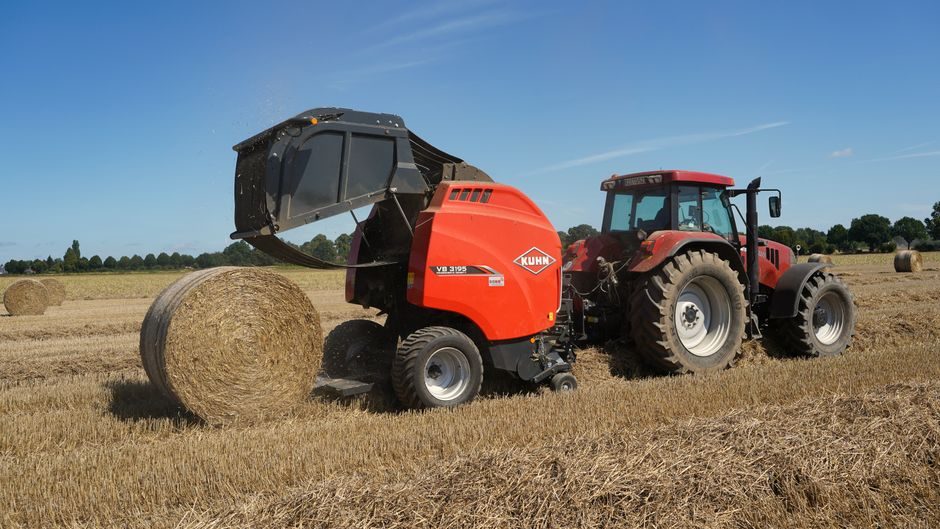
Baler selection starts with material class, target throughput, and finished bale geometry: Chinese export catalogues published between 2026-04-15 and 2026-07-07 list vertical balers rated roughly 0.5-2 t/h for cardboard and soft plastic, semi-automatic horizontal balers with closed or open ends at 2-8 t/h for paper and PET, and automatic two-ram or channel balers at 5-20 t/h for mixed paper, RDF, and scrap metal [S1][S2][S6].
Hydraulic ram force scales with that throughput band: small vertical presses typically run 10-60 kN cylinder force for supermarket and back-of-house waste, while horizontal two-ram metal balers sold by ECOHYDRAULIC operate in the 800-3000 kN range to compress mild steel, aluminium, and copper swarf into 200-500 kg bales [S3]. A correctly sized baler is one whose platen area, feed opening, and bale weight match the infeed conveyor or floor-loading method, not simply the largest cylinder the budget will absorb.
Material Class and Bulk Density Drive Machine Choice
Vertical balers built by Jiangsu Xutian and Nantong Jiabao are specified for low-density streams: cardboard at 50-80 kg/m³, PET bottles at 30-40 kg/m³, textile and clothing at 80-150 kg/m³, and stretch film below 30 kg/m³ [S2][S4]. These machines produce bales of 30-150 kg, suitable for manual handling and rear-load trucks.
Horizontal channel balers and two-ram balers from the same catalogues target high-density fibre and metal: OCC at 350-500 kg/m³ after compaction, sorted office paper at 450-600 kg/m³, and shredded scrap steel that reaches 1000-2000 kg/m³ in the finished block [S1][S2]. ECOHYDRAULIC's hydraulic metal baler line is explicitly built for steel mills, aluminium smelters, copper recyclers, and scrap yards, with cylinder forces quoted in the 800-3000 kN band [S3]. Choosing a vertical press for shredded scrap steel, or a metal briquetter for loose cardboard, are the two most common mis-applications seen on inquiry lists.
Throughput Bands and Ram Force Mapping
Furein Machinery's solution questionnaire asks buyers for output targets such as 10 t/h or 20 t/h, finished bale dimensions, and automatic versus manual tying — four data points that fix the machine class within one revision [S1]. As a rule of thumb drawn from current Chinese OEM catalogues, 1-2 t/h maps to vertical balers below 60 kN, 3-5 t/h to semi-automatic horizontal balers with closed or open ends at 100-400 kN, and 8-20 t/h to automatic two-ram and channel balers at 600-3000 kN [S2][S3][S6].
ECOHYDRAULIC quotes a metric that supports this scaling: a single two-ram installation displaces the throughput of roughly 3-5 vertical presses operating in parallel, while its 4,000+ global installation base spans steel, aluminium, and copper processing lines that each consume 5-15 t/h of loose scrap [S3]. Jiangsu Xutian's horizontal product line splits this further into "small-sized", "medium-sized", and "large-sized" channel balers, with platen widths from approximately 700 mm up to 1800 mm and bale weights from 200 kg to over 800 kg [S2].
Vertical vs Horizontal vs Two-Ram: A Spec Comparison
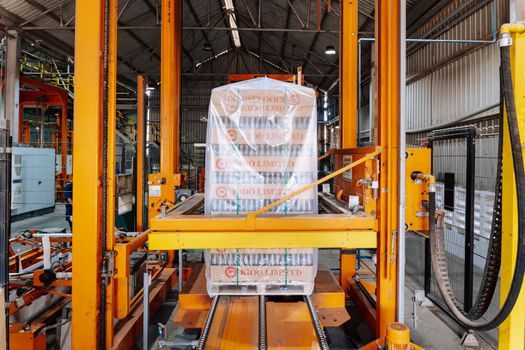
Selection comes down to four engineering criteria — material bulk density, throughput, bale weight, and automation level — and the three machine classes line up against them as follows, based on 2026-Q2 OEM product pages: [S1]
Vertical baler: bulk density to 150 kg/m³, throughput 0.5-2 t/h, bale weight 30-150 kg, manual or semi-auto tie, footprint 1-3 m², typical motor 4-15 kW [S1][S2]. Suits retail, hospitality, and small MRFs. Not suitable for metal swarf or RDF.
Horizontal channel or single-ram baler: bulk density to 600 kg/m³, throughput 2-8 t/h, bale weight 200-500 kg, automatic wire or PET-strap tie, footprint 6-12 m² including infeed conveyor, motor 22-75 kW [S2][S6]. Suits paper mills, plastics reclaimers, and large distribution centres. Struggles with long steel scrap or thick-walled drums.
Horizontal two-ram or metal baler: bulk density 1000-2000 kg/m³, throughput 5-20 t/h, bale weight 300-800 kg (fibre) or 200-500 kg (metal block), fully automatic tie, footprint 15-40 m², motor 75-250 kW with hydraulic plunger pump circuits rated for continuous duty [S1][S3]. Suits scrap yards, steel works, and aluminium smelters. Overkill — and a poor ROI — for clean cardboard streams.
Tying Method, Automation, and Hydraulic Architecture
Furein's questionnaire flags automatic versus manual tie as a defining spec line, and the OEM catalogues back it up: vertical presses from Nantong Jiabao and Jiangsu Xutian are typically offered with manual steel wire (Ø 2.5-3.0 mm) or PET-strap tying, while their automatic horizontal channel balers add a 4- or 6-wire cross-tie head that fires on stroke-end pressure-switch confirmation [S1][S2][S4]. The hydraulic architecture follows the same split: small verticals use single-cylinder, single-pump circuits at 12-18 MPa, whereas two-ram metal balers run dual-cylinder main-ram and side-ram circuits at 21-31 MPa with cooling and filtration skids [S1][S3].
Buyers comparing equal-tonnage horizontal balers should weigh three hydraulic details that rarely appear on summary spec sheets: oil-tank volume (typically 200-800 L on a 10 t/h machine), cooler sizing for continuous-duty ambient above 35 °C, and the use of a hydraulic plunger pump versus a standard gear pump for the high-pressure stage. Furein lists "hydraulic plunger pump" and "thickened steel plate" among its six advertised advantages, and ECOHYDRAULIC emphasises "high-efficiency and energy-saving machine design" alongside ISO 9001 and CE certification for the same reason — these are the components that decide mean time between failures on a 16-hour-day scrap line [S1][S3].
Certification, Documentation, and Supplier Vetting

CE marking on the nameplate is the baseline regulatory requirement for balers shipped into the EU, and ISO 9001:2008 (Furein, certified by TÜV Rheinland) or ISO 9001 (ECOHYDRAULIC) appears on every audited Chinese OEM entry in the 2026 sample [S1][S3]. Jiangsu Xutian holds Made-in-China Diamond Member status since 2013 and an Audited Supplier flag, and lists a verified plant area of 8,799 m² in Tongzhou, Nantong, with an average response time of ≤2.87 hours [S2]. Nantong Jiabao's Gold Supplier listing confirms the same product mix — hydraulic baler machine, waste paper baler, vertical baler machine — and the same CE paperwork [S4].
For end users, this translates into a four-document pre-shipment checklist: CE declaration of conformity, ISO 9001 certificate (note the issuing body — TÜV, SGS, BV, and DNV carry more weight than unknown domestic registrars), hydraulic circuit schematic with relief-valve settings stamped, and a pressure-test certificate for the main cylinder and platen. ECOHYDRAULIC's "overseas installation and after-sales support" line, backed by local service partners in Russia, Brazil, India, and the Middle East, is the operational complement to those documents on a 5-20 t/h metal line [S3].
Failure Modes, Constraints, and Common Mis-Specs
Three failure modes dominate warranty data on balers sold into European and Southeast Asian recycling markets: oil-temperature runaway on continuous-duty two-ram presses without coolers sized for the local ambient, bale-wire misfeed on horizontal automatic tie heads when humidity pushes the wire coil beyond Ø 3.0 mm tolerance, and platen deflection on machines built with sub-8 mm face plates processing RDF or light-gauge steel at the rated tonnage [S1][S3]. Furein's published safe-operating-procedure guidance for vertical waste paper balers is essentially a checklist against these three risks at the small-machine end of the catalogue [S1].
Constraints worth flagging at the RFQ stage: vertical balers taller than 2.4 m struggle with low warehouse ceilings common in retrofit brownfield sites; horizontal channel balers need a 6-12 m straight infeed run that rarely exists inside an existing warehouse footprint; and two-ram metal balers draw peak currents of 150-300 A that often require a 400 V three-phase supply upgrade. None of these is a deal-breaker, but each typically adds 2-6 weeks to installation if it surfaces during commissioning rather than at the inquiry stage — a point well documented across the cross-section of Chinese OEM product pages audited for this guide [S1][S2][S3][S4]. Buyers running process lines that share hydraulic or pneumatic infrastructure with adjacent filling machine or cutting machine skids should also confirm the baler's PLC can be addressed on the same fieldbus, since most export units ship with Modbus TCP or Profinet as standard but a minority still default to standalone relay logic [S2][S3].
For a comparable mechanical-architecture spec exercise on bearings, this tapered roller bearing selection guide walks through the same load-speed trade-off logic at the component level, and this angular contact bearing selection piece covers the duplex-pairing decisions that often sit inside a baler's main gearbox.
For component-level specifications, see linear guide.