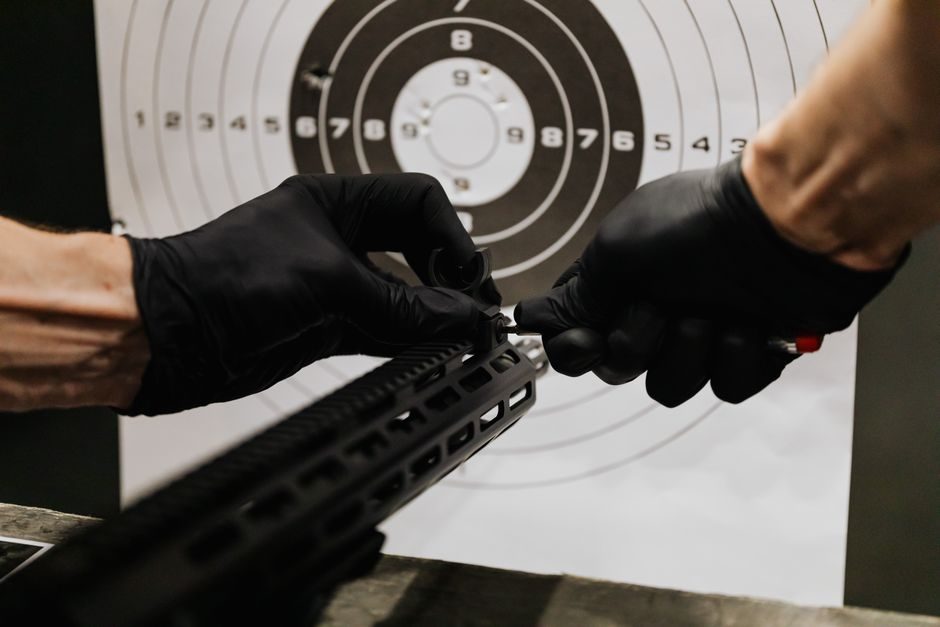
Ball bearing installation is governed by four interlocking controls — shaft and housing tolerance selection, mounting method, preload or internal clearance setting, and lubricant application — and skipping any one of them cuts rated life by a measurable margin. The most common installation failures trace back to brinelling from impact mounting, contamination ingress, or a housing/shaft fit that was tightened or loosened against the bearing's design intent [S1][S3].
Industrial linear and guide-unit products now span bore sizes from 8 mm to 100 mm, rail widths 16–100 mm, operating temperatures from −20 °C to 90 °C, and load ratings from 200 N up to 1,600 N per bearing block in catalogue-grade units [S1][S3][S4]. Selecting among a ball bearing, a recirculating ball screw support bearing, a linear guide carriage, or a crossed-roller guide block is dictated by the same four installation rules applied to different kinematics.
Shaft and Housing Tolerance Selection
Most deep-groove ball bearings on shafts up to ~100 mm bore run a transition or interference fit on the shaft (commonly k5 or k6) and a loose sliding fit in the housing (commonly H6 or H7) — the inner ring rotates with the load, the outer ring is stationary, and rotating-ring interference is what carries torque without creep [S3].
Guide-rod / guide-bushing assemblies for ISO 15552 / ISO 6432 pneumatic cylinders use a different rule: the rod is typically g6 (sliding) and the bushing bore is H7, so the assembly is meant to translate, not to be pressed. Specifying the wrong direction of interference (e.g., pressing a guided bushing onto the rod) is the single most common cause of seized slides on first commissioning [S1][S3]. For non-rotating outer rings carrying point load, a tighter housing fit (e.g., J7 vs H7) is used to prevent ring creep; for rotating outer rings with rotating load, the housing must be loose enough to allow thermal expansion of the shaft.
A measured acceptance check after press-fit: shaft runout ≤ 1/3 of the bearing's stated radial runout class, measured at the adjacent machined shoulder. If runout is higher, the shoulder is not square and the inner ring will tilt, generating edge-loading that shows up as premature flaking within hours of run-in.
Mounting Method: Press, Heat, or Hydraulic
For interference fits above roughly 1,000 N of press force, mechanical hammering on the ring is not acceptable — it brinels the raceway and the damage shows up as a vibration spike and an elevated vibration band (typically in the 1–5 kHz range for small ball bearings) within the first 10–50 operating hours. The standard alternatives, in order of preference: oil-injection hydraulic mounting for large-bore (>150 mm) bearings; induction heating to 80–120 °C for the inner ring on shaft mounting; or a calibrated mechanical press with a ring-loading sleeve that contacts the ring being fitted, never the opposite ring [S3].
The Thomson 1Bx End-Support round-rail linear guide with Super Smart Ball Bushing bearings is rated to 216× the life or 6× the load capacity of the previous generation, but only when installed on a round rail whose surface finish, hardness, and straightness meet the catalogue spec — the bearing will not compensate for a soft or bent shaft [S5]. Heat-mounting is the correct method for these bushings onto the rail-support journals where interference is specified; press-fitting is acceptable only when the catalogue explicitly allows it.
Miniature slide guides like the NB SEB series use integrated ball retainers so the block can be removed from the rail for installation and maintenance, sidestepping the need to press the bearing onto a shaft at all — the installer's task is to bolt the rail straight (flatness ≤ 0.02 mm/100 mm typical for precision class) and let the retainer hold the balls in place during block re-entry [S2].
Preload, Clearance, and Setting Internal Geometry
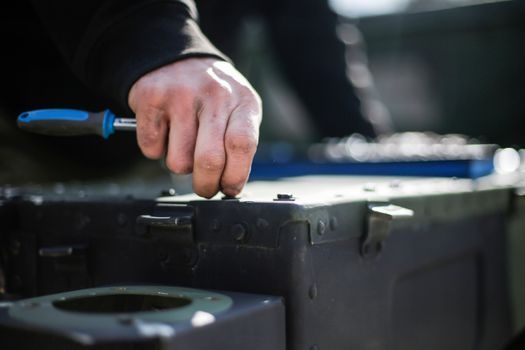
Ball bearings are ordered in one of three internal-clearance classes: C2 (less clearance than normal), CN or C0 (normal), C3, C4, C5 (progressively more). For standard electric motors on shafts up to ~50 mm at speeds up to 3,600 rpm, CN is the default. C3 is the right answer when the shaft runs hot and the inner ring expands more than the outer — a common case in motor and gearbox integrations where bearing operating temperature exceeds 90 °C. [S3]
Preload — applying a defined axial or radial load to remove internal clearance — is mandatory for machine-tool spindles, precision ball screw support bearings, and the bearing sets in crossed-roller guides. The preload target is typically 1–3% of the dynamic load rating for angular-contact pairs in back-to-back or face-to-face mounting; below that, the bearing responds to reversing loads with hysteresis and chatter; above that, you trade life for stiffness. Acceptance: hand-rotation torque after preload should be smooth and continuous, with no detectable stick-spots; any notchiness indicates a brinelled raceway or a contaminated lubricant.
For guide-unit products like the AVM Type 32-32R (electric-cylinder H-guide, ISO 15552, 1,600 N max load, 2 m/s, 5–80 °C), preload is set by the rod-coupling adjustment rather than by the bearing itself: the self-centering rod coupling is specified with no axial play for positioning duties, and with <0.2 mm axial play for non-positioning radial-load applications [S3]. This is a different engineering decision from bearing preload, but it is installed using the same disciplined sequence.
Lubrication: Grease, Oil, and Quantity
Grease quantity is a frequent installation error: a deep-groove ball bearing should be filled to roughly 30–50% of its free internal volume, not packed full. Over-greasing causes churning, temperature rise of 10–30 °C above steady state, and premature grease purge past the seals; under-greasing starves the contact zone and accelerates wear. For high-speed spindles (>10 m/s dn), oil-mist or oil-air lubrication is preferred, with a metered flow rate of roughly 0.5–2 ml/h per bearing depending on size. [S3]
For sliding-door and architectural guide units like the Schock ITS 016, lubrication is part of the catalogue value proposition: the steel profiled guideway with ball-bearing slide is rated maintenance-free at 200–650 N per pair over 200–700 mm slide length, provided the installer does not introduce third-party grease that migrates dust into the raceway [S4]. Die-component guide-pin sets from suppliers like Gunri similarly rely on factory lubrication that is not field-replenished on a normal service interval [S7].
Compatibility check before any re-lube: thickener (lithium, polyurea, calcium) and base-oil (mineral, synthetic PAO, ester) compatibility must be confirmed in writing from the grease manufacturer. Mixing lithium and polyurea greases, for example, softens the mixture and leads to purge and leakage within hours of operation at moderate temperatures.
Contamination Control and Sealing
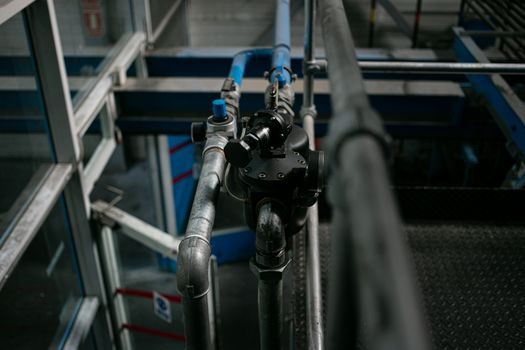
Most bearing failures in industrial service are contamination-driven, not fatigue-driven. A ball valve or ball spline installation is no different in principle: the assembly area must be wiped clean, the bearing should remain in its original sealed packaging until the moment of mounting, and gloves must be used so that skin salts do not initiate corrosion on the raceway. [S1]
Seal selection follows the environment: 2RS or 2RSR rubber-contact seals for general industrial dust; ZZ or metal shields where low torque matters and the environment is clean; non-contact labyrinth seals for high-speed or high-temperature service. The AVM Type 32-32R and 32R H-guide units use wiper seals as standard and offer an anti-corrosion version for washdown environments — a useful comparison point for any linear ball bearing carriage specified for food, beverage, or outdoor use [S1][S3].
Acceptance after mounting and before commissioning: rotate the shaft or block by hand through at least one full revolution, confirm smooth and continuous torque with no binding or roughness, and log the cold-start current draw on the driven machine. A current draw more than 10–15% above the nameplate baseline indicates a fit or preload problem that must be corrected before the equipment is released to production.
Common Failure Modes and When to Replace Rather Than Repair
Brinelling from impact mounting: replace the bearing, do not attempt to "run it in" — the indentations are permanent and initiate fatigue cracks. Overheating discoloration (bearing steel turning blue at >300 °C): the bearing's hardness has dropped and the bearing must be scrapped. Contamination with abrasive media: the bearing can be flushed and re-lubricated only if caught before any surface damage; otherwise replacement. [S1]
The decision boundary is simple: if the raceway shows visible pitting, spalling, or discoloration, replace. If the bearing runs smoothly, has the correct clearance class, was mounted with controlled force and clean conditions, and the lubrication is correct, it will deliver rated life. Cross-checking installation assumptions against the ball bearing catalogue for the specific series is the cheapest reliability step a maintenance team can take.
Trackable signals for the next maintenance cycle: the next planned bearing audit on rotating equipment, the next grease compatibility check when re-lubricating mixed-fleet machinery, and a re-verification of shaft and housing fit classes whenever a bearing supplier or machine design is changed. Related reading for adjacent component installation work is collected in the industrial installation guide hub.
This topic is covered further in Fired Clay Brick Installation: Substrate Prep, Mortar Match, Joint Control, and Heat-Up.