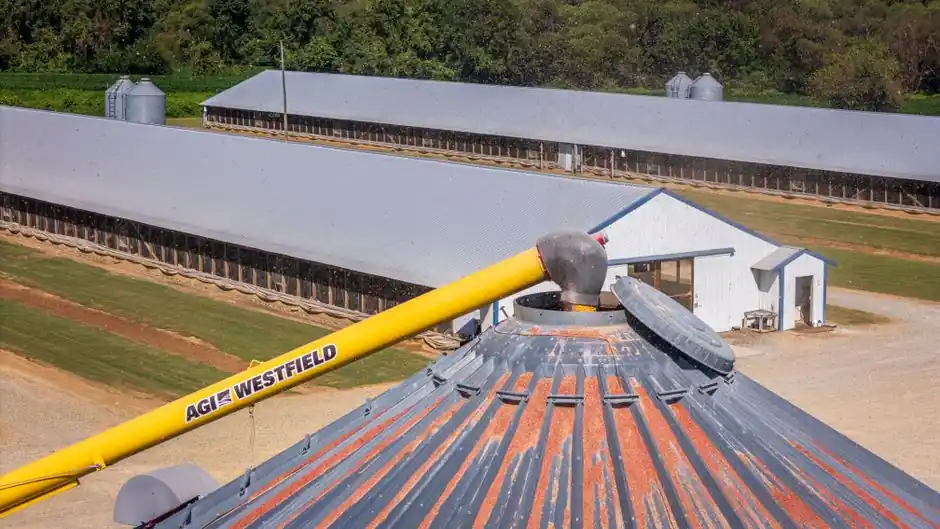
A bucket elevator uses evenly spaced buckets mounted on a belt or chain belt to lift powders, granules and small lumps vertically at temperatures up to 250 °C, with industrial units reaching 40 m and TG-type designs up to 80 m [S2]. A conveyor chain, by contrast, drags material inside an enclosed casing and is the workhorse for horizontal or gently inclined runs where dust containment matters.
For most process engineers the decision is dictated by the lift geometry, the bulk density of the product, and whether the line must handle hot material exiting a kiln, dryer or reactor. Vertical lifts above 15 m almost always end up with a bucket elevator; horizontal transfers above 20 m usually go to a chain conveyor, with the chain conveyor family covering the middle ground of low-angle and enclosed runs [S5][S2].
Operating Envelope: Height, Angle, Temperature
Industrial high-temperature bucket elevators built to JB3926-85 (equivalent to international and advanced foreign standards) with ring chain traction conforming to MT36-80 are rated for material temperatures not exceeding 250 °C, and the standard TG-type configuration reaches a maximum conveying height of 80 m [S2]. Three traction families are still standard: ring chain, plate chain and belt, each matched to a different capacity and temperature band [S2].
Conveyor chains operate close to horizontal, typically within ±15° of level, and rely on an enclosed casing to suppress dust migration. They are commonly driven by roller chain or silent chain elements depending on speed and noise targets, and they tolerate continuous service at ambient temperature when metallurgy is selected for the product being carried [S5]. When the lift goes above 30 m the head and tail pulley diameters, the bucket back angle (commonly 45° for shallow buckets) and the casing stiffness all start driving the cost equation harder than the chain itself [S2].
Throughput, Speed and Bucket Geometry
Bucket elevator throughput is set by bucket volume, bucket spacing, and belt or chain speed, and the shallow 45° lip geometry is the default for free-flowing granular product [S2]. Manufacturers such as AUMUND frame their product as "cost-effective and reliable vertical conveying with high conveying capacities, long service lifetime and low operating costs" against horizontal alternatives [S5], and the China-side supplier base confirms the same envelope: Foshan Firepoint Automation Equipment (established 2018-02-11, 37 staff, Shunde District, Foshan) lists inclined bucket elevators, screw conveyors and multihead weighers as a single integrated packaging line [S1].
Conveyor chain throughput is driven by chain pitch, flight width, and chain speed inside the casing; capacities are quoted per unit width rather than per bucket volume. When a project needs a direct side-by-side read, the Screw Conveyor vs Conveyor Chain selection map lays the same comparison framework out for inclined runs, and the parallel Chain Conveyor vs Conveyor Chain map addresses the horizontal-enclosed case that overlaps with this article. None of those alternatives match a bucket elevator on pure vertical lift, which is why both maps keep the elevator in its own lane.
Material Fit: Abrasiveness, Stickiness, Dust
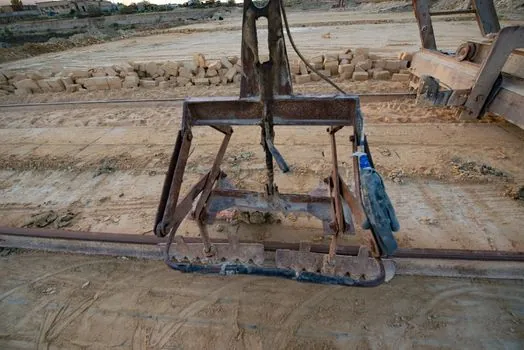
Bucket elevators handle powdery, granular and small-block materials including coal, cement, stones, sand, clay and ore, and the endless-chain traction member allows the higher-temperature operating window that belt units cannot match [S2]. The trade-off is bucket wear: abrasive ores cut bucket lips quickly, and wet or sticky products pack inside the bucket and starve the discharge at the head wheel.
Conveyor chains are better suited to abrasive lump material because the flights are replaceable, the casing is fully enclosed, and the dust path is much shorter. For plants with combustible dust, the enclosed chain conveyor layout reduces explosion-vent area and simplifies ATEX zoning. The bucket elevator typically needs an outer shell to keep dust from flying, with the supplier base offering versions in PP non-toxic hoppers for food, pharmaceutical and chemical service [S2].
Drive, Tensioning and Maintenance Access
A belt-driven bucket elevator runs on rubber belt between lower and upper drive and redirecting rollers; a chain-driven unit uses two parallel transmission chains with a pair of transmission sprockets at one end and reversing chain wheels at the other [S2]. The head and tail wheels carry the entire bucket load, which means bearing selection and tensioning device sizing dominate the maintenance budget over the unit life.
Conveyor chains, including the roller chain and silent chain sub-families, distribute load across many links and offer easier mid-casing access for flight replacement. For plants running 24/7, this access asymmetry often decides the layout: elevators are designed for fewer, longer service intervals on top of the casing, while chain conveyors are designed for walk-in or open-side access.
Decision Matrix: Bucket Elevator vs Conveyor Chain
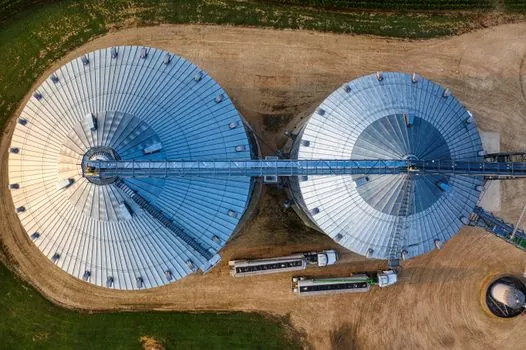
Five criteria usually settle the choice on a P&ID review: lift height, material temperature, dust control, abrasive wear, and integration with downstream packaging or batching equipment. Against those five: bucket elevators win on lift height (up to 40–80 m) and on hot material (≤250 °C with chain traction) [S2]; conveyor chains win on dust control, on abrasive lump handling, and on horizontal footprint efficiency. On integration, both connect to the same multihead weigher and packaging machine line out of Foshan, where inclined bucket elevators and screw conveyors share a single control philosophy with chain conveyors feeding the elevator boot [S1].
A practical rule: if the lift is above 15 m, specify a bucket elevator with chain traction for temperatures above 150 °C and belt traction below; if the run is below 15 m of vertical lift and mostly horizontal, specify an enclosed conveyor chain with replaceable flights. The boundary cases (8–20 m inclines) are where a side-by-side cost study including structural steel, head-room, and dust collection usually picks a winner.
Supplier Signals and Sourcing Footprint
Indian manufacturers such as S.J. Conveyors (Mumbai, established 1983) market a wide assortment of elevators, conveyors and material handling systems aimed at bulk plants [S4]. AUMUND (Germany) targets heavy-duty cement and minerals applications with bucket elevators positioned as the vertical lift element of a broader conveying package [S5]. Chinese suppliers from Foshan to the broader Guangdong cluster push the same line down to packaging-machine integrators, with diamond-member status and ≤15 h average response time on Made-in-China.com [S1].
Reference pricing on Made-in-China places a metallurgy-rated bucket elevator in a US$10,000–126,300 per set band, depending on capacity, material of construction and lift height [S7], which lines up with the long-life, low-operating-cost framing used by European OEMs [S5]. For OEM sourcing, the verifiable signals to track are supplier year of establishment, response time, and whether the unit is built to JB3926-85 or an equivalent international standard for the high-temperature chain-traction class [S2][S1].