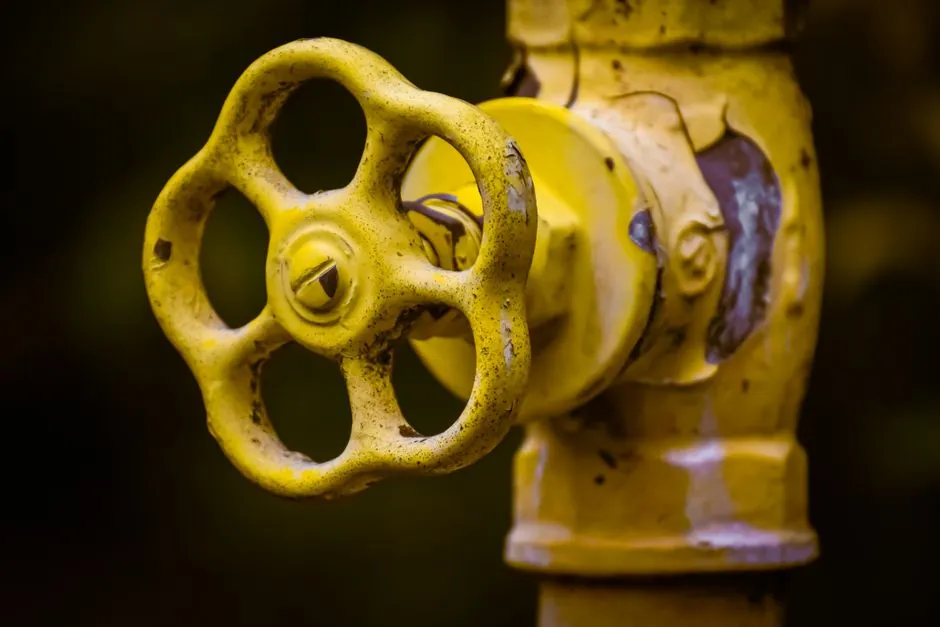
Agricultural irrigation ball valves are specified for 1/2" to 6" lines as on-off isolation or maintenance shut-offs, delivering 100% unobstructed flow in the open position [S4]. On farms drawing from wells, ponds, and canals, selection is dominated by water quality and debris tolerance rather than pressure class, because valves with tight internal clearances stick open or closed when exposed to sand, silt, algae, and fertilizer residue [S4].
Ball valves are grouped with gate and plug valves as the three primary on-off service devices in irrigation systems, all sharing a low pressure-loss characteristic in the fully open position [S3]. The practical difference is actuation: a 90° quarter-turn ball makes a faster shut-off than the multi-turn stem of a gate valve, and a full-port ball bore matches the pipe ID, eliminating the throttling-restriction profile that destroys gate valve seats in partially closed positions [S3][S4]. For full engineering context on quarter-turn design, see the ball valve reference page.
Material Selection: PVC vs Brass vs Ductile Iron
PVC irrigation ball valves are lightweight and corrosion-resistant, making them the default for chemical or treated water, and for lower-pressure laterals where UV-stabilized PVC body compounds survive direct sun exposure [S2][S4]. Brass ball valves carry higher pressure and temperature ratings, are durable, and are commonly used in commercial irrigation mainlines where the operating envelope exceeds PVC limits [S2]. The material also has to match the pipe: mismatched PVC-to-brass joints in mixed systems are a common leak path, so specifying valves in the same family as the surrounding pipe is the baseline rule [S1].
For larger agricultural mains, ductile iron bodies with stainless steel trim and chemical-resistant elastomeric seals are the field-tested combination for outdoor exposure to UV, temperature swing, and fertilizer carry-over [S4]. Drip-system and small-lateral work typically uses barbed or push-fit ball valves sized to polyethylene tubing; these are inexpensive, but they are not interchangeable with threaded brass units [S5]. Connection style (threaded, socket, or barbed) should be locked in alongside body material before procurement, because a PVC socket-end valve cannot be directly solvent-welded to a brass threaded riser without a transition fitting [S1][S2].
Sizing Range and Port Geometry
Irrigation ball valves are practical in the 1/2" to 6" range, with most drip and sprinkler lateral work falling below 2" and mainline isolation in the 2" to 6" band [S4]. Full-port (full-bore) ball valves provide maximum flow with minimal restriction, the geometry used when steady water delivery and minimum head loss are required on a main or sub-main [S2]. A full-port ball matches the pipe ID, so friction loss across the open valve is essentially equivalent to a straight pipe run of the same length.
Reduced-port (standard-port) balls use a smaller bore than the pipe ID, which raises fluid velocity and head loss at the valve; they are cheaper and have a more compact face-to-face, but in irrigation the pressure drop compounds across multiple valves in series, so downstream sprinkler coverage can fall off [S4]. For on-off isolation duty this rarely matters, but when the same valve is also expected to throttle flow, the engineer should size to full-port to avoid the velocity-driven erosion that the University of Florida extension specifically warns about in partially closed gate and plug service [S3]. For the trade-off detail, see full port vs reduced port ball valve.
Where Ball Valves Fit, and Where They Do Not
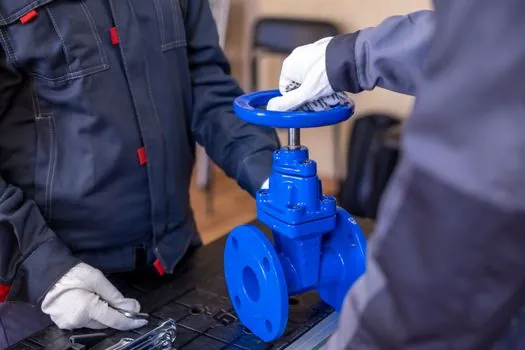
Ball valves are correct for: on-off isolation of zones, quick shut-off during a mainline break, maintenance blanking of a lateral, and lockout in shared or high-traffic installations where a padlock through the handle deters unauthorized operation [S2]. They integrate cleanly with automated irrigation controllers when paired with an electric actuator, giving remote open-close scheduling for pump discharge or filter-bank bypass [S2].
Ball valves are the wrong choice for: continuous throttling, dirty water with high solids loading, and any service that requires linear flow characterization [S3][S4]. Solenoid-driven control valves, butterfly valves on larger dirty-water lines, and check valves on discharge lines each have a defined duty that a ball valve cannot replicate. For backflow prevention specifically, a ball valve is a supplementary shut-off device, not a certified backflow preventer; the actual cross-connection control has to come from a PVB, DCA, or RPZ assembly rated to the local plumbing code [S1]. Engineers should treat the ball valve as one component in a stack that includes a check valve on the discharge side and a dedicated backflow device at the meter.
Field Failure Modes and Selection Criteria
Four selection criteria drive irrigation ball-valve specification more than any pressure-rating line on a data sheet. (1) Debris tolerance: a ball with a full, smooth bore passes sand and organic matter that would jam a globe or needle seat, which is why quarter-turn balls survive in raw well-water service where finer valves fail [S4]. (2) Pressure and flow match: an oversized control valve loses functionality at low flow, and a too-small valve chokes downstream coverage; matching the valve to the system hydraulics, not to the pipe ID, is the rule [S4]. (3) Duty cycle: valves that move a few times per season can be any quarter-turn unit, but valves cycling hourly need purpose-built high-cycle seats and live-loaded packing [S4]. (4) Environment: UV-stabilized PVC, brass with proper thread sealant, or ductile iron with stainless trim are the three material families that survive outdoor exposure, while untreated carbon steel corrodes within a single season in fertilized water [S4].
Operationally, ball valves should be exercised (opened and closed fully) at least once per season to keep internal seats from fouling or seizing, and they should be installed in accessible valve boxes, not buried flush, so the handle position is visible and the stem can be serviced [S2]. Periodic inspection for leaks at the stem, mineral buildup on the ball, and handle-play are the three field checks that catch a failing unit before it strands a zone. The University of Florida extension summarises the operating principle directly: "In the fully open position a passage through a gate, ball or plug valve is unrestricted resulting in a low pressure loss through the valve" [S3].
Comparison Table: Material Trade-Offs at a Glance
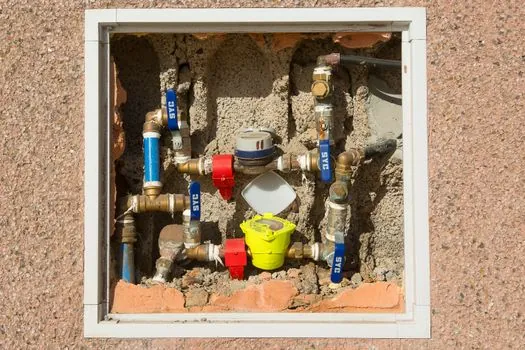
The table below lines the three common irrigation ball-valve materials against the criteria that actually drive farm-scale decisions. Values are qualitative where the research does not give a published numeric rating. [S4]
PVC vs brass vs ductile iron ball valves: corrosion resistance favors PVC and ductile iron over plain brass in fertilizer-laden water; pressure/temperature ceiling favors brass and ductile iron, with PVC capped at low-pressure cold-water service; cost favors PVC at small sizes and brass at mid-range, while ductile iron commands a premium at 4" and above; UV and outdoor-exposure durability favors UV-stabilized PVC and ductile iron, with brass acceptable but not preferred for direct sun; debris tolerance (full-bore pass-through) is comparable across all three when full-port geometry is selected [S2][S4].
Specifying engineers should also note that barbed and push-fit ball valves used in drip systems are an entirely different product class from threaded or flanged full-port valves used on mains, and the two should not be cross-substituted even when the nominal size matches [S5]. For automated irrigation, an electric ball valve package adds an actuator and position feedback, but the upstream material and port selection still follows the same rules as a manual ball valve of equivalent size.
Trackable signals to watch: revised AWWA C507 or equivalent irrigation-valve standards, OEM migration to UV-stabilized composite bodies for 2" to 4" residential-class valves, and the publication of updated debris-tolerance test protocols by major US extension services. Catalog-level changes to brass-versus-PVC price differentials will continue to drive spec shifts on small-lateral valves through the 2026 procurement season.