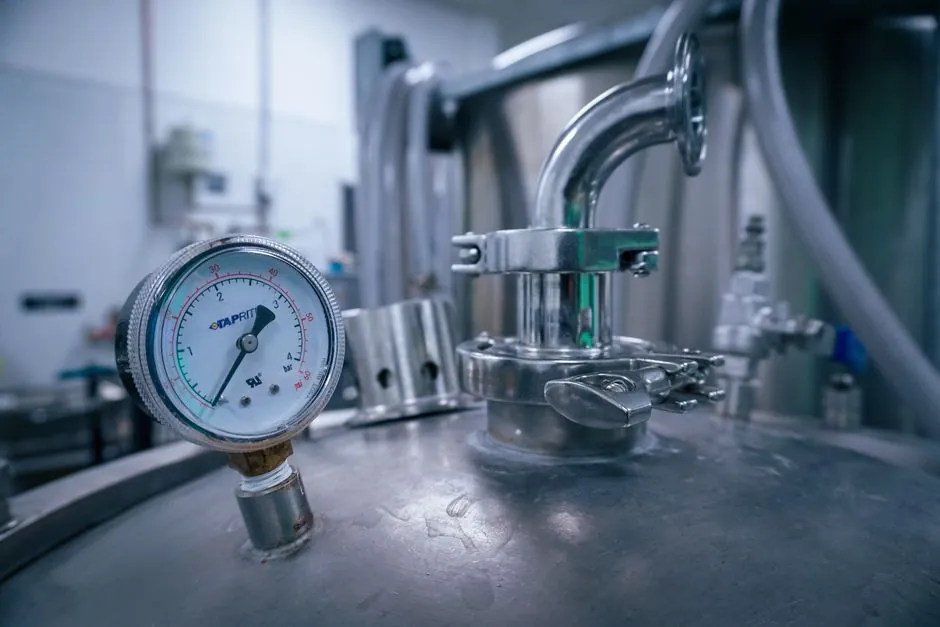
End-to-end continuous manufacturing (CM) for oral solid dosage (OSD) pharmaceuticals integrates feeding, granulation, drying, compression, and coating into a single uninterrupted line with in-line Process Analytical Technology (PAT), and a stochastic net-present-value (NPV) simulation published in PMC shows that, under current U.S. tax rates, investing in CM in the USA yields positive expected NPVs over batch investments in China or India for both brand and generic companies [S1].
As of 2020, 74% of all active pharmaceutical ingredients (APIs) and 54% of finished dosage form (FDF) human drug products were manufactured at facilities outside the USA, a footprint largely built on decades-old batch processing, which has pushed regulators toward CM as a domestic-resilience lever [S1]. Inline process control is the spine of any CM line, because every unit operation must be steered in real time rather than gated by off-line QC.
Defining the two regimes and where each fits
Batch manufacturing (BM) is a sequence of discrete unit operations with off-line quality testing and intermediate storage between each step, while continuous manufacturing (CM) integrates those unit operations into a single, uninterrupted flow with in-line PAT and feedback control [S4]. The ICH Q13 guideline, when fully implemented by ICH members, is the harmonized reference both sides are working toward; only eight CM-produced drugs had been approved at the time of the GaBI review, signalling that the regulatory floor exists but the installed base is still small [S4].
Batch fits multi-product facilities with frequent changeovers, low-volume orphan or potent compounds, and any product that needs held intermediates for traceability; continuous fits high-volume OSD with stable formulations, single-product lines, and plants designed around inline flow metering and process-grade pressure sensing rather than off-line lab release. A useful rule of thumb from the engineering economics literature: BM keeps changeover agile and inventory buffers visible, while CM collapses those buffers and pushes variability into the control loop.
Cycle time, quality, and operating-cost numbers
Researchers cited by News-Medical estimate that CM reduces product variation by 50%, cuts quality-control time by 50–70%, and lowers power consumption by roughly 40% relative to a comparable batch line [S2]. The same source notes that CM scale is adjusted by extending run time, not by retooling, which avoids stockpiling during demand spikes but does require revalidation of the control strategy whenever throughput, equipment size, or material attributes change [S2].
Tulip's 2025 guide adds the cycle-time framing: batch builds in hold times between every stage for off-line QC and storage, while continuous executes all testing, feeding, and processing inline, which can shorten manufacturing cycles from months to days on a properly designed line [S5]. FDA review activity tells the same story from a regulatory perspective: the number of CM facilities under review quadrupled in the half-decade preceding 2025, a strong leading indicator that approval throughput is climbing, not stalling [S5].
CAPEX, NPV, and where the money actually goes

The PMC investment analysis (Rossi et al., 2022, cited by 39) is the most concrete NPV reference available, and it runs a stochastic simulation against actual industry revenue/cost data and detailed engineering cost studies of both technologies [S1]. Headline result: under current U.S. tax rates, the lower operating cost of CM makes U.S.-based CM economically more attractive than either U.S.-based batch or offshore batch in China or India, for both brand and generic OSD; tax policy is therefore a material variable, not a background detail [S1].
Capital expenditure is still the gating constraint: the GaBI review lists high initial cost and regulatory uncertainty as the top two barriers to CM uptake, with hybrid CM/batch plants (continuous wet granulation into a batch dryer, or vice versa) commonly used to spread capex over a multi-year roadmap [S4]. For a green-field single-product OSD line running near nameplate, the inline valve and dampers on the integrated flow path are the main capex items that have no real batch analogue.
Comparison matrix: batch vs continuous for OSD
For a spec-driven comparison, the four decision criteria that consistently show up in both the PMC and GaBI reviews are cycle time, QC effort, capex profile, and changeover/validation cost. On cycle time, batch runs in weeks-to-months with hold times between stages, while CM collapses to days on a fully integrated line [S2][S5]. On QC effort, batch relies on off-line lab release at every step, while CM does 50–70% of that work in-line through PAT [S2]. On capex, batch is lower upfront and easier to phase, while CM has higher first-cost but lower per-unit operating cost and a better U.S. NPV under current tax rates [S1][S4]. On changeover/validation, batch changeovers are short but frequent, and CM scale is changed by run-time, not retooling, with the trade-off that any throughput, equipment, or material-attribute change forces a full control-strategy revalidation [S2].
The NPV result is the deciding line for finance, not engineering: U.S. tax policy materially changes whether domestic CM beats offshore batch, and that single variable has driven several announced re-shoring programs since 2021 [S1]. For an API-and-FDF strategy that already runs at multi-site scale, the safer interim step is a hybrid line, continuous granulation feeding a batch compression stage, because it de-risks the PAT/control-strategy revalidation while still cutting the longest hold times in the train [S4].
PAT, control strategy, and revalidation triggers

PAT is what makes CM auditable without stopping the line, and it is the reason CM regulatory submissions are heavier on the control narrative than BM submissions, which lean on the batch record. The FDA's stated aim for CM is to "modernize the supply chain, enhance the robustness of the manufacturing process and thereby reduce product failures and enhance product quality" [S2]. In practice that means every CM submission must justify how the in-line sensors, the process-grade pressure transmitter network, and the model-predictive loops will detect and reject drifting material before it reaches compression or coating.
Revalidation is the operational hot button: changes to throughput, equipment size, or material attributes trigger revalidation of the entire process, which is why a CM plant is best run as a single-product or very-low-SKU line [S2]. For facilities that need to swing between SKUs, the cost of repeated revalidation usually erases CM's operating-cost advantage, and batch re-emerges as the rational answer.
Failure modes and where CM hurts
Continuous mode fails in characteristic ways: equipment overheating and material accumulation on longer runs can degrade product or force unscheduled shutdowns, and any fault that is not caught by PAT can produce large volumes of out-of-spec material before the deviation is detected, the inverse of batch, where the entire batch is rejected only on final QC [S2]. Steady-state drift on feeders and granulators is the most common root cause of CM rejections, which is why the same engineering discipline that has shipped CM in petrochemicals for decades is being re-applied to pharma PAT and control.
Batch's failure mode is the opposite: smaller blast radius per deviation, but longer recovery time and higher inventory write-off risk between stages [S3][S4]. A maintenance strategy built on CBM maps better to CM's always-running profile, while time-based maintenance tends to fit batch, where a stop window can be planned between campaigns.
Selection rule of thumb and what to watch next
Pick CM when a facility will run one or two high-volume OSD SKUs at high utilization, when U.S. (or EU) tax incentives are part of the financial model, and when the in-line PAT and control strategy can be validated up front; pick batch when the product mix is wide, volumes are low or lumpy, the API is potent or hazardous, or changeover agility dominates the ROI calculation [S1][S4]. The hybrid route is the pragmatic middle for any brown-field plant that needs to phase capex, and it is the most common announced path in the 2021–2026 wave of re-shoring announcements [S4].
Track two signals over the next 12 months: ICH Q13 implementation by FDA/EMA/PMDA, which sets the global submission template for CM, and continued growth in CM facilities under FDA review, which is the leading indicator of new approvals and downstream capex orders [S4][S5]. A third, softer signal: the PMC analysis flags U.S. tax policy as the swing variable for domestic-vs-offshore NPV, so any change in domestic manufacturing tax credits will move the CM/batch investment case before any new tech does [S1].