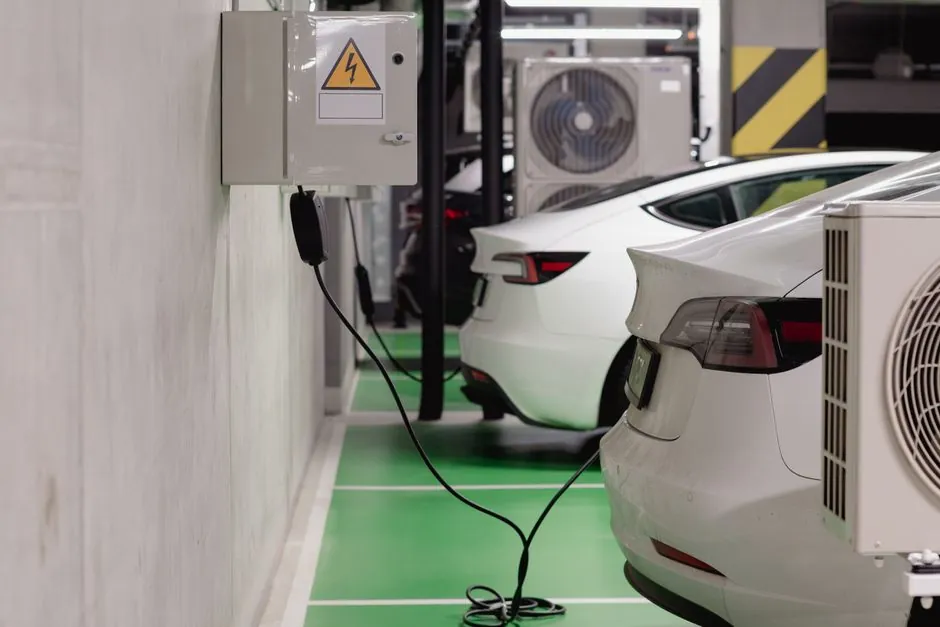
Structural-safety IP in battery packs has organized into four distinct technology clusters between 2023 and 2026, with patent activity in the maturation phase outpacing both the foundational 2004–2018 era and the 2019–2022 development phase [S1].
On the consumer side, the global portable battery pack market was valued at USD 19.38 Billion in 2025 and is projected to reach USD 70.87 Billion by 2035, a 13.84% CAGR over the 2026–2035 forecast window [S3]. EV pack leaders CATL, BYD, and LG Energy Solution continue to set the structural-safety benchmark, as detailed in the EV battery pack market share 2026 breakdown.
Four Structural-Safety IP Clusters Define the 2026 EV Pack Field
Patent and literature clustering between 2023 and 2026 separates structural-safety innovation into four non-overlapping technical lanes: multi-material enclosure optimization, energy-absorbing lattice and sandwich structures, thermal-runaway propagation barriers, and vehicle-level load-transfer architectures [S1]. Cluster 1, multi-material FEM + evolutionary-algorithm optimization, is the most densely filed lane, exemplified by China Fire and Rescue Institute patents (CN, 2023 and CN, 2025) that lock enclosure deformation under all three load cases to below 2 mm using an NSGA-II Pareto front over carbon fiber upper, high-strength steel mid-panel, and aluminum alloy base [S1].
Cluster 2 covers impact-energy management through lattice-core and nature-inspired absorbers, where radial basis function surrogate optimization has demonstrated a 17.62% pack mass reduction and a 30.78% drop in maximum enclosure deformation versus baseline FEM designs [S1]. Cluster 3, thermal-runaway propagation control, has shifted from passive insulation to embedded thermal barriers inside structural members, a topology first seen in Ford Global Technologies' US 2025 filings and now spreading to LG Energy Solution's safety bus-bar architecture with multi-jurisdiction maturity across US, EP, and AU by 2024 [S1]. Cluster 4, vehicle-level load transfer, is anchored by active emergency pack-ejection patents from China Automotive Engineering Research Institute (CN, 2025) and aviation-specific anti-propagation carrier structures from Rolls-Royce (EP, 2024) [S1].
Pack-Level Design vs Cell-Level Strategy: Where the IP Is Filing
Cell-level safety innovation is migrating upward into the pack enclosure itself: simulation-led structural verification is replacing physical prototypes, as shown by Jiangsu Zhengli New Energy Battery Technology's 2025 CN filings that move crashworthiness analysis upstream of tooling decisions [S1]. The implication for specifiers is that a pack's mechanical safety margin is no longer decoupled from its thermal-propagation budget; the same enclosure must satisfy both FEM crash constraints and thermal-barrier embedment, raising the bar for pressure sensor density inside the pack to monitor cell swelling and barrier integrity in real time.
The dominant material combination in 2026 EV pack enclosures is a three-layer composite sandwich: carbon fiber composite top cover for mass-critical stiffness, high-strength steel mid-panel for intrusion resistance, and aluminum alloy base plate for manufacturability and heat spreading [S1]. Lattice-core octet-cross topologies optimized for specific energy absorption now reach 40% relative density at their highest-SEA configurations, a threshold at which additive manufacturing becomes cost-competitive with stamped steel for low-volume programs [S1].
Portable Pack Market: A Different Race, A Different Spec Sheet
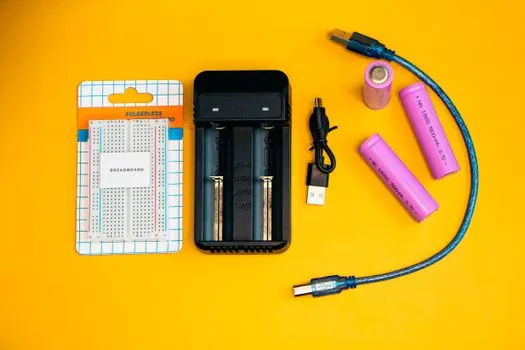
Outside the EV lane, the portable battery pack market operates on a fundamentally different competitive axis: capacity, power-delivery wattage, and feature integration [S3]. Anker's September 2025 IFA launch of the Prime Power Bank set a 26,250 mAh / 300 W output benchmark, explicitly targeting laptop-class devices and multi-device simultaneous charging, while Baseus's January 2025 CES reveal of the EnerGeek MiFi Power Bank fused a 3-in-1 power bank, mobile hotspot, and eSIM connectivity into one SKU [S3].
Demand is driven by smartphone penetration (85.5% of Indian households owned at least one smartphone in 2025, per the country's Ministry of Statistics & Programme Implementation), expansion of remote work, and integration of USB-C power delivery plus intelligent power management [S3]. The mobile industry's USD 7.6 trillion contribution to the global economy in 2025 underlines the addressable-device base for portable packs [S3]. For OEM buyers comparing portable pack suppliers, the industrial valve sourcing discipline of spec-to-cost mapping translates directly: match capacity (mAh), output wattage, and protocol support (USB-C PD, multi-device sync) before negotiating unit price.
Selection Criteria: EV Structural Pack vs Portable Consumer Pack
EV-grade structural packs and portable consumer packs diverge on every decision axis, and confusing the two is the most common spec error in 2026 cross-category sourcing. A pack designed to pass NSGA-II FEM crash optimization at under 2 mm deformation is not interchangeable with a USB-C PD power bank, even when both share 18650 or 21700 cell form factors [S1][S3].
The criteria-based comparison below lines the two categories up against the four specifiers that drive selection: decision criterion, EV structural pack (CATL/BYD/LGES class), portable consumer pack (Anker/Baseus class); safety target, mechanical intrusion under 2 mm and thermal-runaway propagation containment per [S1], USB-C PD overcurrent and cell-level thermal cutoff per [S3]; primary KPI, pack mass (kg) and specific energy absorption (J/kg) per [S1], capacity (mAh) and output wattage (W) per [S3]; certification lane, OEM automotive qualification (IATF 16949 implied by Tier-1 supplier filings in [S1]), consumer electronics safety standards (UL, CE per typical [S3] launch coverage). Specifiers should not attempt to compare across rows.
Use Cases and Failure Modes Specifiers Must Catch
For EV and eVTOL programs, the 2026 use case is clear: any pack enclosure that cannot demonstrate FEM-validated deformation under 2 mm in all three load cases should be excluded from Tier-1 sourcing, regardless of cell supplier pedigree [S1]. The LG Energy Solution safety bus-bar architecture (US/EP/AU filings 2023–2024) is a useful shorthand indicator of a supplier that has invested in pack-level (not just cell-level) safety IP [S1]. On the sourcing side, EV charger procurement from Chinese OEMs follows a similar discipline of matching spec to use case rather than chasing lowest unit cost.
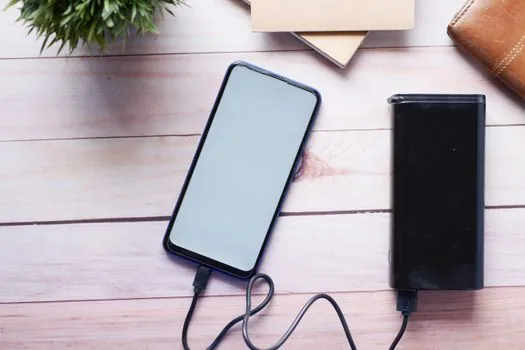
For portable consumer applications, the failure modes are different: thermal runaway in a 26,250 mAh / 300 W pack under sustained multi-device load is a credible consumer-safety risk, and specifiers should require cell-level thermal cutoff documentation, not just pack-level UN 38.3 transport certification. The September 2025 Anker Prime and January 2025 Baseus EnerGeek launches both raised the wattage ceiling, and any sub-100 W competitor entering in 2026 will be functionally locked out of the laptop-compatible segment [S3].
Standards, Limitations, and What the IP Data Does Not Show
Patent activity in structural-safety design is a leading indicator of commercial readiness, but it is not a substitute for validated pack-level testing under UN 38.3, IEC 62660, or OEM-specific abuse protocols; the CN, US, and EP filings catalogued in [S1] represent design intent, not field-proven deployment. The flow meter analogy is apt: a meter with a beautifully optimised internal geometry is still wrong if its process connection does not match the line size, and a structurally optimised pack is still wrong if its thermal interface to the vehicle coolant loop is undersized.
Two constraints bound the 2026 outlook. First, the four-cluster structural-safety IP map is heavily China-weighted in clusters 1, 3, and 4, while aviation-grade anti-propagation IP remains concentrated at Western Tier-1s (Rolls-Royce EP, 2024), creating a trans-regional freedom-to-operate risk that procurement must price into licensing [S1]. Second, the portable pack CAGR of 13.84% rests on continued smartphone and wearable penetration; the 2025 Indian household figure of 85.5% smartphone ownership is a useful upper-bound reference for emerging-market saturation, but it does not by itself predict unit-volume growth in already-mature markets [S3].
Trackable signals for the next 6–9 months: (a) whether the China Fire and Rescue Institute 2025 NSGA-II / Best-Worst Method / Entropy Weight / Game Theory patent family extends to aviation-grade cells, which would compress the Rolls-Royce IP lead; (b) whether Anker, Baseus, or a new entrant crosses the 400 W output threshold in a consumer SKU, redefining the laptop-compatible segment; (c) whether LG Energy Solution's US/EP/AU safety bus-bar architecture attracts a design-around filing wave from BYD or CATL during 2026.