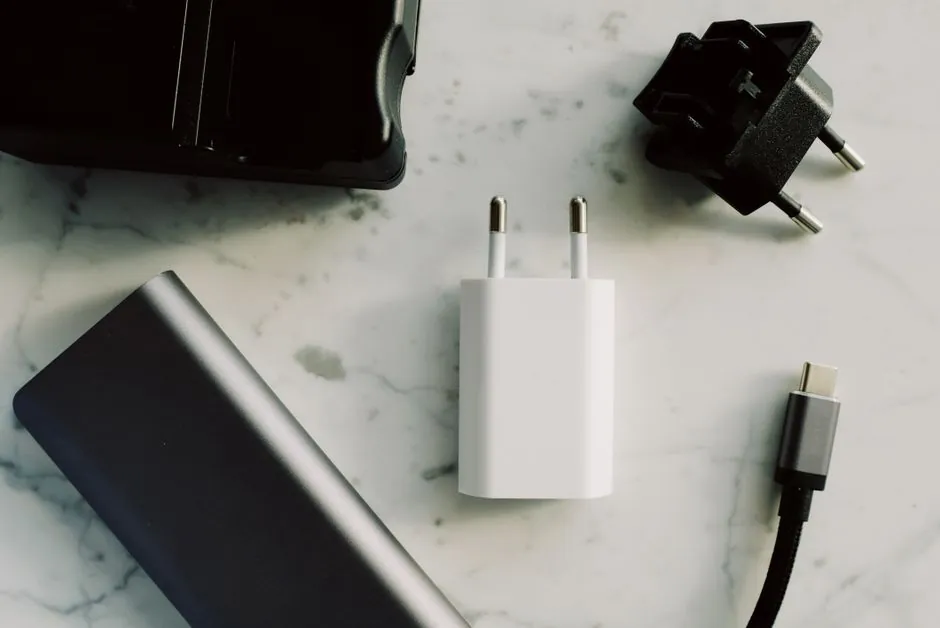
China-manufactured EV chargers in 2026 cover the full power spectrum from 3.5 kW AC portable units to 720 kW DC fast stacks, with connector options spanning CCS1, CCS2, GB/T 20234, CHAdeMO, and the NACS (SAE J3400) form factor [S1][S2].
For OEM BOM projects, the charger is not a single buy; it is a stack of power semiconductors, isolation devices, contactors, sensors, and a controller board, each with its own lifecycle and lead-time profile [S2]. Importers buying finished units for resale additionally face connector, left-hand-drive, and destination-market compliance gates that the BOM buyer does not [S3].
AC vs DC Charger Classes and Power Bands
AC EV chargers sourced from China cluster in three bands: portable Mode 2 units at 3.5 kW, wall-mounted AC chargers at 7 kW and 11 kW single-phase, and three-phase 22 kW units built to IEC 62196-2 Type 2 [S1]. DC fast chargers start at 20 kW movable units, scale through 60 kW and 120 kW wall-cabinet designs, and extend to 160 kW, 360 kW, 400 kW, and flexible 360–720 kW PDU piles for highway and depot use [S1]. AUPINS catalog examples include the C5 Series 7 kW AC wallbox, EF040 and EF160 DC fast lines, and the EF400 / 360–720 kW flexible PDU for high-power charging hubs [S1]. On-board charger (OBC) assemblies at 2 kW, 3.3 kW, 6.6 kW, and 20 kW are also offered as discrete sub-assemblies for OEM vehicle integration [S1].
Connector and Cable Spec Matrix
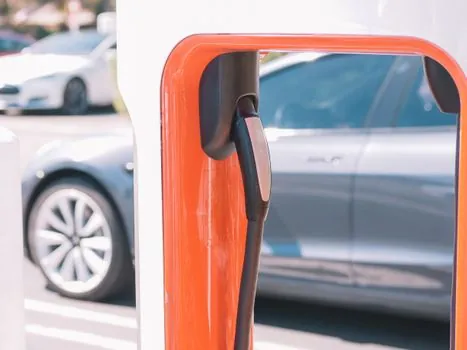
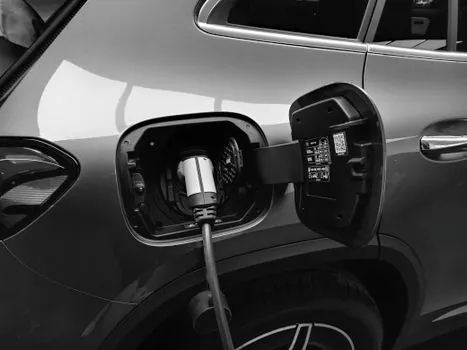
Five connector ecosystems dominate 2026 shipments from Chinese vendors: CCS1 (SAE J1772 + DC), CCS2 (IEC 62196-3 Type 2 DC), GB/T 20234.2 AC and GB/T 20234.3 DC, CHAdeMO, and the NACS / SAE J3400 inlet now in volume production [S1]. Adapter cables are stocked as a separate SKU family: Type 2 to Type 1, Type 1 to Type 2, CCS2 to CCS1, GB/T to CCS2, GB/T to CHAdeMO, and the growing GB/T to TESLA line for export markets still running GB/T vehicles on Tesla Superchargers [S1]. For buyers specifying a fixed charging socket rather than a cable, options exist as IEC fixed, IEC electronic, CCS1/CCS2 DC, GB/T AC electronic, GB/T AC, GB/T DC, CHAdeMO DC, NACS, and SAE AC sockets [S1]. Liquid-cooling terminals and hyperboloid contact pins are listed as the high-current contact technology for 350 kW+ cable assemblies [S1].
Component-Level BOM for OEM Buyers
An EV charger BOM is split into a power section and a control section, and the supplier shortlist looks very different for each [S2]. Power-stage sourcing centers on MOSFETs and IGBTs for DC-DC conversion, rectifier diodes for freewheeling, gate-driver optocouplers for high-voltage isolation, and DC-link / snubber capacitors sized for the charger's ripple current. Control-stage sourcing centers on memory ICs (firmware, OCPP stack, configuration), microcontrollers, signal optocouplers, relays and contactors for AC input switching, current and temperature sensors, and ESD/surge protection on the communication ports [S2]. Auxiliary power supplies for the control board repeat the same MOSFET, rectifier-diode, and optocoupler pattern at a much lower power level [S2].
AC Charger vs DC Fast Charger: Selection Criteria Compared
Buyers should weigh the four charger families against the same four criteria before issuing an RFQ, and the right answer depends on duty cycle, not on marketing copy. [S2]
AC 7 kW wallbox: low unit cost, minimal component count, single-phase grid connection, but 6–8 hour full charge on a 60 kWh pack rules it out for highway retail. AC 22 kW three-phase: cuts AC charge time to roughly 2–3 hours, requires a three-phase supply, popular for European workplace and fleet depot [S1]. DC 60–120 kW wall-cabinet: entry-level fast charging, 20–40 minutes to 80% SoC on most modern EVs, needs grid upgrade above 100 kW. DC 360–720 kW stack: highway-corridor class, liquid-cooled cables required, station cost dominated by grid interconnection and energy storage buffer rather than the charger box itself [S1].
Communication, Control Boards, and OCPP
OCPP compatibility is now a hard requirement for any charger destined for a public network, and Chinese OEMs ship AC SECC PLC controller boards, AC-EVCC module controllers, and AC-EDC / AC / OCPP modules as discrete sub-assemblies [S1]. CCS1/CCS2 protocol simulators are sold as portable bench tools for depot commissioning [S1]. Back-office protocol choice (OCPP 1.6J vs OCPP 2.0.1) and ISO 15118 Plug & Charge support should be locked at the RFQ stage, not after delivery, because the controller firmware and the memory IC footprint change between revisions [S2].
Import Logistics, LHD, and Destination Compliance
Importers buying finished EV vehicles and chargers into left-hand-drive markets such as Nigeria face a different verification list than BOM buyers: LHD configuration confirmation per unit, supplier background check, export document set (commercial invoice, packing list, bill of lading, waybill), and destination customs clearance including any applicable duty bands on charging equipment [S3]. For Africa-bound shipments, the 2026 supply advantage is that Chinese manufacturers offer a complete range from compact passenger EVs to electric buses, with the same production lines also supplying AC and DC chargers, so a fleet buyer can co-load vehicles and depot charging hardware on a single container [S3].
Failure Modes and Engineering Watch-Outs
Three failure modes repeat across China-sourced EV charger deployments and should be specified out at the RFQ stage: undersized contactors that weld closed on DC fault current, optocouplers with insufficient CTR margin that drift and cause gate-driver misfire, and DC-link capacitors that exceed rated ripple current when the charger is operated below 30% load for extended periods [S2]. Liquid-cooled cable assemblies above 250 kW also require specific hyperboloid or crown-spring contact pins to keep contact resistance stable over the 10,000-cycle service life implied by depot duty cycles [S1]. A BOM audit at the part-number level (not the SKU level) is the only way to catch these before they reach a customer's site [S2].
Verifiable next nodes for tracking: the OCPP 2.0.1 firmware revision shipping on 2026-vintage AC-EVCC controller boards, and the NACS (SAE J3400) inlet availability across Chinese OEM 7 kW and 11 kW AC wallbox lines. Buyers sourcing a complete industrial valve cabinet for a charging-hub cooling loop should treat the charger's liquid-cooling circuit and the site's facility water loop as one integrated spec, matching the discipline in our BESS sourcing spec map.
Spec-level background on the components involved: linear guide, and crossed roller guide.