
OEM and ODM in the lithium-battery sector are no longer interchangeable: as of 2026-07-11, energy-storage suppliers such as Green Power Technology Co., Ltd. (founded 2013, Shanghai, 20,000 m² production, ISO 9001, products certified to UL, CE, UN38.3) publicly market both tracks side-by-side, with OEM positioned as build-to-spec and ODM as a faster, reference-design route [S1].
The decision is now binary at the procurement stage: buyers with an existing pack architecture, BMS firmware and cell-format specification go OEM; buyers needing a working 5–100 kWh reference platform with datasheet, BMS and UN38.3 test report already on file go ODM, and the price delta is wide enough that the wrong choice can blow an entire project's margin.
Definitions and Scope: What the 2026 Lithium OEM/ODM Contract Actually Buys
An OEM engagement in the lithium space means the factory manufactures to the buyer's released drawings, BoM and BMS firmware — the IP, the cell-format selection (e.g. 280 Ah LFP prismatic vs. 50 Ah NMC pouch), the CAN/J1939 or Modbus register map, the housing CAD and the safety-test plan all originate on the buyer side, and the factory is contractually a build-to-print house [S3].
An ODM engagement transfers most of that stack upstream: the supplier ships a pre-engineered pack platform, the buyer re-labels it, optionally re-skins the enclosure, and ships it under its own SKU. Green Power's public positioning is explicit on this: "Custom-designed or white-label products tailored to your brand and market needs" [S1] — that is the ODM lane, and the same supplier runs both lanes from one roof.
On the trade-side directory made-in-china.com, the same factory can be filtered by "R&D Capacity" sub-filters "OEM / ODM / Own Brand" (e.g. bike-inverter, battery-band, auto-motive, power-discharge, NiMH cell factory listings all carry the same three-position R&D selector) [S2][S4][S5][S6][S9], so the taxonomy itself is now standardised across the Chinese supplier base.
Selection Criteria: Cost, Lead Time, IP and Certification Load
Four criteria drive the OEM-vs-ODM call on a 2026 lithium project: tooling and NRE cost, time-to-shipment, IP ownership, and certification carry-over. On ODM, UN38.3, MSDS, CE-EMC and the IEC 62133 cell-level test report are typically the supplier's asset and travel with the SKU, so a buyer can be shipping a finished product in 4–8 weeks rather than funding 6–9 months of cell, BMS and pack safety testing. [S1]
On OEM, the buyer funds and owns every test report. That is the price of getting a proprietary 280 Ah LFP module with a custom BMS threshold set and a private CAN protocol — the same factory can do it, but the engineering hours, the cycle-life characterisation and the IEC 62619 pack-level abuse tests all sit on the buyer's invoice.
Minimum order quantity tracks the same split: ODM reference platforms usually start at 50–200 packs for a private-label run, while OEM with custom tooling and fixture build-out rarely amortises below 1,000–5,000 units. The made-in-china.com filter "Annual Revenue" on the supplier profile (bands from <1 M USD up to 10–50 M USD) [S2][S6] is a reasonable proxy for which ODM-versus-OEM mix the factory can carry, because a sub-2.5 M USD shop is almost always ODM-only.
For a deeper cost-side view of where the bill of materials money actually sits — lithium carbonate, nickel sulphate, cathode active material, cell winding/stacking — see the lithium cost breakdown reference, which lines OEM and ODM spend against the same upstream cost stack.
Comparison: OEM vs ODM on the Four Decision Criteria
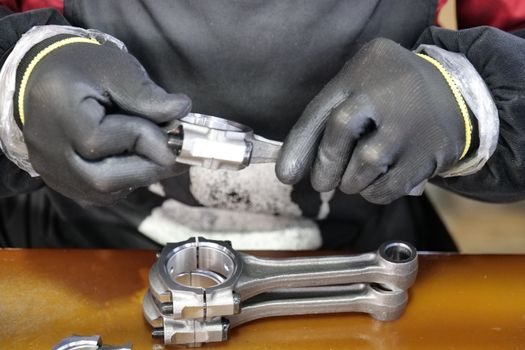
Side-by-side on the criteria that matter to a 2026 procurement engineer: [S2]
Time-to-first-shipment — ODM: 4–8 weeks using the supplier's reference design and existing UN38.3 / CE / UL file [S1]. OEM: 6–9 months covering BMS bring-up, cell-format approval, IEC 62133 / IEC 62619 pack-level testing and pilot run.
IP and BMS ownership — ODM: factory retains the reference BMS firmware, the cell-format datasheet and most mechanical IP; buyer owns the brand and minor cosmetic changes. OEM: buyer owns the full pack CAD, BMS source, register map, and the test report stack.
NRE and tooling cost — ODM: typically 5,000–30,000 USD for label, manual and minor enclosure re-skin, no custom fixturing. OEM: 50,000–300,000+ USD for custom housings, BMS PCBA fixtures and the cell-format pilot line, recouped over the program volume.
Certification carry-over — ODM: UN38.3, MSDS, CE-EMC, IEC 62133 cell-level all transfer because the platform is unchanged [S1]. OEM: every certificate is re-issued under the buyer's SKU, which is the dominant hidden cost of an OEM program.
The same split applies in adjacent electronics manufacturing: a useful parallel is the CPU OEM vs ODM 2026 models reference, which uses an identical four-criteria frame and confirms the pattern is industry-wide, not lithium-specific.
Who OEM Is For — and Who It Is Not
OEM is the right call when the buyer needs a proprietary form factor, a non-standard BMS threshold or register map, integration into a higher-level system such as a PLC-controlled energy-management stack, or any application where the pack itself is a defensible piece of IP. ESS integrators, e-mobility OEMs with vehicle-bus integration (CAN J1939, CANopen), defence and rail buyers all sit on this side. [S3]
OEM is the wrong call for a buyer whose value is software, brand or distribution rather than electrochemistry: funding a custom 100 kWh LFP rack to ship under your own SKU is an easy way to burn cash on certification, when the same rack exists as a reference ODM with a 5-year cycle-life datasheet already on file.
Who ODM Is For — and the Failure Modes
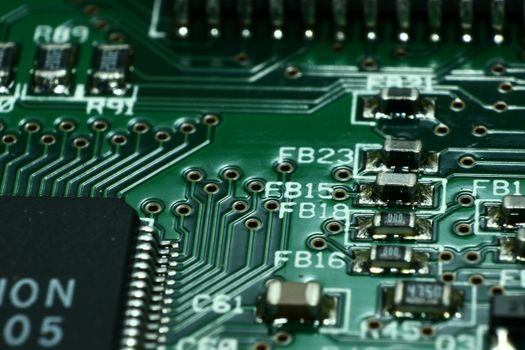
ODM fits solar-EPC contractors, portable-power-station brands, e-bike pack assemblers and any channel player whose moat is go-to-market. Green Power explicitly markets ODM to that group, including hybrid-solar-system bundles where the battery, hybrid inverter and panels are sourced as one tested string [S1] — a one-stop ODM bundle is now the default solar-channel procurement model.
ODM's failure modes are well known: differentiation is shallow because the underlying platform is shared across buyers, so margin compresses as the market matures; BMS firmware updates are gated by the factory, which complicates long-term field support; and a private-label recall triggered by an ODM-level cell defect pulls every rebranded SKU into scope simultaneously.
For buyers running ODM volume through a B2B portal, the additive-manufacturing supply-chain logic translates directly: spec bands, supplier-tier signals and three coupled flows (material, cert, capacity) are the same framework used to qualify a Tier-1 LFP cell line.
Standards, Certifications and the 2026 Compliance Stack
On the cell level, IEC 62133 (portable cells), UL 1642 / UL 1973 (stationary) and UN38.3 (transport) are the non-negotiable baseline; on the pack level, IEC 62619 (industrial LFP), UL 9540 (ESS) and CE-EMC / CE-LVD under the EU Low Voltage Directive sit on top. Green Power's public claim that its products are "certified to international standards (UL, CE, UN38.3)" [S1] is the minimum a 2026 ODM partner is expected to put on the homepage, and anything below that line is a red flag at RFQ stage.
For a granular walk through the QA stack — cell grading, cycle-life bands, supplier-tier signals, and how those map to a 2026 buyer's incoming-QA plan — the Lithium Battery QA Stack 2026 reference lines the same standards against an actual supplier-qualification workflow.
Management-system certifications also split the field: ISO 9001 is now table stakes and appears on every credible Chinese lithium OEM/ODM profile [S1]; ISO 14001 (environmental) and ISO 45001 (occupational health) appear on the larger factories that ship into EU and US OEM programs [S2][S5][S6]. A factory with only ISO 9001:2008 and no ISO 14001 should be treated as a small-format ODM-only house.
Production-Line Reality: What Sits Behind the OEM/ODM Split
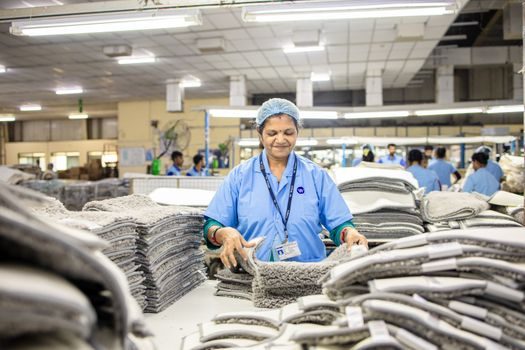
Whether the contract is OEM or ODM, the underlying line architecture is converging on the same 2026 template: prismatic LFP cell formation, module-to-pack (MTP) or cell-to-pack (CTP) integration, laser-welding or wire-bonded BMS PCBA, and end-of-line cyclers that grade every pack on capacity, internal resistance and self-discharge. The OEM/ODM distinction sits upstream of the line, in whose CAD and whose BMS code the line is configured to run. [S4]
A useful 2026 production-line reference for the cell-format and PACK-architecture side is the 2026 lithium production-line design article, which lays out the throughput and format bands the same line has to cover whether the SKU ships OEM or ODM.
Signals to Track Through Q3 2026
Two verifiable signals will reshape the OEM/ODM split in the second half of 2026: (1) how many China-based lithium suppliers keep UN38.3 + IEC 62619 + UL 1973 active on a single reference platform, because that determines whether a Western buyer's private-label ODM is still a 4-week program or has slipped back toward OEM-level re-certification; (2) the spread between the largest 10–50 M USD factories and the <2.5 M USD shops on the made-in-china.com annual-revenue filter [S2][S6], which historically tracks how much ODM share is consolidating into the top tier.
For component-level specifications, see additive manufacturing material, and pressure transmitter.