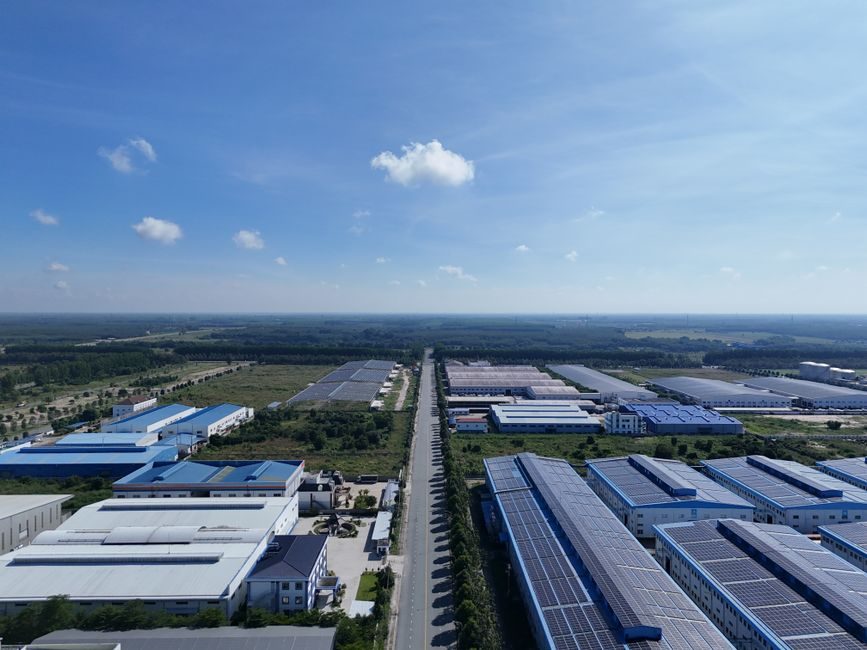
Capacity planning for refined cobalt is not an abstract scheduling exercise — it is anchored to discrete project milestones such as Jinchuan Group's 5,000-metric-ton two-phase line expansion, where Phase 1 added 2,500 t/y in December 2018 and Phase 2 added a matching 2,500 t/y, taking the group to a stated 18,000 t/y annual capacity with 100% raw-material self-sufficiency for cobaltosic oxide and nickel-cobalt-manganese ternary precursors [S2].
At its core, capacity planning is the process of determining the configuration of equipment, labor and shift patterns required to meet a defined output target; production capacity itself is the maximum output a facility can achieve over a specific period, separate from actual output and from capacity utilization rate [S3][S6]. For cobalt processors, those two layers — maximum nameplate versus demonstrated throughput — drive every downstream decision on precursor feed, lithium-battery cell line ramp and refinery debottlenecking, so the rest of this article maps the data, the formula and the sourcing signal a planner needs to defend a number.
Defining Cobalt Capacity: Nameplate, Demonstrated and Utilization
Three numbers must be kept distinct on any cobalt planning sheet: nameplate capacity (the engineered upper limit, e.g. Jinchuan's 18,000 t/y post-Phase 2), demonstrated capacity (the rolling actual output averaged over a period such as a quarter or a year), and capacity utilization rate (demonstrated ÷ nameplate), which is the standard efficiency gauge used to judge whether a plant is over- or under-loaded [S3]. Production capacity is "the maximum output of a production facility, measured in finished products over a given period of time" and "shows the potential output i.e., the theoretical upper limit of goods able to be produced with installed machines, labor, and resources" [S3].
For a single product, the manual calculation requires machine-hour capacity (usable machines × available hours per employee-machine) divided by throughput time per unit; for a multi-product refinery running cobalt sulfate, cobalt metal and ternary precursor side-streams, planners sum the per-product capacities and subtract shared-bottleneck hours [S3]. The same logic is encoded in ERP modules: Oracle's JD Edwards EnterpriseOne defines capacity planning as ensuring "sufficient capacity is available to accomplish the planned production schedule that is generated by Master Production Schedule (MPS) or Material Requirements Planning (MRP)", and decomposes it into Resource Requirements Planning (RRP) and Rough-Cut Capacity Planning for long-horizon checks [S7].
How a Cobalt Line Is Actually Scaled: Jinchuan's 5,000 t/y Two-Phase Reference
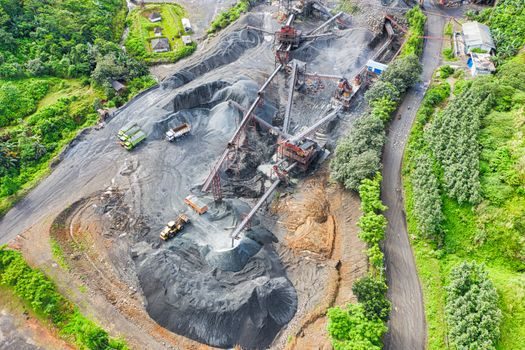
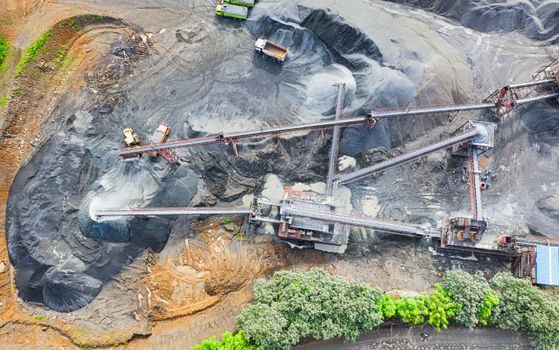
Jinchuan Group's 5,000-metric-ton cobalt line expansion is a textbook reference for matching a lithium-battery demand curve to a metallurgical plant's nameplate, and the published data points are unusually clean: the project is split into two 2,500 t/y phases, Phase 1 trial-produced in December 2018, Phase 2 started construction in May 2021, completed plant construction and main equipment installation before trial production in June 2022, with Phase 2's output feeding cobalt sulfate solution for lithium-battery ternary precursor production [S2].
Once both phases are at nameplate, the group reaches 18,000 t/y annual cobalt capacity and targets a 100% self-sufficiency rate for cobalt raw materials used in cobaltosic oxide and NCM ternary precursors, an unusually tight upstream-to-precursor integration ratio for a non-vertically-integrated refiner [S2]. The output stream is also multi-product: Lanzhou Jinchuan Advanced Materials Technology Co Ltd, the operating arm, was established in 2004 in Lanzhou, Gansu, and produces cobalt-related lithium-ion battery materials for 3C portable electronics and new-energy vehicles, plus metal cobalt and aerospace-alloy grades — meaning capacity planning has to be done per product family, not per tonne of contained cobalt [S2]. For planners benchmarking similar lines, the same GPU production capacity planning logic for accelerator-aware schedulers applies: bottleneck identification on the shared leaching, solvent-extraction and crystallizer train dominates the schedule.
Australia as a Sourcing Signal: What the CBCIE Cobalt Series Actually Shows
For non-Chinese capacity planning, the CBCIE (China-Backed Commodities Intelligence Exchange) refined-cobalt capacity dataset for Australia is the most directly comparable public series, with annual capacity entries posted each January covering 2020 through 2024, and the structure of the dataset — capacity tonnage per calendar year, per country — is the same template planners should impose on internal plant data [S5]. The headline use of the series is not the absolute number but the year-on-year delta, which is what a procurement team uses to decide whether to lock a long-term offtake or to stay on the spot market.
In practice the CBCIE series is consumed the same way any MRP feed is consumed: it is a rolling capacity input that gets reconciled against the MPS in a rough-cut capacity planning pass, then re-checked at RRP granularity once a real offtake is signed [S7]. Sourcing teams should treat the January publication as a snapshot, not a guarantee — the Jinchuan experience shows a 2,500 t/y phase can move from groundbreaking (May 2021) to trial production (June 2022) inside 13 months when the plant envelope already exists [S2].
MRP-to-Shop-Floor Linkage for a Cobalt Refinery
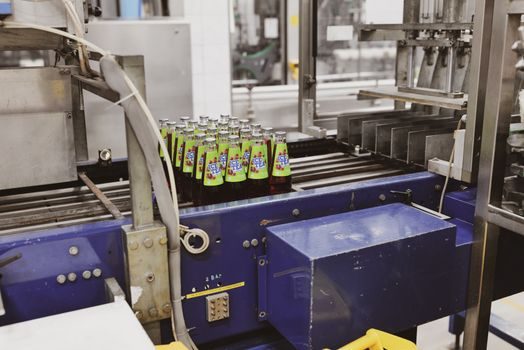
The shop-floor implementation follows the standard manufacturing planning stack: MRP explodes the demand plan (battery-grade cobalt sulfate, cobaltosic oxide, metal cobalt) into operations and rough capacity loads, and Oracle's NetSuite Advanced Manufacturing module then defines capacity as "the maximum amount of work your work center can complete in a given period" — the same definition that drives work-center routing, item start/end dates and feasibility checks against available capacity [S8]. For cobalt, the practical work centers are leach, solvent extraction, crystallizer, calciner and finishing/packing, and each has a different bottleneck profile: leach is feed-limited, SX is solvent-ratio-limited, crystallizer is heat-exchanger-limited, calciner is temperature-ramp-limited.
When the rough-cut load exceeds nameplate on any work center, the planner has three real options — alter the plan (reschedule), alter the capacity (add a shift, add a crystallizer), or alter the mix (sell the intermediate as sulfate instead of calcining to oxide) [S7]. Jinchuan's choice to feed Phase 2 output directly into ternary precursor production is exactly the third lever: rather than expanding calcination to convert all 2,500 t/y to oxide, the sulfate solution is piped to the precursor line, which raises overall cobalt throughput without adding a calciner [S2]. The same bottleneck-led scheduling pattern is documented for lithium cell manufacturing equipment process stations, where coating, calendaring and formation dominate the capacity curve.
Comparison: Three Capacity-Planning Levers for a Cobalt Plant
Three levers can be applied to any cobalt nameplate problem, and a planner should score them on the same four criteria before committing capex: cost per incremental tonne of contained cobalt, lead time from board approval to first metal, utilization-rate impact, and exposure to precursor-offtake risk. Reschedule (MPS/MRP shift) is the cheapest, zero-capex lever but caps out near the existing bottleneck's hard limit [S3][S7]. Add a shift or debottleneck a single work center is mid-cost, 6–12 month typical lead time, and is what most brownfield expansions effectively do — Phase 1 of Jinchuan's project is exactly this class of work, expanding the original cobalt plant by 2,500 t/y and reaching trial production in December 2018 [S2]. A greenfield 2,500–5,000 t/y line is the highest capex, longest lead-time (Jinchuan Phase 2 took roughly 13 months from groundbreaking to trial production on an existing site envelope) and the highest utilization-rate upside, but it locks the planner into a single precursor-offtake profile [S2].
The decision rule that falls out: if the demand uplift is below the largest single-work-center debottleneck (typically 10–20% of nameplate on a leach train), reschedule; if it is 20–50%, add shifts or a parallel crystallizer; above 50% and into a new product mix (e.g. adding a sulfate-to-precursor integrated line), build — which is the structural logic behind Jinchuan pairing its 2,500 t/y Phase 2 with a direct pipe to ternary precursor [S2][S3].
Limits, Failure Modes and What Capacity Planning Will Not Catch
Capacity planning "is not an exact science" and "every application is different and every user behavior is different" — a caveat from a totally different domain (WebLogic server sizing) that nevertheless applies verbatim to cobalt refining, where feed grade variability, impurity profile and customer-spec drift make a nameplate number a soft ceiling rather than a hard one [S1]. The four classic failure modes a planner must price in: (1) feed-grade slip below design basis, which silently reduces leach recovery and so cuts demonstrated versus nameplate; (2) solvent-extraction crud buildup, which lowers phase-separation rates; (3) calciner temperature-ramp overrun on a new product mix, which limits campaign length; (4) precursor-offtake timing mismatch, where the downstream cathode line ramps slower than the cobalt sulfate it is supposed to absorb.
For all of these, the standard mitigation is to keep at least one work center of headroom and to re-run rough-cut capacity planning on a rolling basis whenever the MPS changes by more than ~10% — the same heuristic the industry 4.0 lithium IIoT flexible production architecture stack uses to flag scheduler drift. Capacity planning will not catch a bad sales forecast, and it will not catch a feed-supply disruption at the mine — those are upstream and downstream of the planning function, and a planner who treats the 18,000 t/y figure as guaranteed rather than as nameplate is setting up a missed-quarter conversation [S2][S7].
Trackable Next Nodes: What to Watch in the Next Two Quarters
Three signals are worth pulling into a planning dashboard: (1) the January 2026 CBCIE update for Australian refined-cobalt capacity, which is the next data drop in that annual series and the cleanest external benchmark against any internal Asia-Pacific capacity model [S5]; (2) Jinchuan's published Phase 2 ramp curve against the 2,500 t/y nameplate, with the first 6–12 months of demonstrated output being the leading indicator of whether the 18,000 t/y group total is credible [S2]; (3) the relative pricing of cobalt sulfate solution versus cobalt metal on the precursor-grade index, because the spread is what tells the planner whether sulfate-direct-to-precursor capacity (Jinchuan's chosen configuration) is still the highest-margin route or whether the plant should be reconfigured toward metal [S2]. Any of these moving materially will force a re-run of the rough-cut capacity plan; a fourth, structural signal — a new rare-earth critical-mineral disclosure rule affecting the cobalt bill of materials — would change the cost line, not the tonnage line, and so would not trigger a capacity re-plan.
For component-level specifications, see pressure transmitter, flow meter, and industrial valve.