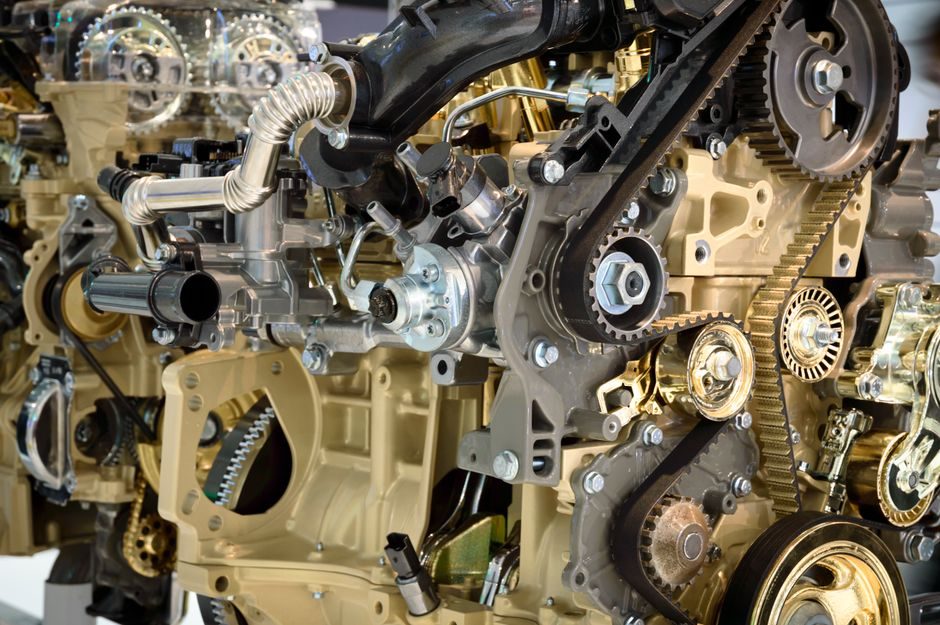
For automotive parts logistics, the spec window that actually matters is 40 kg per pallet up to 2,000 kg per pallet, with horizontal transport as the baseline and Z-type lifts as the vertical bridge — a sizing envelope that the PTS series belt conveyor from Modular Assembly Technology lists explicitly at 40 kg / 600 kg / 2,000 kg maximum load per pallet [S1].
Tier-1 supplier catalogues published on DirectIndustry's automotive conveyor belt index in mid-2026 list 16 manufacturers and 39 products, anchored on modular plastic belts (uni AMB, Habasit M2623), fabric belts (Forbo Siegling Amp Miser, RE 8/2 U0/BV5H MT) and metal endless belts (PureSteel) — a 2-to-1 ratio of modular/fabric to specialty constructions that mirrors the dominant automotive assembly-line practice [S2].
Payload Bands Drive Frame, Drive, and Belt Choice
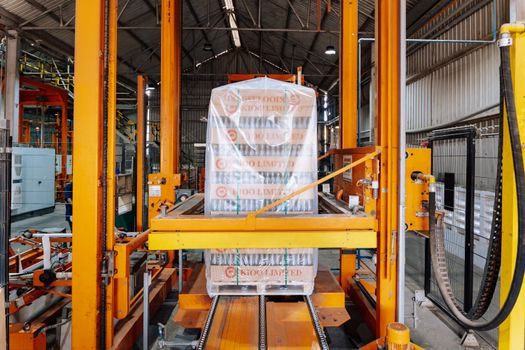
Payload is the first decision and it cascades into frame section, drive kW, and belt body. The PTS series from Modular Assembly Technology publishes three discrete load steps — 40 kg, 600 kg, and 2,000 kg per pallet (88.185 lb, 1,322.774 lb, 4,409.245 lb) — and pairs those steps with chain-driven horizontal transport modules, indicating that the same physical frame is not used across all three bands; each step implies a different chain pitch, drive roller diameter, and bearing class [S1].
For body-shop and powertrain logistics, the 2,000 kg band is the workhorse: engines, transmissions, and battery trays all clear the 600 kg ceiling. The 40 kg band covers small-parts totes, fastener trays, and kitting containers at the line side. Selecting outside these bands — say 150 kg — forces a custom frame, which is why tier-1 plant engineers stay on the published steps rather than asking for in-between capacities.
Belt Type Comparison: Modular Plastic, Fabric, and Metal
Modular plastic belts dominate automotive accumulation zones because they accept side flexing, dead-plate transfers, and small-pitch (≤1 in) sprocket drives without fraying. The Habasit M2623 Non Slip 1" lists 13.9 mm thickness with yellow side modules for visibility on plant floors, and the uni AMB series claims up to 180,000 N/m belt pull — the upper figure for high-load accumulation in body-shop skids [S2].
Fabric belts cover the long horizontal runs where energy cost dominates. Forbo Siegling's Amp Miser line spans 1.9 mm to 2.95 mm thickness and carries TÜV Rheinland validation for CO2 and energy savings; the same maker's RE 8/2 U0/BV5H MT PET belt at 2.2 mm targets parcel and telescopic conveyors with sealed tension members, which is the construction auto-parts DCs use for tote diversion to rack storage [S2].
Metal endless belts (PureSteel at 1–1,000 mm width, 0.025–1 mm thickness) sit outside the automotive mainstream; they show up only where oil, hot parts, or sharp stampings destroy fabric in weeks. For general tier-1 part handling, steel belts are over-specified and drive capex 3–5× above a comparable fabric line.
Selection Criteria by Application Zone
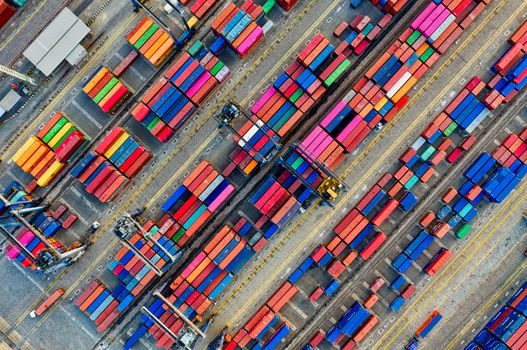
Three zones define the spec: assembly feed, inter-process transfer, and finished-vehicle dispatch. Assembly feed runs 5–30 m with 90° transfers, and the right answer is a chain-driven pallet conveyor at the 40 kg or 600 kg step (Modular Assembly Technology's B-series Z-type and S-Modular straight modules cover this geometry) [S1]. Inter-process transfer between stamping, body shop, and paint typically uses fabric belts at 1.9–2.95 mm with accumulation-grade covers; the Amp Miser profile fits here.
Finished-vehicle dispatch and battery-handling lines are converging on heavier modular belts, since the uni AMB 180,000 N/m pull rating covers the skewed loads a 2,000 kg pallet imposes during inclined lift. For each zone, the four decision criteria are payload (kg/pallet), belt thickness (mm), maximum belt pull (N/m), and turn radius (mm) — write those four numbers into the RFQ and you eliminate 80% of the catalogue noise.
Standards, Safety, and Layout Geometry
Conveyor safety in automotive plants is governed by EN 619 (continuous mechanical handling equipment — safety code) and ISO 5048 (continuous mechanical handling — belt conveyors with carrying idlers — calculation of operating power and tensile forces) at the equipment level, with plant-level lockout/tagout per ISO 14118 and electrical compliance per IEC 60204-1. The PTS series specifies horizontal transport as the canonical layout; Z-type lifts (B-series) are the add-on for crossing floor-level obstacles without civil works [S1].
Layout geometry is itself a spec: a 90° transfer with a 600 mm minimum inside radius works for 40 kg totes but forces a 1,200 mm radius for 2,000 kg pallets to keep chain wrap above the manufacturer-recommended sprocket tooth count. A belt tensioner is mandatory on any run longer than 8 m, because modular plastic belt elongation under load will otherwise walk the belt off the sprocket within weeks.
Limits, Failure Modes, and What Not to Specify

Modular plastic belts fail at the hinge pin when temperature exceeds the resin limit (typically 80–100 °C for acetal-based belts) — paint-shop exit conveyors running above that threshold need a heat-resistant belt or a fabric alternative. Fabric belts fail at the splice first; ERO Joint® mechanical fastening systems from the Gates catalogue are the field-repair answer when vulcanised splices are not available on-site [S2].
Do not specify a flat belt drive for a 2,000 kg pallet line; flat belts lose traction under oil mist and the take-up travel cannot compensate for the stretch a heavy-pallet line induces. Do not specify a metal endless belt for a clean kitting zone — particulate generation from the splice will trip the cleanliness audit. For high-torque, low-speed pallet lifting, a timing belt with steel tension members is the correct substitute for chain in noise-sensitive areas, with trade-off being lower peak load.
Integration with Buffering, Routing, and Pallet Systems
The PTS series description states its purpose plainly: "standard conveyor modules make it quick and easy to create simple as well as advanced layouts for routing, balancing, buffering and positioning of pallets" — meaning the conveyor is a building block, not a stand-alone product [S1]. Specifying without a buffering strategy leaves throughput on the floor; typical tier-1 plants run 10–15% of line length as powered accumulation zones with zero-pressure logic.
For a mesh belt section, the application case is small stamped parts that need airflow for cooling or wash; it does not replace modular plastic in a body-shop pallet loop. For accumulation between processes, a ribbed belt drive on the take-up shaft gives better grip in oily conditions than a smooth crowned pulley, at the cost of higher bearing wear.
Sourcing, Lead Time, and Vendor Landscape
Mid-2026 vendor listings put Habasit, Ammeraal Beltech, and Forbo Siegling at the top of the modular and fabric belt indexes, with BEUMER's BG Parcel Belt Conveyor covering the CEP (courier-express-parcel) side of the parts logistics chain at the distribution end [S3]. Lead time for a 50 m modular belt line with 90° transfers runs 8–12 weeks ex-works Europe; Chinese suppliers on DirectIndustry list comparable PTS-style modules with shorter lead times but require on-site commissioning [S1][S2].
For a working spec, write the four numbers (payload kg, belt thickness mm, max belt pull N/m, turn radius mm) into the RFQ, attach the layout drawing with floor-level obstacles marked, and require the vendor to nominate the belt conveyor frame section, drive kW, and take-up travel against the heaviest single pallet on the line. That document set will produce a like-for-like comparison across the 16 manufacturers in the automotive belt index and protect the spec through procurement.
Trackable signals for the next 90 days: EN 619 revision activity in CEN/TC 148 working groups, and any ISO 5048 update on tensile-force calculation; both feed into the next conveyor retrofit cycle at tier-1 plants. For readers mapping the wider MRO and intralogistics spec landscape, the Roller Chain Pros and Cons: Spec-Driven Selection Map for Industrial Drives piece covers the chain-drive alternative that competes with timing-belt pallet conveyors in heavy-pallet lines.