Pharmaceutical distribution belt conveyors are sized against three binding constraints: GMP/cleanroom classification (ISO 7 to GMP Class D), belt-surface material compatibility with active ingredients, and ATEX zoning for solvent or dust-handling lines — not raw throughput [S2].
The current supplier base listed on industrial directories shows 73 companies offering 187 pharmaceutical-conveyor variants [S3], with belt-driven and modular-belt architectures dominating the spec list. Typical maximum loads cluster between 50 kg and 100 kg, and belt speeds range from 0.13 m/s for tablet handling up to 2.6 m/s for parcel-style distribution merges [S1][S2][S3].
Cleanroom, GMP, and ATEX Cross-Map
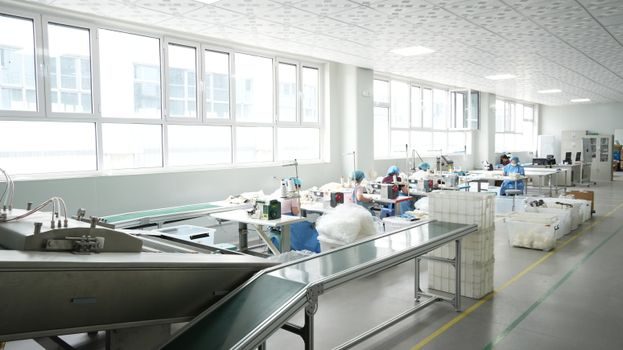
Cleanroom compatibility is non-negotiable: ERIMAC's CTM L modular belt conveyor is explicitly rated for ISO 7 cleanroom or GMP Class D use, with optional build to the ATEX directive for Zone 1/21 and Zone 2/22 explosive atmospheres — relevant where solvent vapours or fine powder dusts are present [S2]. The same spec sheet confirms compliance with Machinery Directive 2006/42/EC and CE conformity marking, which is the baseline for any European pharmaceutical installation [S2].
For dust-laden streams, an integrated belt conveyor design must be paired with a combustible-dust assessment before procurement, because pharmaceutical powders such as lactose, APIs, and excipients fall under the same dust-explosion regime as food powders. Selection logic for the upstream dust-collection train is laid out in Dust Collector System Types: Spec Bands, Filter Choices, and Application Map, and the CFM / combustibility trade-off is dissected in Dust Collector Selection: CFM, Filter Type, and Combustibility Map.
Belt Architecture: Flat vs Modular vs Timing
Three belt architectures dominate the pharmaceutical spec map. Flat endless belts (e.g. Maschinenbau Kitz GUF-I in stainless-steel construction, 75 kg max load, 40 m/min speed) suit horizontal bulk and boxed-product transfer on a single plane [S5]. Modular plastic-link belts (CTM L series) support curved and straight runs, height adjustment, and cleanroom disassembly, rated to 100 kg and 4,000-20,000 mm/min [S2]. Timing/toothed belts (TTPUC reinforced monolithic TPU) carry hygienic food-grade certification and zero-tension design, which matters where belt stretch would distort dosing [S1].
For e-commerce-style distribution floors, where merge-and-divert logic resembles pharma packaging lines, the broader Belt Conveyor Spec Map for E-commerce Fulfillment Floors translates directly. The Transnorm TS 1110 / TS 1200 / TS 1600-090 family appears on both sides of the fence, with 50-90 kg max load and 2.5-2.6 m/s speed, using a patented low-tension belt drive for long service life [S1][S3]. Qingdao Palet Machinery explicitly lists pharmaceutical production among its belt-conveyor application segments alongside parcel logistics, food processing, and e-commerce sorting, confirming the architecture overlap [S6].
Load, Speed, and Throughput Bands
The published spec envelope for pharmaceutical-conveyor belt drives is tight: maximum load sits at 25-100 kg for unit-handling conveyors, with the 50 kg Transnorm TS 1110 / TS 1200 / TS 2960 cluster as the most common figure [S1][S3]. Speed bands split into two regimes — gentle tablet/capsule handling at 0.13 m/s (e.g. item industrial applications' 2M8 NO-US PVC belt, 0.51-1.02 m length) and high-speed merge conveyors at 1.3-2.6 m/s [S1][S3].
For bulk-bag or tote transfer, the B-series flat-belt range covers 30-600 t/h bulk throughput over 6-40 m lengths, exceeding any unit-load pharmaceutical requirement and entering the heavy end of the spec map [S1]. Most distribution-floor builds sit well below this band; the relevant decision is whether a 50 kg / 2.5 m/s Transnorm-class unit suffices or a 100 kg / 20 m/min ERIMAC modular belt is needed for cleanroom duty. The mesh belt conveyor variant — exemplified by the Wire Belt Company Geradeausförderer, listed for food, pharmaceutical, and recycling service — is the preferred option where wash-down and drainage are required [S4].
Belting Material, Surface, and Tensioner Selection
Belting material drives hygiene class. Reinforced monolithic TPU is the current standard for hygienic food and pharma processing because it meets stringent hygiene requirements, runs zero-tension, and tolerates aggressive wash-down [S1]. PVC 2M8 (NO-US FDA-grade) is the lower-cost option for dry, non-cleanroom lines [S1]. Stainless-steel wire belting — the Geradeausförderer range — is specified where the line sees hot air, oil, or mechanical scraping in addition to wash chemistry [S4].
Tensioning method is a separate decision: a heavy loaded belt that runs at 2.6 m/s with 90 kg peak (TS 1600-090) requires a take-up that maintains constant belt length over thermal cycles, and the belt tensioner page covers the screw, gravity, and pneumatic take-up options used on these units. Pneumatic shock-absorbing transfers on the LT40 (7-16.8 kg, 20,000 mm/min) show the upper end of low-load precision diverting, where divert accuracy — not throughput — is the KPI [S1].
When NOT to Specify a Belt Conveyor
A belt conveyor is the wrong tool when the product is a free-flowing powder in bulk — vibratory or screw conveyors are the established alternative for tablets, capsules, and APIs in non-packaged form. Linear vibratory conveyors are listed in the pharmaceutical-conveyor index for moving tablets and capsules horizontally, with standard lengths of 800, 1000, and 1200 mm, easy disassembly, and deduster/polisher integration [S3]. CX-series trough screw conveyors are explicitly rated for pharmaceutical service, and TX/TXF tubular screw conveyors carry EC-regulation traceability certification [S3].
Chain conveyors (X45 series, 30-125 kg, 60 m/min) suit products up to 8 kg across many shapes and are the right call when accumulation and side-flexing are needed [S3]. Pneumatic dilute-phase conveying (PPV series) is the route for free-flowing powder transfer between vessels [S3]. Specification of any conveyor variant for solvent or dust-handling duty must be cross-checked against the explosion-proof distribution and power distribution box requirements for the drive and control cubicle, and against distribution cabinet layout for VFD integration.
Selection Criteria Comparison Table
Four architectures compared against the four decision criteria that drive a pharmaceutical distribution spec: [S3]
Flat endless belt (GUF-I stainless): 75 kg load, 40 m/min, hygienic but not cleanroom-rated by default, low cost, suits dry boxed-product transfer [S5]. Modular plastic-link belt (CTM L): 100 kg load, 4-20 m/min, ISO 7 / GMP Class D cleanroom rated, ATEX 1/21 and 2/22 build option, curved/straight flexibility, mid-to-high cost [S2]. Timing/toothed belt (TTPUC): low load, hygienic TPU, zero-tension for dosing accuracy, no cleanroom statement on the public spec [S1]. Wire mesh belt (Geradeausförderer): high-temperature and wash-down tolerant, listed for food/pharma/recycling, drainage-friendly, mid cost [S4].
Sourcing, Standards, and Trackable Signals
Procurement should require the following documentation from every short-listed vendor: EC Declaration of Conformity under Machinery Directive 2006/42/EC, ATEX certification for Zone 1/21 or 2/22 if the line carries solvent vapour or combustible dust, GMP/cleanroom build statement (ISO 7 or Class D minimum), and material traceability per EU food/pharma contact regulations [S2]. DirectIndustry currently indexes 73 vendors across 187 pharmaceutical-conveyor product listings — a useful shortlist starting point [S3] — and 30 belt-driven conveyor vendors across 36 products for cross-checking [S1].
Two trackable signals to monitor: (1) Qingdao Palet Machinery has added pharmaceutical production to its published belt-conveyor application list as of mid-2026, signalling continued Chinese OEM entry into the regulated-pharma conveyor segment [S6]; (2) ERIMAC's CTM L is the most explicit cleanroom + ATEX dual-rated modular-belt offering in the public spec set, making it a useful baseline reference when benchmarking competing quotes [S2]. For an adjacent read on the upstream packaging-line valving that typically sits on the same conveyor, see Specifying Electric Ball Valves for Pharmaceutical Duty and Electric Ball Valve Sizing and Selection: 2026 Field Guide.