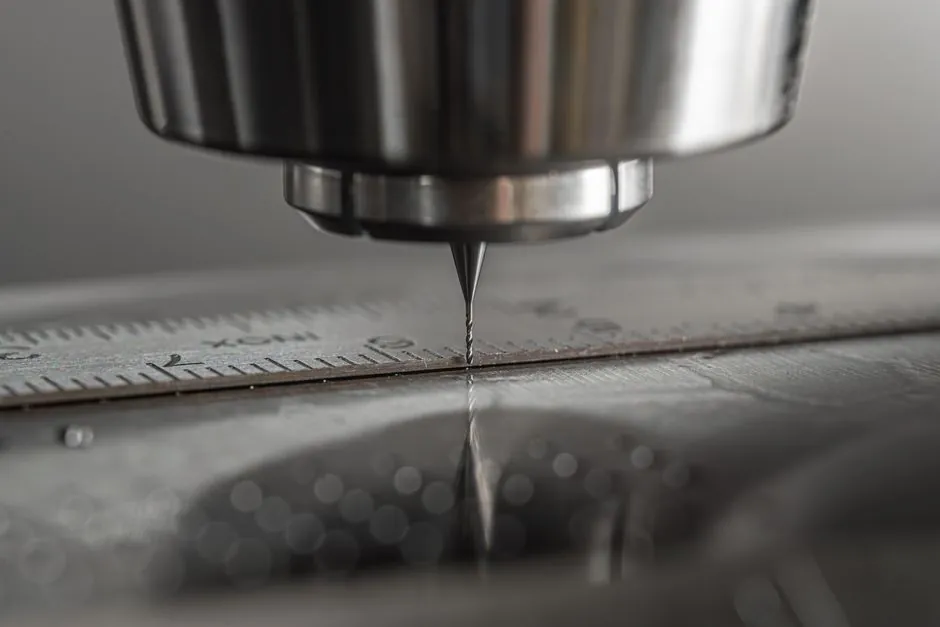
A ball-screw module is listed with ±0.01 mm repeatability, while a fully closed belt module is listed with 0.05 mm repeatability, a maximum speed of 2,000 mm/s, and suitability for clean-room applications [S5].
This comparison covers positioning performance, travel speed, payload, stroke, maintenance, and cost for single-axis and Cartesian automation using a timing belt or precision ball screw [S4].
Decision Criteria for Linear Module Selection
The decisive variables are positioning accuracy, repeatability, maximum speed, stroke, payload, duty cycle, mounting orientation, environment, and maintenance requirement [S4]. Belt drives suit applications that need high speed, long travel, short cycle times, and cost-sensitive automation where extreme positioning precision is not required [S4].
A ball screw converts servo or stepper rotation through a ball nut and recirculating steel balls, while a belt module transfers rotation through a timing belt and pulleys [S4]. The linear module housing, guide rails, drive, motor, and controls must be evaluated as a system rather than by drive type alone [S4][S5].
For compact or vertically mounted axes, consider whether the drive requires a brake, because payload orientation changes the safety and holding requirements [S4]. For an XY or XYZ gantry, repeatability of every axis contributes to the machine's final Cartesian positioning error, so a faster axis does not offset a poorly resolved axis in the other direction [S5].
Speed, Stroke, and Cycle-Time Comparison
One closed belt module has a rated maximum speed of 2,000 mm/s, while one supplier's belt-driven linear-module range extends to 5 m/s and 6 m in module length, with longer configurations available [S5].
These figures are product-specific limits, not universal technology limits. They show why belt-driven modules are often selected for transfer, packaging, sorting, pick-and-place, and long-stroke gantry work, where rapid travel and long travel can reduce cycle time [S2][S4]. Ball screw modules are usually chosen for stable low-speed motion, controlled positioning, inspection, dispensing, laboratory automation, and machine-tool functions [S4].
The speed decision must include acceleration and deceleration, not peak velocity alone. Long belt-driven axes can be dynamically less rigid, while a ball screw supports stronger thrust transmission and stable servo-controlled movement [S4]. For reciprocating short strokes, however, a high rated velocity may have little practical value if acceleration, settling, or load capacity governs the cycle.
Accuracy and Repeatability: The Hardware Trade-Off
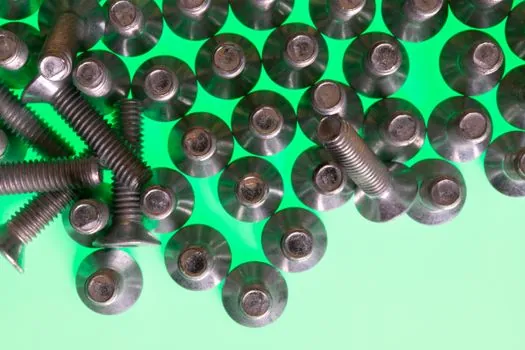
One supplier lists ±0.01 mm repeatability for a ball-screw module [S5]. A fully closed belt module with a steel strip cover is rated for 0.05 mm repeatability [S5].
Repeatability measures the consistency of return to a commanded position; positioning accuracy measures the difference between the achieved and commanded position. A drive can repeat one position closely while accumulating pitch or belt-related positioning error, so both specifications should be requested from the supplier [S4].
The ball screw offers higher rigidity, strong thrust capability, and the option of preload to reduce backlash [S4]. The belt remains an elastic transmission component, and stretch, tension variation, load change, and wear can affect positioning performance over time [S4].
A belt module is not automatically inaccurate, and a ball screw is not automatically accurate. Grade, preload, assembly, guide alignment, control tuning, and the selected module determine the result. If the process can accept roughly ±0.05 mm repeatability and does not require screw-like rigidity, the belt option may meet the requirement at lower cost [S1][S5].
Load, Life, and Maintenance Constraints
Published belt-module capacities include 80 kg for a fully closed model and up to 150 kg across a supplier's broader linear-module range [S5]. For one ball-screw module family, the listed horizontal load range is 10 to 110 kg [S5].
These are catalogue maxima and operating ranges, not a rule that a ball screw always carries more load. Axis orientation, frame size, support arrangement, cantilever moment, duty cycle, and the manufacturer's allowable load affect selection [S4]. Belt drives are generally positioned as lower-load solutions, while ball screws are selected where axial rigidity and thrust transmission are more important [S2][S4].
Maintenance requirements differ materially. Belt tension must remain controlled, and elastic wear affects transmission behavior [S4]. A ball screw requires correct lubrication, preload, sealing, and contamination control, with ball screw selection for CNC machine tool feed axes providing a deeper guide to duty-related selection. In chip-producing or dirty environments, the cover and sealing arrangement can be more decisive than the nominal drive specification.
Cost, Integration Effort, and Application Fit
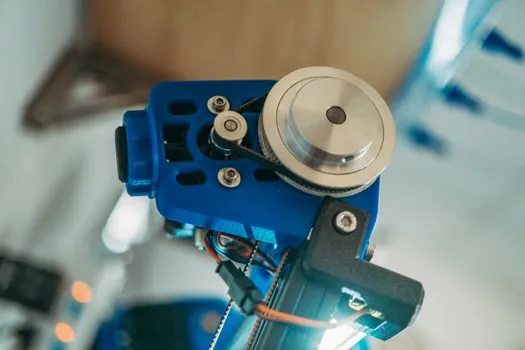
Belt-driven modules generally have a lower initial cost, particularly for long strokes, while ball screw modules cost more but may provide better value when accuracy and rigidity are essential [S4]. The same architecture can be offered in belt or ball screw versions, with stroke, payload, mounting hardware, motor, driver, cable chain, and limit switch selected around the application [S5].
Compare the options against four criteria before releasing a design. On speed and stroke, the belt-driven choice is the stronger candidate, with a cited range extending to 5 m/s and long modules [S5]. On repeatability and rigidity, the ball screw choice is stronger, with ±0.01 mm examples and preload options [S4][S5]. On initial cost, the belt-driven choice is generally lower for long travels [S4]. On integration effort, both use a servo or stepper motor and linear guides, but the screw axis requires load, preload, lubrication, and contamination planning [S4].
The ball screw linear actuator is the better fit for precision assembly, inspection, dispensing, laboratory automation, and low-to-medium-speed servo axes. The belt-driven module is the better fit for packaging, sorting, material transfer, long-stroke gantries, and pick-and-place systems where speed and cost outweigh sub-0.05 mm positioning demands [S2][S4].
Specification Checklist Before Purchase
Specify peak speed, acceleration, moving mass, payload, stroke, duty cycle, orientation, accuracy, repeatability, and the required service interval before selecting the drive [S4]. For the ball screw axis, request screw accuracy class, preload, allowable speed, load rating, and lubrication requirements. For the belt axis, request speed rating, tension procedure, belt and pulley specification, and permissible side load [S4].
Do not compare catalogue peak speed alone. Confirm the speed at the specified payload and stroke, then evaluate settling time, servo resolution, belt or screw wear, and the environmental enclosure. For long-stroke systems, ask for positional error across the full travel rather than repeatability at one point [S4].
Track the final module model, maximum speed, rated load, horizontal or vertical mounting, repeatability, stroke, and environmental condition in the purchase specification. These fields provide the cleanest verification that a selected axis matches the actual cycle rather than a favourable catalogue configuration.