
Correct belt tensioner selection starts with the belt family: a 6-rib PK serpentine drive on a passenger engine and a 1200 mm wide flat belt on a 50 m conveyor use entirely different hardware, even though the part is called the same. The RUVILLE 55093 v-ribbed belt repair kit, for example, ships with a 70 mm OD hydraulic tensioner pulley and 26 mm width for BMW applications, while the AUTLOG RT1248 tensioner lever at 0.681 kg services MERCEDES-BENZ C-, E-, S-, G-CLASS and SPRINTER variants through 2006/05 [S2][S5].
Conveyor and engine drives share three load-bearing data points: pulley outside diameter, face width, and the operating mode (mechanical spring, hydraulic, or dead-weight). Get any one wrong and the belt walks, slips, or the tensioner bearing fails inside 20 000 km. The rest of this guide walks through the four decisions an engineer or buyer has to lock before issuing a PO.
Step 1 — Identify the belt family and span geometry
Engine accessory drives use either a multi-rib V-ribbed belt (PK, PJ profiles) or a timing belt; both are paired with an automatic tensioner that maintains a closed-loop force as the belt stretches [S2][S5]. Conveyor and industrial drives split into flat belts with snub pulleys, where a take-up winch or screw jack is typical, and V-belts or ribbed belts, where automatic spring or hydraulic tensioners dominate. For serpentine drives the rule is constant: specify a tensioner whose pulley OD is within ±2 mm of the OE reference (FORD 4118964 catalog data) and whose face width equals the belt count × rib pitch [S6].
Industrial belt-conveyor spans longer than ~20 m usually demand a gravity take-up or a screw take-up, not a spring tensioner, because the stored elastic energy in a long belt exceeds what a small spring can absorb without bottoming out. For short conveyor runs under 6 m with a flat belt and crowned pulleys, a screw-adjusted manual tensioner is the lowest-cost option and easiest to inspect.
Step 2 — Match tensioner type to duty cycle
Three duty classes are defined in the catalog data: mechanical spring (light, low cost, used on small-displacement engines), hydraulic automatic (mid-to-high load, maintains constant tension over belt stretch), and dead-weight / screw take-up (long-span conveyors, heavy impulse loads) [S1][S2][S5]. The RUVILLE 55093 / 55155 / 56373 / 56374 / 57507 series are hydraulic v-ribbed belt tensioner repair kits covering BMW, MERCEDES-BENZ, AUDI, SKODA, VW, and DAEWOO / SSANGYONG platforms, with the 56374 variant adding a tensioner-pulley damper for reduced belt resonance [S5].
On conveyor drives a spring-loaded automatic tensioner (commonly a stud-mounted pretensioner) suits short, lightly loaded belts with frequent starts; for heavy aggregate or mining conveyors the spec is a dead-weight take-up tower sized to 1.0–1.5× the calculated steady-state belt tension. A hydraulic tensioner is rarely used on industrial conveyors because the reservoir and seal maintenance burden outweighs the precision benefit at conveyor scale.
Step 3 — Lock the physical dimensions and OE reference
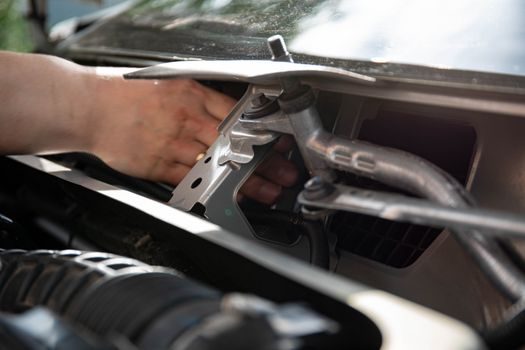
Catalog data sheets carry three numbers that must match the existing bracket: outside diameter, face width, and bolt-pattern / stud thread. The RUVILLE 55093 kit is published at 70 mm OD × 26 mm width with hydraulic operation; the FORD 4118964 idler pulley ships as a tensioner unit in the 驱动带及装置 (drive belt and device) catalog with make-specific dimensions [S5][S6]. Cross-check the OEM reference before ordering: AUTLOG RT1248 replaces MERCEDES-BENZ 6062000073 across the W202, W124, W210, W140, W463 and SPRINTER 901/902/903/904 series — substituting a different part number risks an unmatched bolt circle or arm length [S2].
For engine serpentine drives always confirm the tensioner type listed in the OE catalog as "tensioner pulley," "tensioner lever," or "tensioner assembly." A Gates hydraulic timing-belt tensioner assembly for 1998–2003 Toyota Sienna V6 sells in the US$71.24 range per unit and is shipped as a complete assembly, not a service kit — a buyer who orders the pulley only will not get the hydraulic damper [S3].
Step 4 — Cross-reference the alternatives and price bands
The aftermarket offers parallel listings from AUTLOG, TREVI AUTOMOTIVE, AUTEX, SPIDAN, AUTOKIT, WILMINK GROUP, BTA, QUINTON HAZELL, and JAPKO for the MERCEDES-BENZ RT1248 application, with part numbers TA1079, 654488, 66122, 03.81431, 654571, WG1253485, TA2031, E2K6135BTA, WG1253297, 66106, QTA877, and 128310 covering the same fitment [S2]. For the 1989–1997 MERCURY COUGAR V6-3.8L a Gates belt tensioner assembly is listed at US$71.96, giving a current US$70–75 band for genuine hydraulic tensioner assemblies on legacy V6 engines [S4].
Use this band as a sanity check: anything below US$25 for a hydraulic tensioner assembly is almost certainly a pulley-only or a non-OEM part without the damper cartridge. Industrial buyers sourcing ribbed belts and tensioners together should request the full kit part number, not separate components, to avoid a mismatch between belt profile and tensioner pulley groove. The wider 2026 sourcing map for V-ribbed belt suppliers and equivalents is laid out in this V-ribbed belt supplier roundup.
Step 5 — Selection criteria for the four main options
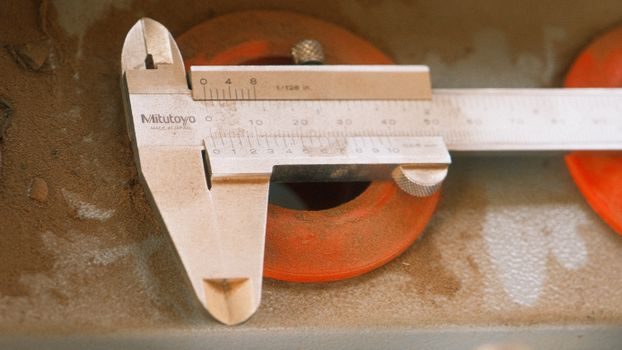
Comparing the realistic options against four decision criteria:
• Mechanical spring tensioner — cost US$5–20 per unit, fitment limited to small engines with belt wrap under 180°, no damping, shortest service life (~30 000 km). Suits motorcycles, small compressors, low-load accessory drives.
• Hydraulic automatic tensioner — cost US$60–90 per assembly, fits mid-to-large engines with multi-rib serpentine drives, maintains constant tension over belt stretch, integrates damper for resonance control (RUVILLE 56374 with damper) [S3][S4][S5]. Suits passenger car and light commercial engines.
• Manual screw / spring take-up — cost US$30–80 for stud-mount units, fits industrial V-belt and flat belt drives, requires periodic re-tensioning, no automatic compensation. Suits short conveyor and pump drives under 6 m span.
• Dead-weight / gravity take-up — cost US$500–5000 installed (tower + weight), fits long-span conveyors over 20 m, fully automatic, handles shock loads. Suits mining, aggregate, and bulk-material conveyors. See a belt conveyor reference for the long-span geometry rules.
Who should NOT pick the hydraulic tensioner
Hydraulic tensioners are the wrong choice for three cases: (1) drives with extreme temperature swings above 130 °C at the tensioner pulley, where the hydraulic seal will degrade and leak; (2) applications with a high dynamic load spectrum and shock impulses above 5× nominal belt tension, where the damper bottoms out; and (3) maintenance-restricted installations where the hydraulic cartridge cannot be replaced without removing the assembly — in those cases a mechanical spring tensioner is serviceable in the field with basic hand tools. Industrial buyers comparing belt conveyor take-up options to engine tensioners should not transfer hydraulic-tensioner assumptions onto a conveyor: the scale of stored energy is different by two orders of magnitude. [S1]
For most passenger-car and light-truck serpentine drives, however, a hydraulic automatic tensioner is the right default, and the failure mode to design against is seal leakage and oil loss rather than mechanical wear of the pulley bearing. Always replace the tensioner and belt as a set, never separately, when the belt has covered more than 80 % of its published life.
Verification, standards, and sourcing signals
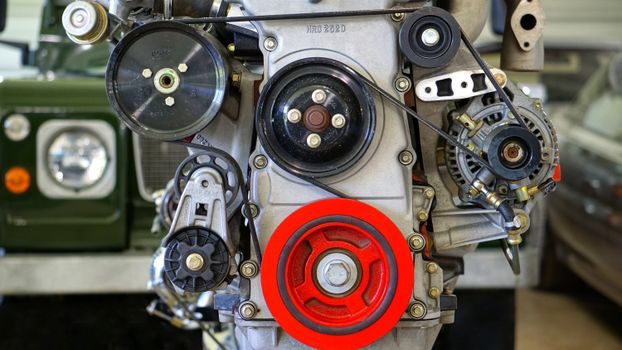
Tensioner conformance is typically validated against ISO 9001 supplier quality systems and the individual OEM part-number cross-reference; for industrial drives, ISO 5048 / ISO 15236 cover flat belt and steel-cord conveyor belt geometry, and ISO 4183 / ISO 5293 cover V-belt and ribbed belt pulley geometry. Engine-side tensioners are validated against each automaker's internal durability cycle, which generally runs 200 000 to 300 000 km equivalent for passenger cars. The CENS.com supplier database lists belt-tensioner bearings as a recognized export category from Taiwan, and the niparts / jarparts catalogs carry the OE references and dimensions needed for cross-validation [S1][S2][S5][S6].
One trackable signal for the rest of 2026: watch the OE-reference refresh on RUVILLE and Gates kits for 2024+ MY passenger vehicles, and confirm the belt tensioner availability for 48 V mild-hybrid accessory drives, which add a second belt load path to the tensioner pulley and may require a higher-capacity damper cartridge than the existing 56374 / 57507 series. A second signal: confirm that any imported tensioner kit arrives with the damper cartridge matched to the belt profile — the 26 mm width figure on the 55093 kit is not interchangeable with a 32 mm width unit even when the OD is the same [S5].