
Battery energy storage system (BESS) manufacturing equipment covers the full production stack from electrode coating and cell stacking to module assembly, BMS integration, and the UL-listed inverter/PCS that ties the finished cabinet to the grid, with sizing typically expressed in kW power and kWh energy [S2][S3].
Reference product lines range from small residential units (7 kW / 13.8 kWh, 8-hour duration, Li-ion) up to commercial cabinets rated 60–150 kVA AC at 100–500 kWh, with larger modular nodes scaling to 633–2280 kWh at the industrial tier [S3][S6][S8].
Core technical metrics that drive a BESS spec sheet
The eight primary BESS metrics every procurement spec must call out are power capacity, power capability, C-rate, energy (conversion) efficiency, round-trip efficiency, service life, self-discharge rate, and operating temperature range, per the standard BESS technical-specification framework [S4].
C-rate defines charge/discharge current relative to capacity: a 1C system drains its rated kWh in one hour, a 0.5C system in two hours, and a 0.25C system in four hours, which is what determines whether a product is a power asset or an energy asset [S4]. Round-trip efficiency for commercial Li-ion BESS typically runs in the mid-80s to low-90s percent band, and operating temperature range is constrained by the cell chemistry, generally requiring controlled ambient conditions around 15–30 °C for optimal calendar life [S4].
Equipment line breakdown: what a BESS factory actually builds
A complete BESS manufacturing line comprises electrode coating machines, calendaring rolls, cell stacking or winding units, electrolyte filling, formation cycling cabinets, module pack assembly, BMS PCBA, rack integration, and the power conversion system (PCS) station [S2].
Coating and calendaring determine electrode loading uniformity in g/m² and porosity; stacking/winding defines cell format (prismatic, cylindrical, or pouch); formation cycling is where cells receive initial SEI formation through controlled charge/discharge cycles, often the longest single step in days; and the PCS station must carry a UL 1741 listing for grid interconnection [S2]. For context on the broader spec-driven sourcing logic that ties BESS line build-out to inverter OEM/ODM choices, see Power grid OEM vs ODM manufacturing: a spec-driven selection map. Background on adjacent power-grid equipment standards that share the same IEC/IEEE backbone appears in Power Grid Industry 4.0 Adoption: Standards, Sensing Stack, and Procurement Spec Map.
Standards, certifications, and codes that gate the build

Every grid-tied BESS shipped into a US project must satisfy UL 9540 for the system, UL 9540A for thermal-runaway fire propagation test data, UL 1741 for the inverter/charge controller, and IEEE 1547 for interconnection, per the US DOE BESS technical specification template [S2].
At the cell level, lithium-ion cells and modules should carry UL 1973 recognition, while transport must follow UN 38.3 for shipping classification. For a project specification document such as Section 48 17 13, the specifier must also reference applicable state and local codes, plus the local fire marshal sign-off for siting and suppression [S1][S2]. The DER-side fundamentals relevant to inverter and EMS testing map onto the same energy meter reference class used across industrial metering, where bidirectional kWh metering and revenue-grade accuracy (typically 0.2% or 0.5% class) apply.
Sizing examples: residential vs commercial vs industrial
Residential BESS in the 7 kW / 13.8 kWh class targets 8-hour backup durations for solar self-consumption and demand response, and is rarely a net financial gain in the short term without time-of-use arbitrage [S8].
Commercial cabinets in the EnerShed family step through 60 / 90 / 120 / 150 kVA AC output at 100–500 kWh, with rated AC currents of 72.5 / 108.8 / 145.0 / 181.0 A at unity power factor [S6]. Industrial modular energy nodes scale further to 211 / 422 / 633 / 1056 / 1520 / 2280 kWh, with paralleled units reaching multi-MWh per site for data centers, healthcare, water/wastewater, and remote industrial loads [S3]. For the storage-side hardware that physically houses these kWh blocks, storage rack and storage cage selections dictate aisle layout, seismic bracing, and forklift-clearance geometry in a finished BESS facility.
Use cases and where each tier fits
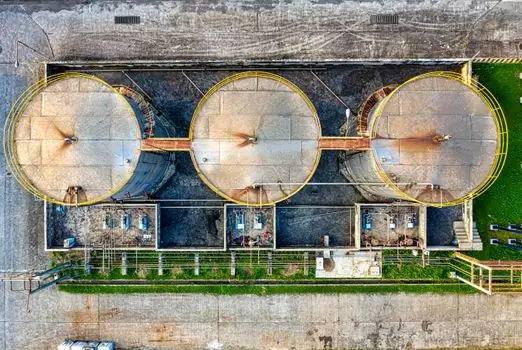
Off-grid and resiliency use cases (remote communities, mining, oil and gas, island power) typically demand the 422–2280 kWh nodes because diesel-displacement ROI depends on long-duration cycling rather than peak shaving [S3].
Manufacturing/industrial sites, EV charging infrastructure, and commercial properties commonly run the 211–633 kWh class sized to peak demand charges. Universities, data centers, healthcare, and water/wastewater treatment plants fall in the upper commercial / lower industrial band where ride-through and power-quality ride-through matter as much as raw kWh [S3]. Smaller commercial and light-industrial use cases sit on the 60–150 kVA EnerShed-style platform [S6].
Limitations, failure modes, and what to watch in a spec
Capacity labels on BESS datasheets are nominal and may not equal usable energy: depth-of-discharge (DoD) limits reduce the deliverable kWh from the nameplate rating, and round-trip efficiency losses are applied on top of that DoD, so the AC-side useful energy per cycle is less than the nameplate kWh [S4][S5].
Thermal runaway remains the dominant failure mode at the cell level, which is why UL 9540A test data is non-negotiable for cell-to-rack-to-unit-to-installation fire-propagation claims, and why the spec template mandates thermal management design, arc-flash studies, and severe-weather clauses on a per-site basis [S2]. Self-discharge rates, calendar life versus cycle life, and warranty terms expressed in years or MWh throughput (rather than nominal cycles) should also be checked against the use-case duty profile before any line is qualified [S2][S4].
Selection criteria checklist for a BESS line or project
A spec-first BESS equipment decision sorts on seven axes: nameplate kW and kWh, C-rate and duration, round-trip efficiency, UL 9540 + UL 9540A + UL 1741 + IEEE 1547 compliance, operating temperature range, enclosure/cooling type, and EMS communications protocol [S2][S4].
For example, an EnerShed 150 at 150 kVA and 500 kWh delivers a usable C-rate near 0.3C at full DoD, a ride-through profile suitable for a commercial demand-charge application, and operates within the typical controlled-ambient band [S6]. A modular 2280 kWh industrial node at the same chemistry instead targets 0.25–0.5C long-duration duty for diesel-displacement or microgrid service, and the spec must reconcile chemistry, containerization, and fire-suppression integration with the local AHJ before the line is released for build [S3].
Track two signals going forward: DOE/FERC updates to BESS interconnection guidance that flow back into IEEE 1547 and UL 1741 harmonization, and cell-level roadmap shifts (LFP versus NMC share) that change the thermal-management budget on every new BESS cabinet spec.