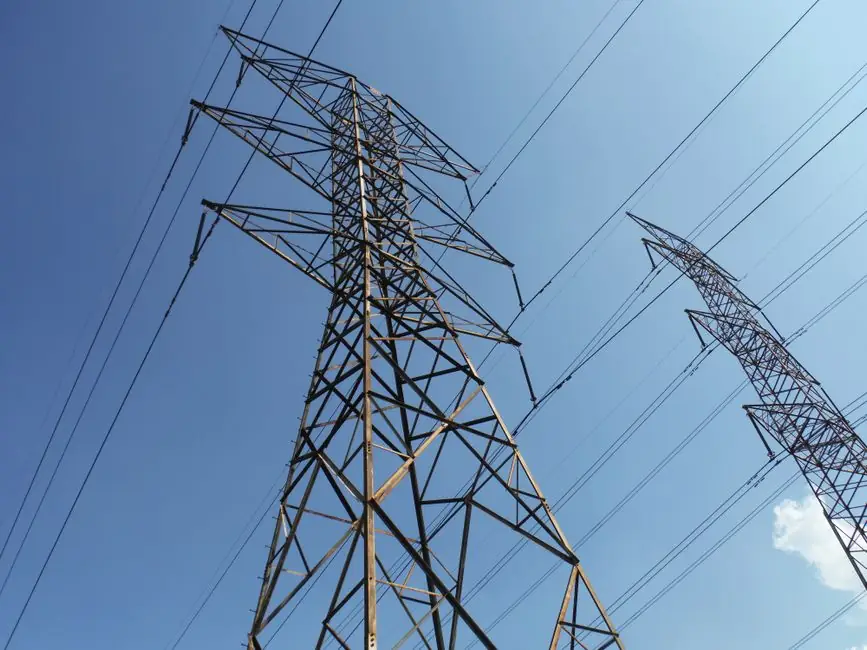
For grid hardware, the OEM and ODM split is decided at the component class level, not the project level: a single substation build can carry OEM power transformers and power cables alongside ODM-built power meters and distribution panels, because the constraints differ by SKU [S1][S6].
OEM manufacturing executes the utility's or EPC's own design, specifications, and type-test dossier, and the buyer retains IP and approval drawings; ODM manufacturing supplies a manufacturer-owned reference design that the grid buyer brands and re-certifies, with the ODM holding the underlying design IP [S1][S3][S7]. The two models are routinely used together on the same grid site, with ODM handling standardized skids and OEM handling the differentiated, fault-current-critical equipment [S2].
Definition and scope: where the line sits in grid hardware
Under standard sourcing definitions, an OEM manufactures to the buyer's specifications and the buyer controls drawings, BOM, and IP; an ODM supplies a manufacturer-owned base design that the buyer can rebrand and lightly customize without changing tooling, with the ODM retaining the original design IP [S1][S7][S8]. On grid projects, OEM scope typically covers power transformers, HV/EHV switchgear, protection relays, and power cables, all of which carry type-test certificates tied to a specific design envelope.
ODM scope in the same projects typically covers standardized low-voltage distribution panels, busbar trunking up to a fixed current rating, power meter enclosures, and modular skid frames, where the ODM's reference platform already has the type test and the grid buyer only adds branding, terminal layout, and communication protocol mappings [S1][S3]. In the data-center-adjacent grid segment, the same ODM/OEM split is documented: ODMs such as Foxconn, Quanta, Wiwynn, and Inventec handle design and prototyping, while OEMs such as Dell, HPE, Cisco, and IBM handle branding, configuration, and channel support [S2].
Selection criteria: cost, NRE, cycle time, and certification effort
OEM projects carry higher upfront investment because the buyer funds custom design, prototype tooling, and the type-test campaign, while ODM projects shift those costs onto the manufacturer and expose the buyer to lower minimum order quantities and a shorter product development cycle [S1][S3][S4]. On grid hardware, the cycle-time delta is typically measured in months, because OEM HV equipment has to clear IEC 62271 series type tests on the buyer's specific ratings, whereas ODM LV skids often inherit the ODM's existing IEC 61439 series certificate and only require a delta test [S2][S6].
IP and design-control are the second axis: the OEM client retains all design rights and can change the BOM or relay logic across the equipment life, while the ODM client typically only gets branding changes, color, label, and connector layout, and any deeper modification that touches tooling is rejected by the ODM [S1][S5][S7]. On power trowel-class sub-products this is rarely a problem, but on power transformer class equipment it is decisive, because utilities must own the short-circuit, impedance, and loss dossier to extend type-test validity.
Who OEM is for, and who it is not for

OEM is the right model for transmission utilities, large IPPs, and EPCs that need custom MVA ratings, specific impedance percentages, custom protection relay logic, or HV cable constructions qualified to a project specification; it is also the right model where the buyer must hold the design IP for the 30-40 year asset life, including de-rating, repurposing, and post-fault forensic analysis [S3][S6][S8]. OEM is not the right model for commodity MV/LV switchgear assemblies, metering skids, or auxiliary distribution panels where the buyer's only real requirement is a panel-builder nameplate.
ODM is the right model for distribution utilities, microgrid integrators, and data-center build-outs that need MV/LV switchgear, power meter cubicles, and standardized auxiliary panels on short lead times and with the ODM's existing IEC 61439 or IEC 62053 type test inherited [S2][S5][S7]. ODM is not the right model where the buyer's grid code mandates a specific relay vendor, a specific CT/VT ratio, or a specific short-circuit duty that the ODM's base platform does not already cover; in that case the "light customization" the ODM allows, label, color, and minor connector moves, is not enough [S1][S5].
Side-by-side: OEM vs ODM on the criteria that decide grid procurement
On design ownership, OEM gives the buyer full IP and drawing control while ODM leaves IP with the manufacturer and limits the buyer to branding and minor external changes [S1][S5][S7]. On NRE and tooling, OEM puts the cost on the buyer as part of the unit price or as a separate tooling amortisation, while ODM amortises the cost across its platform customers and bills a lower unit price plus lower MOQ [S3][S4].
On cycle time, OEM projects typically run 9-18 months for HV equipment because type tests are project-specific, while ODM projects run 4-10 weeks for catalog LV/MV skids because the platform certificate is reused [S1][S2][S6]. On certification effort, OEM requires the buyer to commission and own the IEC 62271-200, IEC 60076, or IEC 60502 test dossier, while ODM requires the buyer to file a delta test plus a project-specific coordination study, with the platform's base certificate carried over [S2][S6]. On supply-chain control, OEM lets the buyer dictate the BOM down to the contactor and relay firmware, while ODM fixes the BOM at the platform level and only opens approved-vendor substitution on commodity passive parts.
Use cases by grid component class
For power transformer procurement above 10 MVA or any unit with non-standard impedance, OEM is the only defensible model, because loss capitalization, sound level, and short-circuit behavior must be tied to a buyer-owned design dossier that survives transformer refurbishment cycles spanning 25-30 years [S6][S8]. For HV cable on EHV routes, OEM is also standard, since conductor size, screen construction, and sheath material are project-specific and feed directly into the ampacity and earth-fault calculation the utility must sign off [S6].
For LV switchgear assemblies, motor control centers, and power meter panels, ODM is dominant, because the IEC 61439 platform certificate plus the buyer's wiring diagram and CT/VT choice is sufficient for grid code compliance, and the cycle-time savings of weeks instead of months usually dominate the procurement decision [S1][S2][S5]. A related engineering decision, the sensing stack for OEM control cabinets, is detailed in a parallel spec map that lines ultrasonic, current, and voltage sensing against cabinet standards. ultrasonic sensor RFQ spec map for OEM control cabinets For modular protection-and-control panels, ODM is increasingly paired with the ODM's pre-engineered communication gateway, which maps IEC 61850 GOOSE messages onto a buyer-selected SCADA list and removes a class of integration work that pure OEM builds would have absorbed.
Limitations, failure modes, and where the model breaks
ODM's main failure mode is silent design drift: the ODM can change a contactor series, a relay firmware, or a busbar plating process between orders without notifying the buyer, which on a 30-year asset is a hidden obsolescence risk that does not show up until the first major maintenance event [S1][S5][S7]. The mitigation, contractual design-freeze clauses with end-of-life and last-time-buy rights, is standard in OEM contracts and is often missing in ODM purchase orders, which is why ODM works for 5-15 year asset classes and OEM is required for 30-40 year classes [S6][S8].
OEM's main failure mode is the under-specification of NRE: the buyer pays for a custom design but later amortises that cost over too few units, raising the effective unit price by 20-40% compared to an equivalent ODM platform, and locking the buyer into a single-source relationship for the equipment life [S3][S4]. The mitigation is to share the OEM design across multiple substations or across a multi-year framework agreement so the per-unit NRE falls into a defensible range, and to keep an ODM reference platform qualified as a fallback for non-critical bays [S2][S6]. For grid projects that sit at the edge of the ODM envelope, such as MV switchgear with non-standard short-circuit duty, a hybrid path is common: an ODM does the platform, an OEM does the type-test delta and holds the final certificate, and the buyer gets the cycle time of ODM with the certification integrity of OEM [S2].
Sourcing and standards: what to put in the contract

For both OEM and ODM, the contract must define who owns the design IP, who owns the tooling, who is liable for type-test validity, and what the change-control procedure is across the asset life, because the default legal position in most sourcing relationships is that the manufacturer keeps the IP and the tooling unless the contract says otherwise [S1][S5][S8]. On grid hardware, the relevant standards are IEC 62271-200 for switchgear, IEC 60076 for transformers, IEC 61439 for LV assemblies, IEC 60502 for HV cables, and IEC 62053 for metering; the contract should bind the ODM or OEM to the specific edition the utility's grid code references, not to a generic "latest edition" clause [S2][S6].
The procurement path that has held up in 2025-2026 grid builds is to qualify an ODM platform for standardized LV/MV assemblies and metering on a multi-year framework, keep an OEM qualification open for any HV, EHV, or non-standard-impedance equipment, and run a parallel watch on the sensing and Industry 4.0 stack so that the ODM gateway contract does not silently pull the asset off the utility's IEC 61850 roadmap. The next trackable signal is whether major ODMs begin offering buyer-funded firmware escrow and design-freeze clauses as a standard line item in ODM MSAs, which would push the OEM/ODM boundary one component class further toward ODM on MV switchgear and one step further away from ODM on long-life HV assets.