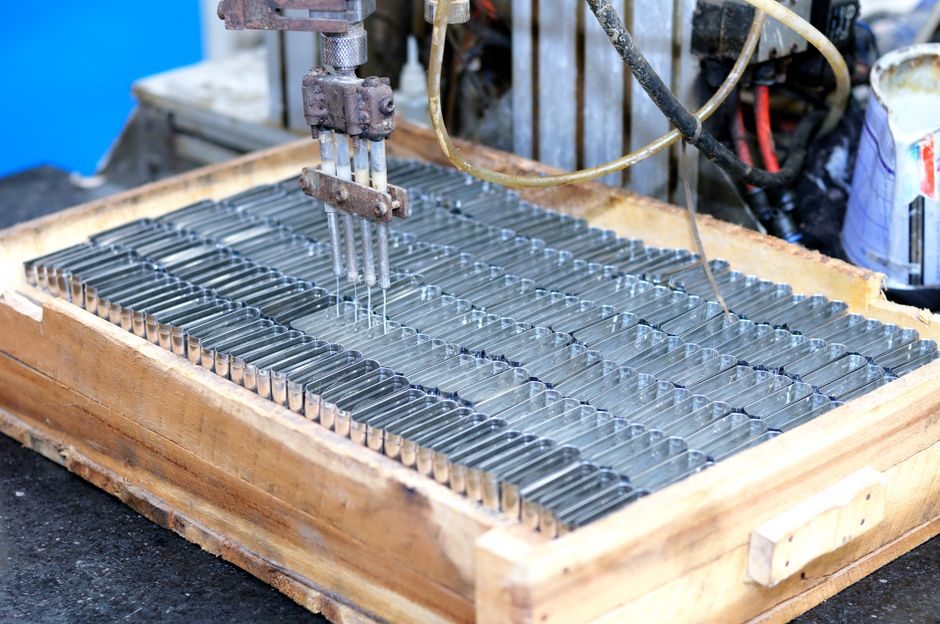
Chinese BESS manufacturers published 2026 product lines converging on LiFePO4 prismatic cells with operating windows of -60 °C to 55 °C and continuous C-rates spanning 0.5C to 80C, reflecting the chemistry's grip on stationary storage SKUs [S5].
Stationary battery energy storage system (BESS) manufacturing in mid-2026 centers on four cell formats — cylindrical 18650/21700, prismatic LFP, large-format pouch NMC, and emerging solid-state — with LiFePO4 holding the largest share of C&I and utility-grade product launches reviewed within the past 60 days [S2][S5][S6].
Cell Format Selection: Cylindrical vs Prismatic vs Pouch vs Solid-State
Prismatic LFP cells are the default for stationary BESS in 2026 OEM catalogues, with 280 Ah and 314 Ah large-format hard-case cells dominating utility containerized SKUs; their aluminum rigid shell and stacked electrode architecture support the >8000 cycle life cited in C&I product sheets [S5][S6].
Cylindrical 18650 and 21700 cells remain specified for modular home BESS where format standardization and BMS granularity matter more than absolute energy density, and where established winding equipment and a mature global supply base reduce cell cost [S9].
Pouch cells (NMC/LFP) appear in high-energy-density commercial BESS where pack-level volumetric Wh/L trumps cycle count; large-format pouch is mechanically more demanding — external compression frames and aluminum laminate sealing are mandatory at the module stage [S10].
Solid-state lithium-metal lines from Ganfeng LiEnergy combine oxide and sulfide electrolyte layers, with the manufacturer positioning the technology as a safety and energy-density upgrade over liquid-electrolyte Li-ion for next-generation stationary packs [S7].
Electrode and Cell Assembly: Coating, Calendaring, Stacking vs Winding
Electrode fabrication begins with slurry mixing of cathode active material (LFP, NMC811, or NMC622), PVDF or water-based CMC binder, conductive carbon, and solvent, followed by slot-die or comma-bar coating onto 10–20 µm aluminum (cathode) and 6–12 µm copper (anode) current-collector foils [S2].
Drying, calendar compression to target porosity (typically 25–35%), and slitting into electrode strips precede cell assembly; electrode moisture content is held below 200 ppm for Li-ion dry rooms, a threshold that drives the billion-dollar dry-room infrastructure every gigafactory has to build [S2].
Prismatic and large-format cells use Z-fold or stack-and-stack electrode lamination, which delivers better tab symmetry and lower internal resistance than jelly-roll winding; cylindrical cells exclusively use the wound mandrel process at winding speeds typically reaching 30 m/min on 21700 lines [S2][S5].
Cell finishing steps — tab welding (laser or ultrasonic), aluminum-shell insertion for prismatic, top-cap laser welding, electrolyte filling, and vacuum pre-sealing — are followed by formation cycling (SEI layer formation at fractional C-rates) and aging, which is the single largest time sink in cell manufacturing at 7–21 days of rest [S2].
Module and Pack Assembly: From Cell to Battery Pack
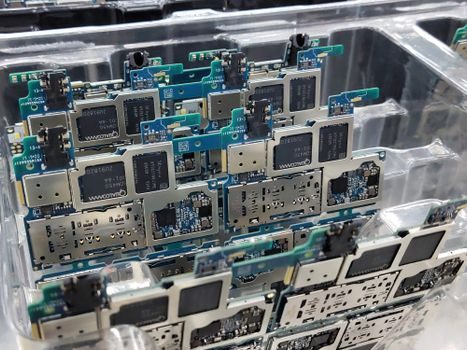
Modules group 1S to 16S cells with a cell-level BMS slave board, busbars (laser-welded aluminum or nickel-plated copper), and a compression frame that controls pouch swell or prismatic case expansion through charge/discharge cycles [S6][S10].
Pack assembly — sometimes called battery pack lamination in Chinese vendor literature, though the term is unrelated to additive manufacturing — refers to busbar+frame+BMS integration at the pack tier, the stage at which thermal-runaway propagation testing is run to validate pack-level safety claims [S6].
Integrated multifunction process calibrators are specified by pack-line engineering teams to verify BMS voltage and temperature channel accuracy against ISO/IEC 17025 traceable references before pack EOL test [S6].
FPR New Energy, a Chinese BESS supplier founded in 2016, reports cumulative capacity exceeding 3 GWh, illustrating the scale at which Chinese BESS integrators now operate [S6].
Chemistry Trade-Offs: LFP vs NMC vs Sodium-Ion vs Solid-State
LFP wins on cycle life (typically 6000–10000 cycles to 80% capacity), thermal stability (onset of thermal runaway near 270 °C vs 150–210 °C for NMC), and raw-material cost (no cobalt, no nickel), which is why every Chinese BESS supplier reviewed in 2026 leads its lineup with LFP [S5][S6][S8].
NMC811 and NMC622 are confined to space-constrained commercial BESS in 2026 OEM catalogues, where the higher nominal cell voltage (3.6–3.7 V vs 3.2 V for LFP) and energy density (~240 Wh/kg vs ~160 Wh/kg) justify the cobalt-nickel cost and the more demanding thermal-management bill of materials [S2][S10].
Sodium-ion appears in low-cost C&I SKUs and cold-climate deployments where LFP's low-temperature knee is a concern; vendors list working envelopes down to -40 °C for sodium-ion versus typical -20 °C to -10 °C for LFP without thermal conditioning [S10].
Solid-state lithium-metal chemistries target energy densities in the 350–500 Wh/kg range with non-flammable oxide/sulfide electrolytes, but 2026 product lines remain pre-commercial with limited cycle data and a price premium that places them in pilot fleet rollouts rather than mass-market BESS [S7].
Thermal Management and Safety: Liquid Cooling, Air Cooling, and Aerosol Fire Suppression
Containerized 1–6 MWh BESS cabinets in 2026 predominantly use liquid cooling with a 50/50 water-glycol loop, refrigerant or chiller-assisted heat rejection, and pack-level immersion or cold-plate configurations sized to keep cell delta-T below 5 °C at 1C continuous [S6][S9].
Air-cooled cabinets persist in residential and small-commercial BESS where acoustic footprint and maintenance simplicity dominate; forced-air cabinet heat-exchanger sizing typically targets 3–5 kW per 100 kWh of installed nameplate [S8].
Aerosol-based fire suppression (condensed-phase potassium-based) and perfluorohexanone clean-agent systems are standard at the container level, paired with pack-level heat sensors, off-gas (H2, CO, VOC) detection, and water-mist deluge as a secondary stage [S6][S9].
DC-side contactors, fast-acting fuses, and insulation-monitoring devices are mandatory at the pack-to-PCS interface; the battery management system typically samples cell voltage every 50–100 ms and pack current at 1 kHz to support ISO 26262-aligned ASIL-C functional safety architectures on C&I SKUs [S6][S10].
Standards, Testing, and Sourcing Map for 2026
BESS integrators shipping into the EU in 2026 reference IEC 62619 (secondary Li-ion cells for industrial applications), IEC 63056 (DC aspects for household and similar BESS), UL 9540A (cell-, module-, unit-, and installation-level thermal runaway fire propagation), and UN 38.3 (transportation); the GB/T 36276 domestic Chinese standard covers DC-side performance and is the baseline for grid-side tenders [S5][S6][S9].
Cell-level cycle testing follows IEC 61960-3 and IEC 62620, with 6000-cycle to 80% capacity retention now standard for LFP cells from tier-1 Chinese suppliers; this is the headline spec in datasheets published within the 60 days reviewed [S5][S6].
Manufacturing equipment sourcing — dry rooms, electrode coaters, calendar presses, stackers, laser welders, formation cyclers, EOL testers — concentrates in Jiangsu, Guangdong, and Zhejiang; the broader lithium industry 2026 cathode demand, storage pull, and sourcing rewire dynamics shape iron phosphate, copper foil, and aluminum shell pricing on 6–12 month lead times [S3][S5][S9].
For a complementary view on how cathode active materials and metal foils feed into the gigafactory bill of materials, see the lithium industry 2026 cathode demand, storage pull, and sourcing rewire breakdown — capacity expansions in LFP cathode and lithium iron phosphate precursor lines are the upstream throttle on BESS cell output for the next four quarters.
Trackable signals: (1) Tier-1 Chinese BESS integrators' monthly shipment disclosures in the 50–500 MWh band, (2) UL 9540A test certificate refreshes for stackable home BESS SKUs at 5–15 kWh, (3) the first GB/T 36276-2024-aligned tenders from State Grid for 1C continuous LFP containers above 3 MWh per unit.
For component-level specifications, see energy meter.