Austempered ductile iron (ADI) and high-silicon ductile iron (Si-DI) have displaced gray and standard ductile iron in many upstream and midstream castings where higher strength-to-weight ratios, weldability constraints, and corrosion allowance budgets converge [S4].
Forged-steel and CRA-clad alternatives still own the sour-service and high-pressure / high-temperature (HPHT) envelope, but cast iron remains the cost-default for non-sour manifolds, valve bodies, pump housings, and downhole-tool bodies above the NACE MR0175 line.
Cast Iron Families Relevant to Oil and Gas
Gray iron (ASTM A48, ISO 185) and standard ductile iron (ASTM A536, ISO 1083 / EN 1563) are the volume baseline: tensile strength sits roughly between 200–450 MPa for ductile grades, with elongation in the 3–18% band depending on ferritic, pearlitic, or mixed matrix control [S4].
These three plus the ductile family cover the bulk of upstream cast specs [S4].
Selection Criteria That Decide the Grade
Four criteria carry the decision in roughly this order: (1) H2S / sour-service qualification under NACE MR0175 / ISO 15156, (2) operating temperature envelope, (3) chloride and water-handling corrosion allowance, and (4) castability / repairability of the part geometry [S4].
By contrast, standard ferritic ductile iron 60-40-18 (≈60 ksi / 414 MPa tensile, 18% elongation) is the default for pump and valve bodies where ductility and weldability matter more than peak strength.
High-silicon cast iron (≈14.5% Si) is the go-to for concentrated sulfuric acid and hot concentrated caustic service in midstream processing, but it is brittle, non-weldable by fusion, and typically a buy-to-print item — repairs are limited to mechanical pinning and resin systems, which is exactly the envelope Slinden Services operates in for cast-iron cylinder heads, pump casings, and gearbox housings [S4].
Nickel austenitic ductile iron (Ni-Resist, ASTM A439, type D-2 / D-2B) covers marine and produced-water service where chloride pitting and galling resistance outweigh cost; chromium content above ~2% is what drives the corrosion advantage over standard ductile iron.
Sour Service (H2S) and NACE MR0175 / ISO 15156 Boundaries
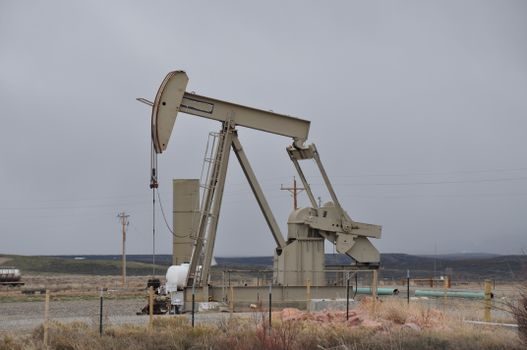
For sour service, the design line is NACE MR0175 / ISO 15156, which lists cast irons in a narrow band: gray iron per ASTM A48 is restricted to mild environments, while ductile iron in the lower-strength / higher-elongation grades is generally preferred over higher-strength grades that fail environmental cracking tests [S4].
High-silicon cast iron, white irons, and high-chromium irons are typically NOT NACE-qualified — they sit outside the listed alloys, and silicon segregation makes them intrinsically brittle in H2S-charged environments. ADI likewise has limited MR0175 listing; if the project rules say "per NACE MR0175," the realistic cast-iron options narrow to qualified standard ductile iron grades, and most operators pivot to carbon steel, low-alloy steel, or CRA claddings instead.
For a typical upstream gathering-system spool, where partial pressure of H2S is below 0.0003 MPa (0.05 psi) and chloride is below 50 mg/L, standard ductile iron per ASTM A536 65-45-12 is regularly specified and is the practical ceiling for cost-driven cast iron in O&G [S4].
Real Use Cases by Subsystem
Upstream wellsite and test equipment: standard ductile iron 60-40-18 to 80-55-06 covers separators, scrubbers, and produced-water treaters. American Welltest Incinerators (AWI) operates in this segment for welltest flaring trains, where vessel-grade ferritic ductile iron is the typical body material at 1.5–6 MPa working pressure [S2].
Midstream and rotating equipment: ADI 1050/700/07 to 1200/850/04 is common in gearbox housings, pump housings, and compressor crankcases — parts that benefit from the strength-to-weight upgrade and run in hydrocarbon-only, low-H2S service. Cylinder heads and large engine blocks historically built in flake gray iron (ASTM A48 Class 30–40) are the canonical weld-repair work that Slinden Services handles with gas-fusion procedures on a per-defect basis [S4].
Downhole-tool bodies and frac components: ferritic / pearlitic ductile iron remains the default for pump housings, bridge plugs, and certain frac-tree bodies; ADI 850/550/10 is the grade band often called out for fracture-resistance-critical bodies that still need to be cast near-net-shape.
Process piping and valves: carbon steel (ASTM A216 WCB, A352 LCC) dominates, but high-silicon cast iron (ASTM A518 grade 1) and Ni-Resist D-2 retain their share for sulfuric alkylation and chloride-bearing water service where carbon steel fails by general corrosion within months.
Limitations, Failure Modes and Repair Reality
Three failure modes define cast iron's O&G risk envelope: (1) brittle fracture at low temperature (gray iron loses most of its impact energy below 0 °C; the ductile-to-brittle transition in pearlitic ductile iron sits near −20 to −40 °C), (2) graphitic corrosion in saline produced water that pits the ferrite matrix while leaving a graphite skeleton, and (3) H2S-induced cracking on higher-strength grades that fail NACE MR0175 environmental tests [S4].
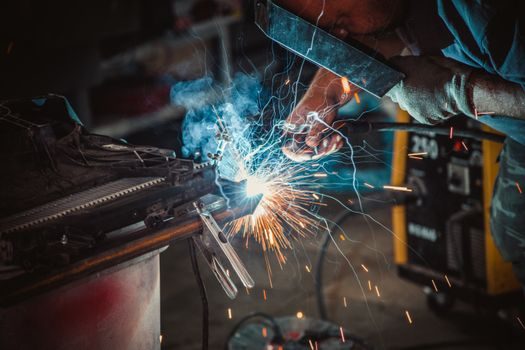
Repairability is the practical discriminator. Gray iron and standard ferritic / pearlitic ductile iron are weldable using austenitic nickel-iron consumables (Ni-Fe, ENiFe-CI) and pre-heat discipline above 250 °C for heavy sections. ADI, high-silicon cast iron, and white irons are generally not weldable by fusion — repairs use metal stitching, mechanical pinning, or epoxy/composite systems, and Slinden Services' gas-fusion procedure is qualified only for the lower-alloy, weldable end of that spectrum [S4].
For a process engineer, the practical rule: if the part is weldable, the operating envelope can be pushed; if it isn't, the casting has to be right first time, which means specifying ASTM A897 or A536 with full traceability, ultrasonic testing per ASTM A395 / A536, and a documented heat-treatment record.
Comparing the Main Cast Iron Options for O&G
Five families on four criteria — the matrix engineers actually score against on a P&ID review: [S1]
Gray iron (ASTM A48): low cost, good machinability, low strength (150–300 MPa), NOT recommended below 0 °C, limited NACE MR0175 use, weldable with Ni-Fe consumables. Best for non-pressure-retaining housings, gear pump bodies, and baseplates.
Standard ductile iron (ASTM A536 / ISO 1083): mid cost, 250–550 MPa tensile, 3–18% elongation, qualified for many non-sour / mild-sour NACE MR0175 applications, weldable with discipline. The default for vessels, valve bodies, and pump casings above 1 MPa.
Austempered ductile iron (ASTM A897): higher cost, 850–1600 MPa tensile, 1–10% elongation, fatigue and wear resistant, limited weldability, limited NACE listing. Best for high-stress rotating-equipment housings and structural castings.
High-silicon cast iron (ASTM A518): 2–3× the cost of carbon steel, ≈14–18% Si gives full resistance to hot H2SO4 and chloride, brittle and non-weldable, outside NACE MR0175 list. Best for alkylation and concentrated-acid piping.
Ni-Resist austenitic ductile iron (ASTM A439): higher cost again, ≈12–30% Ni gives chloride pitting resistance, moderate strength (≈400–500 MPa), weldable with Ni-Fe consumables, niche NACE use. Best for produced-water and seawater service.
Standards and Sourcing Discipline
The governing standards are ASTM A48, A536, A897, A518, A436, A439, A532 (cast-iron families) plus ISO 1083 / EN 1563 (ductile) and ISO 185 (gray). Welding procedure qualification follows AWS D11.2 / D11.6 for cast-iron welding; NACE MR0175 / ISO 15156 covers sour service; ASTM A395 is the pressure-containing ferritic ductile iron spec commonly called out for valve and fitting bodies [S4].
For procurement, the practical signal is to require a mill certificate with actual chemistry (C, Si, Mn, P, S, Mg for ductile, plus Ni / Cr for the alloyed grades), mechanical properties from separately cast test bars, and a documented austempering heat-treatment curve for ADI. The supplier's willingness to share the heat-treat chart and ultrasonic NDT report is the single best predictor of consistent O&G-grade cast iron.
Cast iron's role in oil and gas is structural and cost-driven rather than safety-critical at the HPHT end of the envelope, which is why the grade ladder matters more than the brand. The wider selection logic for grades, processes and spec anchors is mapped in the cast iron grade, process and sourcing guide, and for downstream pumps and rotating equipment the same ductile-vs-ADI logic carries into cast iron selection for industrial buyers. Where the wear / abrasion side dominates — frac pumps, sand-handling — high-chromium white irons (ASTM A532) and the oil seal family of elastomer / metal-faced rotating seals define the runtime boundary.
Track for the next quarter: (1) any revision of NACE MR0175 / ISO 15156 Part 3 listing new ADI or high-Si grades, since that single document defines the cast-iron ceiling in sour service; (2) the spread between ASTM A897 ADI and A516 pressure-vessel steel pricing, which sets the point at which designers stop trading weldability for strength; (3) any new A518 grade for hydrofluoric or mixed-acid service as alkylation units age out.
For component-level specifications, see gas analyzer.