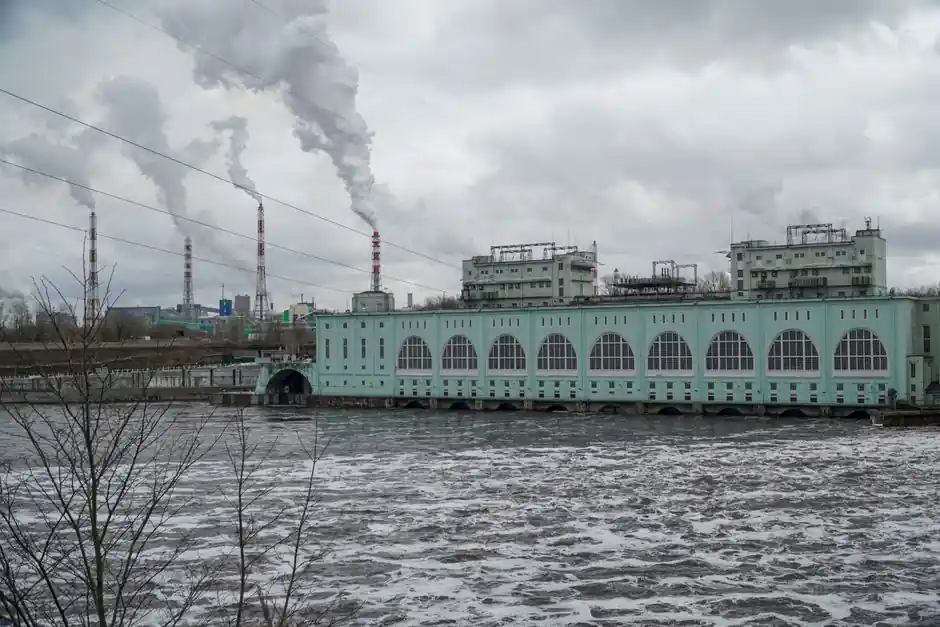
Power plants routinely co-locate flammable gases (hydrogen around generators, methane near gas turbines, diesel vapor in fuel rooms) and combustible dust (coal-handling, fly-ash, limestone), so the wrong fixture becomes the ignition source for the entire unit; specifiers in 2026 should default to LED fixtures carrying ATEX, IECEx, and UL 844 marks, with a Class I Division 1 or Class I Division 2 rating matched to the worst-case zoning at the site [S4][S6].
Across the current hazardous-area catalog, four product lines dominate shortlists: Eaton Crouse-Hinds Champ, HEXLON HLBD05 and HLBD06, James Industry STA, and Caladan 150W, all carrying multi-region certification (ATEX, IECEx, CCC) and die-cast aluminum or stainless housings suitable for boiler fronts, turbine decks, and coal-conveyor galleries [S4]. Typical LED power savings versus HID reach roughly 80%, while fixture surface temperature stays low enough to keep the T-rating honest in confined switchgear rooms [S4][S7].
Matching Fixture Class, Division, and Group to the Plant Hazard
Class I Division 1 covers spaces where an explosive gas atmosphere is present continuously or for long periods during normal operation, and it is the right pick for hydrogen-cooled generator housings, natural-gas regulating stations, and LPG pumphouses where a standard lamp would never be accepted [S4][S6]. Class I Division 2 suits spaces where flammable gas is not expected under normal conditions but may appear briefly, which covers most indoor turbine enclosures and outdoor walk-down platforms where venting dilutes any leak [S4].
For coal-handling and limestone-handling zones, Class II Division 1 or Division 2 governs, with Group F (coal dust) and Group G (grain, flour, fly-ash-like dusts) the relevant groups at a coal-fired station [S4]. A spec error here is the single most common field failure I see: ordering a beautiful C1D1 LED high-bay and then mounting it over a coal conveyor because the contractor assumed "hazardous" was a single thing; it is not, and the dust-group rating must be printed on the nameplate before energizing.
For broader hazardous-location electrical context, see the explosion-proof lighting reference page, which covers enclosure, flame-path, and temperature-class principles that apply to any certified luminaire, not just fixtures.
Comparing the 2026 Top Picks: Output, Wattage, and Certification
The four most commonly shortlisted explosion-proof LED lines in 2026 differ enough on output, form factor, and certification that a one-line comparison helps a specifier avoid the common "I just bought whatever the rep had" mistake [S4][S5].
Criterion, Eaton Crouse-Hinds Champ, HEXLON HLBD05/HLBD06, James Industry STA, Caladan 150W. Typical wattage range, 30W-150W, 40W-200W, 30W-120W, 150W. Lumen output, 3,500-21,000 lm, 5,600-28,000 lm, 3,000-15,000 lm, ~19,500 lm. Hazardous-location rating, Class I Div 1 and 2, Class I Div 1 / Div 2 / Zone 1, Class I Div 1, Class I Div 2. Certifications carried, UL, cUL, ATEX on select SKUs, ATEX, IECEx, CCC, UL 844, cUL, ATEX on select SKUs, UL 844. Housing material, copper-free aluminum, die-cast aluminum or 316 stainless, copper-free aluminum, copper-free aluminum [S4][S5].
For high-ceiling turbine halls and boiler-front retrofits, the HEXLON HLBD05/HLBD06 family and Caladan 150W push the higher lumen end and reduce the number of fixtures per unit area, which matters when the contractor is working around hot piping and scaffolding premiums; for confined battery rooms and hydrogen-seal-oil skid enclosures, the smaller James Industry STA or a 40W Champ is the safer mechanical fit [S4][S5]. Wattage and lumen figures cited here come from the product-line summaries and individual SKU listings indexed in the LEDRADIANT hazardous-location catalog [S5].
Emergency Backup and Egress Lighting in Switchgear Rooms
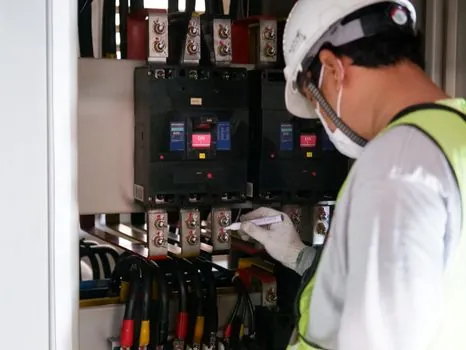
A maintained or non-maintained emergency-backup explosion-proof luminaire is mandatory anywhere loss of normal lighting could trap personnel in a classified area, and the AGC HA05 is a useful reference design: 1,350 lm output, built-in battery delivering 90 minutes of emergency runtime, IECEx and ATEX compliance, and LED technology that sips power and runs cool enough to stay inside the temperature code of the room [S3]. The 90-minute figure is the standard minimum egress window expected across most plant safety procedures, and it lines up with maintained-lighting practice where the same fixture runs on mains during normal operation and switches to battery on power loss [S3].
At a power plant this is not a luxury option: an unplanned trip on a 500 kV bus drops downstream lighting in the relay room, and if the backup battery is undersized or absent, the operator is walking to the emergency light in the dark past energized cable terminations. Specifying a HA05-class fixture at 1,350 lm, or a similarly rated portable rechargeable unit such as the 1,600 lm / 10-hour Class I Div 1 worklight, covers the egress path and a small work envelope for first-minute fault diagnosis [S3][S9]. For battery-room and UPS-room retrofits where hydrogen off-gassing is credible, the explosion-proof rating on the emergency fixture is the line between code-compliant and inadmissible.
Fixture Form Factor by Plant Location
Linear explosion-proof fixtures are the right answer for walkways, corridors, stairwells, and processing-line aisles, because the elongated housing throws even light along the travel path and reduces the shadow pools that make trip-hazard inspections harder at night [S8]. Round high-bay and UFO-style fixtures, including 80W-300W SKUs at 10,400-39,000 lm, belong over open turbine decks, large boiler-front platforms, and coal-conveyor transfer towers where vertical mounting height typically runs 8-15 m and you need punch rather than spread [S5].
Jelly-jar and utility fixtures (21W / 2,520 lm, 40W / 4,400 lm) fit local task lighting on valve manifolds, instrument racks, and skid packages where the operator needs 200-500 lux at the working plane rather than uniform flooding of the room [S5]. Flood-light SKUs in the 100W-200W range at 13,000-26,000 lm suit exterior tank-farm perimeters and outdoor transformer-yards, where the goal is to push usable light to the fence line for routine patrolling without glare into adjacent control-room windows [S5]. The site explosion-proof distribution and explosion-proof junction box reference pages cover the upstream wiring side of these fixture runs, which matters because the luminaire certificate is only as good as the conduit, seal, and support hardware attached to it.
LED Efficiency, Heat, and Maintenance Realities
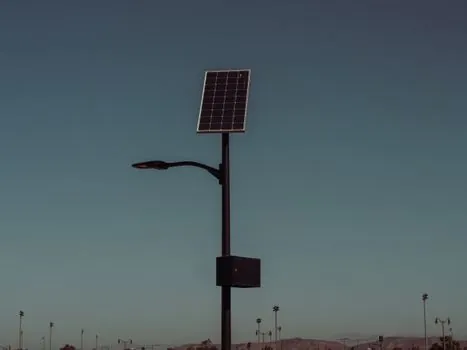
Switching from HID to LED in a hazardous area is not just an energy decision; it is a thermal and maintenance decision. LED explosion-proof fixtures routinely cut energy use by up to 80% against metal-halide and high-pressure sodium baselines, and the lower wattage draw directly translates to cooler driver compartments, longer driver life, and reduced cooling load on already-stressed switchgear-room HVAC [S4][S7]. Lower surface temperature also makes it easier to stay under the T-code (T4, T5, T6) the area classification demands, which is the specifier's first headache when retrofitting legacy HID fixtures into a Class I Div 1 room with a tight ignition temperature budget.
Maintenance discipline is the second headache. Inspection cadence should be monthly, with particular attention to the flame-path threads on the enclosure, the condition of the gaskets at the lens and cable entry, and the torque on the conduit plugs; one missing plug or a pinched gasket downgrades a certified luminaire to a non-compliant one, regardless of the badge on the nameplate [S4]. LED modules in this segment typically carry 50,000-hour L70 ratings, which means a properly installed fixture should run 10+ years in continuous service before re-lamping, and the dominant failure mode in the field is the driver rather than the LED itself; stocking a couple of spare drivers per 100 fixtures is a common-sense hedge against nuisance dark spots [S4][S7].
What Specifiers Get Wrong in 2026
Three errors show up over and over on power-plant lighting retrofits. First, ordering a Class I Div 2 fixture for a hydrogen cooler enclosure because "it's outside the flammable zone" on a P&ID, when the actual hazard analysis puts the same volume in Div 1; the certificate and the zoning must agree, and the AHJ will pick the more conservative reading [S4][S6]. Second, assuming a high IP rating (IP66/IP67) equals an explosion-proof rating; it does not. IP covers dust and water ingress, not flame-path integrity or surface temperature, and an IP66 non-classified fixture in a Div 1 room is a documented violation, not a clever workaround [S6].
Third, treating ATEX, IECEx, and UL 844 marks as interchangeable across all jurisdictions. ATEX is the European regulatory framework under Directive 2014/34/EU; IECEx is the IEC scheme accepted across most of Asia-Pacific, the Middle East, and Australia; UL 844 is the U.S. and Canadian standard, and the NEC/CEC classify by Article 500-505 zones, not by the ATEX/IECEx Zone system one-to-one. A plant with multi-region procurement will often need both UL 844 and ATEX/IECEx marks on the same fixture SKU to avoid a separate vendor for each geography [S4][S6]. Crossing these boundaries without checking the local authority having jurisdiction is how a $200,000 retrofit lands on the punchlist and does not close out.
For related equipment decisions on the same hazardous-area workfront, see the comparison of push-button vs selector-switch on an explosion-proof control station, which covers the operator-interface side of the same Class I Div 1 control panels these fixtures often hang off of.
Where the Market Goes From Here
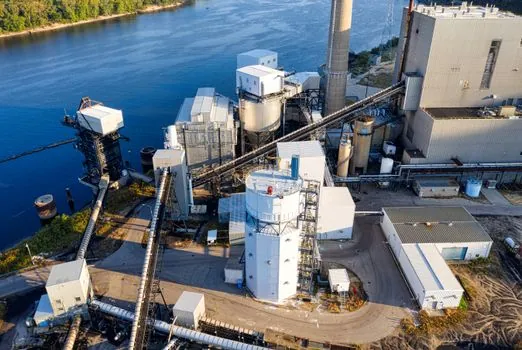
Two signals are worth tracking through the rest of 2026. First, more SKUs are landing in the 200W-300W round UFO form factor at 26,000-39,000 lm, which is a direct response to demand from 1,000 MW-class combined-cycle plants replacing 400W-1,000W HID floods on outdoor transformer yards and cooling-tower aprons [S5]. Second, vendors are tightening the integration between emergency-backup drivers and DALI-2 or 0-10V dimming controls, so the same fixture that runs the egress path can also dim to 10% during normal off-hours in a battery room; the AGC HA05-style architecture (1,350 lm / 90-minute backup) is the template the rest of the field is converging on [S3][S5]. When the next quarterly hazardous-area audit lands, the practical question is whether the shortlist still has all four vendor lines represented, or whether consolidation has narrowed it to two; the answer will shape lead-times and spares strategy through the next outage season.