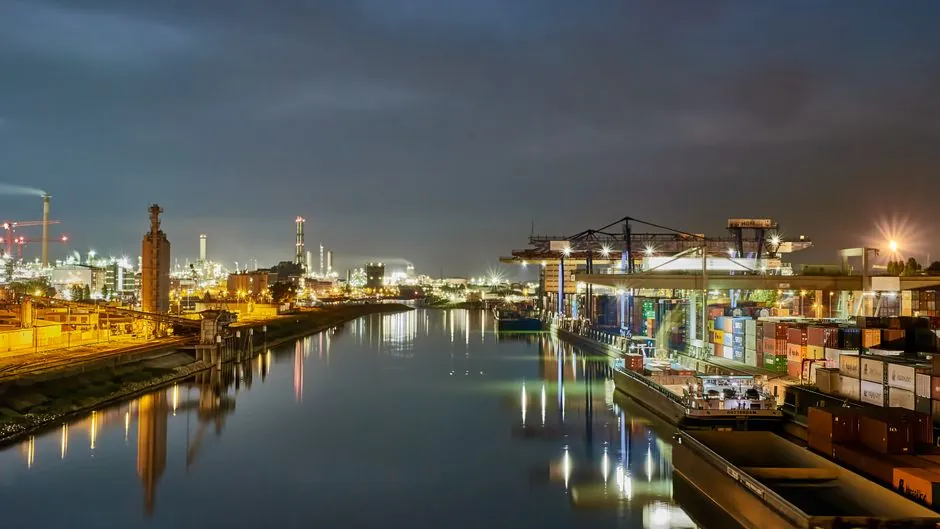
Explosion-proof lighting selection is driven by the hazardous-location classification, not by wattage or aesthetics: the site gas/dust group and temperature class (T-rating) decide which fixture body is even legal to install, and the wrong match voids both certification and insurance [S1][S4].
The four input variables a spec engineer must lock before opening a catalogue are the Class/Division or Zone, the gas or dust Group, the maximum allowed surface temperature (T-code), and the ingress protection (IP) rating demanded by the process environment [S1][S3][S4].
Step 1: Lock the Hazardous-Location Classification
The NEC/CEC Class-Division system and the IEC/ATEX Zone system describe the same physics two different ways, and most global plants now have to handle both because vendors stamp dual markings on the nameplate [S4]. Class I covers flammable gases and vapors (refineries, fuel storage, chemical processing), Class II covers combustible dust (grain elevators, flour mills, coal handling, metal processing), and Class III covers easily ignitable fibers and flyings (textile mills, woodworking) [S4].
Division 1 means the hazard is present during normal operation; Division 2 means it appears only under abnormal conditions such as a leak or pump failure [S4]. In Zone terms, Zone 0/1/2 mirror continuous/frequent/infrequent exposure to an explosive atmosphere, with Zone 0 being the most demanding enclosure requirement on the planet [S4]. Picking the wrong side of that line, for example installing a Division 2 fixture in a Division 1 battery room, is the most common audit finding in oil and gas facilities.
Step 2: Match the Gas/Dust Group and T-Code
Within Class I, the gas Group (A: acetylene, B: hydrogen, C: ethylene, D: propane in the NEC system; IIA/IIB/IIC in IEC) determines the flamepath gap the enclosure must contain, with Group IIC / Class I Division 1 Group B demanding the tightest machined joints [S4]. For dust, Group E (metal), F (coal), and G (grain) set the dust-ingress tolerance, and the IEC equivalent uses IIIA/IIIB/IIIC, with IIIC conductive dust being the harshest.
The T-code caps the fixture surface temperature below the auto-ignition point of the surrounding atmosphere: T6 stays at or below 85 degC, T5 at or below 100 degC, T4 at or below 135 degC, T3 at or below 200 degC, and T1 climbs to 450 degC [S4]. Hydrogen (580 degC auto-ignition) gives plenty of T-headroom, but diethyl ether (160 degC) or carbon disulfide (90 degC) force T6 fixtures even on a mild ambient job. explosion-proof light nameplates carry the exact Group and T-code combination; treat that string as the search filter, not the wattage.
Step 3: Decide LED vs Fluorescent vs HID, and the Voltage Drop Budget
LED is now the default for new hazardous-area builds: lower surface temperature, instant-on after a power dip, 50,000+ hour L70 life, and roughly 50 to 70 percent less energy draw than the metal-halide or HPS fixtures they replace [S1][S2][S5]. For very high mounting heights above 12 m on offshore platforms, 150 W to 400 W LED high-bays typically replace 400 W to 1000 W HID units one-for-one at 2.0 to 2.5 times the lux on the deck.
Voltage drop is the silent killer on long hazardous-area cable runs. A 250 W LED at 277 V pulling 0.9 A over 150 m of 12 AWG loses roughly 8 V, which already pushes some drivers below their under-voltage cutoff; step to 10 AWG or split the circuit, and verify the driver accepts 100 to 277 V AC or 120 to 250 V DC for sites with DC battery-backed distribution [S2].
Step 4: Check Certifications, IP Rating, and Build Materials
A nameplate that does not show ATEX, IECEx, UL 844, or CSA C22.2 No.137 for the exact gas group and T-code is not a match, regardless of what the datasheet PDF says in the marketing copy [S1][S5]. For North American projects, UL 844 plus the Class/Division/Group/T-code stamp is the legal requirement; for the EU, ATEX 2014/34/EU with the Ex d (flameproof), Ex e (increased safety), or Ex tb (dust) marking is non-negotiable; for global EPCs, IECEx is the common denominator because one certificate is accepted in all member schemes.
IP66 is the practical floor for outdoor or wash-down hazardous areas, IP67 for submergence to 1 m for 30 minutes, and marine-grade 316L stainless steel or copper-free aluminum housings (below 0.4 percent magnesium for coal-dust applications) are the materials that survive five-year offshore cycles [S1][S3]. Polycarbonate lenses are lighter and impact-resistant but yellow under UV; borosilicate glass holds transmission longer in 60 degC+ ambient.
Step 5: Lumen Output, Beam Pattern, Mounting Height, and Emergency Backup
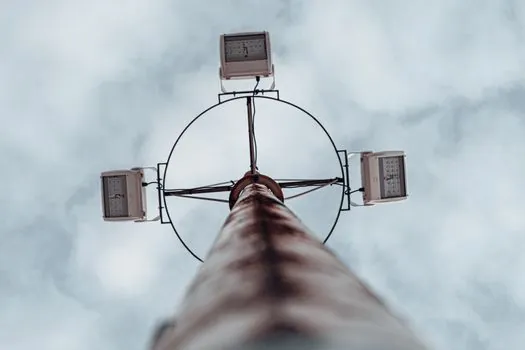
For task lighting on walkways and stairs in a Class I Division 2 process area, 100 to 160 LED lumens per fixture on 6 m centers is typical; for tank-farm floodlighting at 8 to 12 m mounting, 15,000 to 30,000 lm fixtures on 25 m spacing usually delivers the 50 lux average that API RP 540 and IEC 60079-10 lighting guides call for [S2]. Beam pattern (narrow 30 deg, medium 60 deg, wide 120 deg, oval Type V) must be matched to the pole layout, not chosen from a stock SKU.
Mounting style drives the SKU: ceiling, wall, pendant, stanchion 25 mm/32 mm, yoke/trunnion, or recessed, and many Class I Division 1 housings use a 3/4 in NPT or M25 conduit entry that has to clear the explosion-proof junction box layout. Battery-backed emergency drivers rated for the same hazardous location add 90 to 180 minutes of egress illumination and are mandatory on escape routes in most jurisdictions [S5].
Step 6: Compare the Main Variants on Real Decision Criteria
Three form factors cover roughly 90 percent of hazardous-area lighting applications, and the specifier's job is to pick the right one before brand selection: high-bay UFO/low-bay for indoor process structures, linear/batten strips for tunnels, cable trays, and engine rooms, and floodlights for outdoor tank farms and offshore decks [S2][S5].
High-bay UFO fixtures (100 W to 400 W, 15,000 to 60,000 lm) win on mounting height above 8 m and lumen-per-dollar, but lose on optical control; linear strips (20 W to 80 W, 2,500 to 12,000 lm) dominate in 3 m to 6 m corridors where uniform 100 to 200 lux is required and conduit entries are limited; floodlights (50 W to 600 W, narrow and wide beam) are the only practical option for yards above 10 lux average with poles 15 m to 30 m apart [S2]. Vapor-tight fixtures, often confused with explosion-proof, only keep moisture and dust out; they do not contain an internal ignition, so they belong in food processing and parking decks, not in a gasoline-loading gantry [S4].
Who Should NOT Pick the Mainstream Option, and Why
Specifying a generic Class I Division 2 LED high-bay in a hydrogen compressor room is a common and dangerous shortcut: the gas group is B, which in many enclosures forces Division 1 hardware with tighter flamepath gaps, and the T-code has to be T6 if the auto-ignition of the specific hydrocarbon blend sits below 135 degC [S4].
Similarly, dust Zone 21 (conductive metal dust) cannot be served by a Zone 22 fiberglass fixture because the dust ingress and surface temperature tests are different, and grain elevators with IIIC dust need IP6X plus a T-code tied to the dust cloud ignition temperature, not the 5 mm layer value that some catalogues still print. Intrinsically safe Ex i lighting is the correct call only when the total circuit power stays below the ignition-energy limit for the group; it is the wrong choice for general area illumination because the lumen output is too low for production work [S4].
Failure Modes, Maintenance Windows, and Lifecycle Cost
The three field failure modes that drive most replacements are lens yellowing and lumen depreciation after 50,000 hours, gasket hardening that breaks the IP rating on a 7 to 10 year cycle, and driver failure from voltage transients on large switchboards [S1][S2]. Budget a 10-minute visual inspection per fixture per quarter, a full photometric check at year 5, and a gasket and driver replacement at year 7 to 10 for offshore sites; on a 100-fixture tank farm, that lifecycle plan beats a one-time capex-only buy about 30 to 40 percent on a 15-year total cost of ownership basis.
Track these three signals after purchase: nameplate confirmation of ATEX/IECEx/UL 844 certificates with the exact Ex marking string (for example Ex db IIB+H2 T6 Gb), recorded field lux measurements against the design value, and the manufacturer's published LM-80/TM-21 data for the LED package, not the fixture-level marketing number. For related control-station selection, the parallel logic on operator devices is detailed in Push Button vs Selector Switch on an Explosion-Proof Control Station.