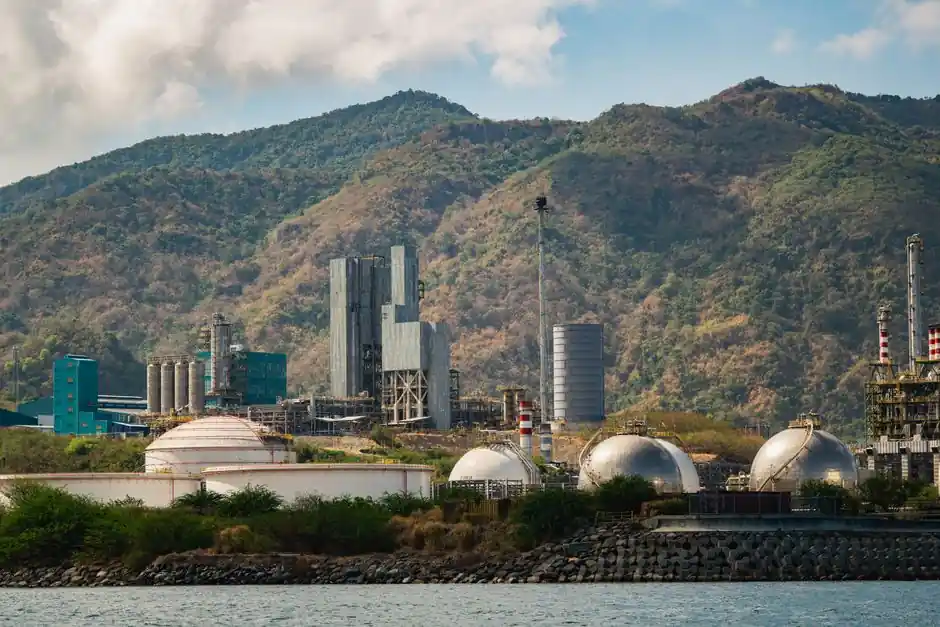
For a chemical plant running dozens of variable-frequency drives on mixers, extruders, and pump skids, the highest-value harmonic filter is an active unit sized to roughly 50–100% of the largest VFD cluster, paired with a detuned passive branch (typically tuned below the 5th harmonic, p ≈ 7%) where reactive support is also needed.
Selection is governed by three measurable targets: IEEE 519-1992 individual and total harmonic voltage distortion (THDv) limits, the utility's individual harmonic current injection caps, and a true power factor of at least 0.85 lagging [S3]. The dominant process-side harmonic sources are 6-pulse VFDs, which produce characteristic 5th, 7th, 11th, and 13th harmonics, plus DC bus harmonics from rectifiers feeding reactors and centrifuges.
Filter topologies compared: passive, active, hybrid
Passive tuned filters are series or parallel LCR circuits that shunt or block a target harmonic; they are the lowest-cost option but require harmonic studies to avoid resonance with the system impedance, and their tuning drifts with temperature and component ageing, so a lower Q response is usually preferred for grid frequency tolerance [S2]. A detuned reactor (p ≈ 7%, ~189 Hz at 50 Hz) is the standard chemical-plant passive choice when the goal is mainly to protect capacitors and dodge resonance, not to chase tight THDv.
Active harmonic filters (AHFs) sample the load current and inject a 180°-out-of-phase compensating current, behaving like a noise-cancelling stage for the bus; they deliver excellent filtering efficiency, dynamic correction, and the ability to mitigate multiple harmonic orders simultaneously [S3]. For VFD-driven chemical mixing lines, an AHF lets operators tune mitigation per order without taking the line down to retune capacitors.
Hybrid filters combine a passive LC branch for bulk reactive and harmonic support with an active inverter stage for fine, dynamic correction; this pairing is widely cited as cost-effective for industrial sites needing both power factor correction and harmonic mitigation in a single footprint [S5]. Across the four decision criteria below, hybrids lead on reactive support and harmonic performance, active leads on dynamic response, and passive leads on installed cost:
Criteria-based comparison (typical chemical plant, 400–690 V bus):<br>• Harmonic THDv reduction: passive tuned 30–50%, AHF 80–95%, hybrid 85–97% [S2][S3].<br>• Reactive power support: passive and hybrid deliver MVAR; AHF supplies leading reactive only as a side effect.<br>• Dynamic load tracking: passive none, AHF sub-cycle, hybrid sub-cycle on the active stage.<br>• Installed cost per amp of mitigation: passive lowest, hybrid mid, AHF highest [S1].
Voltage class, rating, and bus architecture
Most low-voltage chemical MCCs run 380–480 V (60 Hz) or 400–690 V (50 Hz), and the AHF is typically installed at the MCC bus or upstream of the main VFD cluster rather than at each drive. For 24 kV chemical sites, an AHF injected through a coupling transformer has been demonstrated to keep individual harmonic voltages inside Engineering Recommendation G5/4 limits while PV and VSD load varies widely [S3]. Medium-voltage metal-enclosed filter banks (e.g., 5–38 kV) are an established product class for chemical, mining, and petroleum service [S6].
Voltage class selection also drives enclosure choice: in corrosive or outdoor chemical yards, IP54 / NEMA 3R enclosures with anti-corrosion paint systems are the typical minimum, and many OEMs offer stainless or fiberglass options for chloride exposure. The 2024–2035 global harmonic filter market is segmented by voltage into low, medium, and high voltage, with the low-voltage active segment forecast to outpace the others as discrete VFD count grows [S1].
Compliance: IEEE 519, IEC 61000-3-6, and grid codes
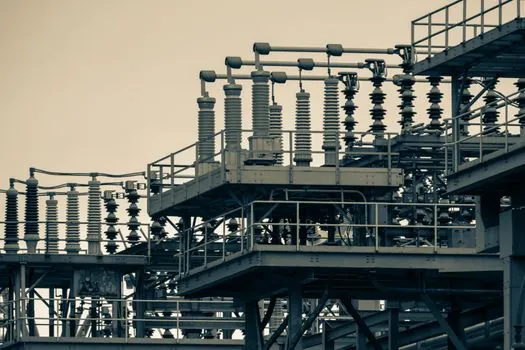
The binding compliance instruments for chemical plants are IEEE 519-1992 (THDv and TDD limits at the point of common coupling), IEC 61000-3-6:2008 for individual harmonic current assessment at MV, and the local DSO grid code [S3][S5]. The Thai Metropolitan Electricity Authority's PRC–PQG–01/2011 standard, for example, sets harmonic, power factor, voltage fluctuation, and rms voltage rules and disallows grid connection for non-compliant rooftop solar and industrial users [S3].
For spec writing, the auditable checks are: individual harmonic current injection (referenced to IEC 61000-3-6:2008 at 24 kV in the published case study), individual harmonic voltage and %THDv (referenced to G5/4 at 24 kV in the same study), and a true power factor not lower than 0.85 lagging [S3]. On active devices specifically, vendors such as Schneider Electric publish AccuSine+ AHF performance under IGBT-based modular architecture, which is the dominant topology cited in the current AHF supplier landscape [S4].
Who it is FOR, and who it is NOT for
An AHF or hybrid is FOR chemical plants with: (a) VFD density above roughly 30% of the connected load, (b) THDv measurements above 5% on the MCC bus, (c) sensitive downstream loads (analytical instruments, batch controllers, lab power), or (d) plans to add DC fast chargers, electrolyzers, or rooftop solar behind the same bus [S1][S3]. Eaton's Harmonic Correction Units, for example, target exactly this dynamic mitigation plus power factor correction use case [S4].
It is NOT for: small sites with a single VFD under 50 hp where a line reactor or passive trap is sufficient, sites with weak structural support for the extra weight of an AHF cabinet, or sites where the existing capacitor bank has not first been audited for resonance risk [S2]. A passive solution also remains the right call where the only goal is reactive support at the utility interface and harmonic distortion is already inside IEEE 519-1992.
Failure modes, constraints, and what to verify on site
Resonance between shunt filters and the system impedance is the headline failure mode; an AHF that injects a current spectrum close to a system natural frequency can amplify, not damp, that order [S2]. Active stages are also sensitive to DC-link voltage sag, so ride-through specification (typically 50–100 ms) must be checked against the site's voltage dip profile.
On the passive side, detuning factor δ must accommodate system frequency tolerance plus temperature and ageing drift; in the published approximation, optimum Q scales with the system impedance angle and δ, so a sloppy study under-specifies the filter and over-promises THDv [S2]. Specifying the filter as capacitive at fundamental frequency is required when it forms the capacitive section of an SVC, otherwise reactive balance is lost [S2].
Useful related reading on instrument-grade power quality work includes the multifunction power meter sourcing map for 2026, and for plants pairing harmonic mitigation with structured filter QA, the industrial filter manufacturing quality standards guide is a useful cross-reference.
Sourcing landscape and what to ask the vendor
Active harmonic filter suppliers with a 2025–2026 public profile include Eaton (Ireland), Schneider Electric (France), Danfoss (Denmark), Hitachi Energy (Japan), and TE Connectivity (US), all of which bundle power quality management with smart-grid and harmonic mitigation portfolios [S4]. On the passive side, medium-voltage metal-enclosed filter banks are a stock product line for chemical, petroleum, and mining service [S6].
A useful harmonic reducer reference clarifies how the active and passive stages divide the correction workload.
The 7.8% CAGR forecast through 2030 for the active segment [S4] is the headline number to anchor any 2027 budget conversation.
The underlying component specifications are covered under chemical anchor.