
Industrial filter quality rests on a four-pillar stack: ISO 9001 quality management, ISO 14001 environmental management, ISO 16890 air filter classification, and product-level marks such as CE and UL [S1][S3].
Plants that outsource cutting, pleating, or housing machining lose visibility on dimensional drift, media lot variation, and weld integrity, and that is where field failures originate [S1].
Certification stack buyers should verify before issuing a PO
ISO 9001 is the floor, not the ceiling: it certifies that a manufacturer runs a documented quality management system with management review, corrective action, and internal audit, but it does not certify any specific filter performance number [S1][S3]. ISO 14001 layers on environmental management, relevant because solvent-bearing process lines and metalworking fluids are common upstream of filter assembly [S1][S3].
For air filter products, ISO 16890 supersedes the older EN 779:2012 ePM classification and reports efficiency on the 0.3-10 micrometre fraction, which is the right resolution for HVAC and cleanroom specifiers [S1]. CE marking covers the EU market access under the relevant directives, while UL listing is the parallel North American safety mark for electrical or flammability-bound components [S3]. A buyer that cannot see a current certificate number, issuing notified body, and scope of registration on the manufacturer's quality pack is being asked to take the claim on faith.
From raw media to finished cartridge: the controls that actually catch defects
Material selection is the first gate, and the documentation has to go further than a generic 'polyester felt' line item. Standard Filter names polyester felt, polypropylene, and high-temperature grades as the common media options, and ties each to a specific operating envelope such as chemical resistance or thermal ceiling [S4]. Pallman groups its controls into benchmarking, monitoring, validation, and standards adherence, with real-time sensor data on dimensions, material uniformity, and assembly accuracy feeding the monitoring stage [S1].
For liquid filtration, Industrial Filter Manufacturing Ltd. builds standard efficiency pleated cartridges in-house, with 90% and 99.98% particle-removal efficiency points published for its high-flow pleated product line, and melt-blown cartridges rated 90% efficiency at a designated micron with FDA Title 21 compliance [S2]. The point of publishing those numbers, rather than 'high efficiency', is that they tie to ISO 16889 multi-pass testing, beta ratio calculation, or equivalent methods, which a buyer can rerun on incoming lots [S2][S1].
In-process checkpoints versus end-of-line testing
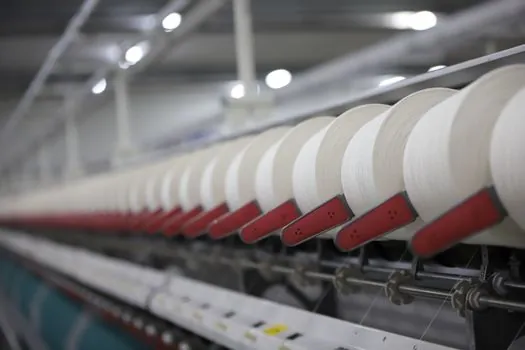
End-of-line burst, pressure drop, and efficiency tests catch gross defects, but they do not catch the systematic drift that wrecks field reliability. Pallman splits the work: validation runs at every stage from raw material inspection to final assembly, while continuous monitoring watches dimensional, uniformity, and assembly-torque data in real time [S1]. Standard Filter applies that same logic to filter bags, with material cutting, stitching, and sealing each held to tolerance before the bag moves to performance testing for durability, filtration efficiency, and wear resistance [S4].
For a process engineer evaluating a vendor, the question to ask is how many in-process gates exist, what the reject criteria are at each gate, and whether the gate data is trended or thrown away. A cleanroom operation such as Pullner Filter's 10,000 m² Songjiang facility with 20+ production lines for micro-membrane and pleated cartridge work is the kind of footprint where traceability from resin lot to finished element is realistic, and the audit trail should be requestable, not promised [S3].
Application-driven spec: matching certification to service condition
Pharmaceutical, semiconductor, food and beverage, and automotive paint lines do not share a filter spec, and pretending they do is a common sourcing failure. For pharmaceutical and microelectronics, full traceability, FDA Title 21 compliant materials, and cleanroom assembly under documented environmental controls are non-negotiable; for HVAC and general industrial air, ISO 16890 ePM10/ePM2.5 classification with the appropriate pressure-drop budget is the operative spec [S1][S2][S3].
High-temperature or chemical-aggressive service pushes the media decision toward PTFE, stainless steel mesh, or specialised high-temperature felts, with the housing material and seal elastomer matched to the same chemistry [S4][S5]. Buyers who default to 'polypropylene, 10 micron' without checking the chemical compatibility chart, the maximum differential pressure rating, and the published beta ratio end up replacing cartridges on a calendar basis rather than on a differential-pressure signal. For plants standardising on condition-based changeout, pairing filter selection with a multifunction power and energy meter on the blower or pump loop gives the differential-pressure and power-draw trend needed to actually trigger changeout at the right point.
Comparison: certification scope and what each one actually proves

Buyers often treat ISO 9001, ISO 14001, CE, and UL as interchangeable badges; they are not. ISO 9001 covers process discipline across the manufacturer's operation, ISO 14001 covers environmental management, ISO 16890 covers the actual particle-removal performance of an air filter element, CE and UL are market-access marks, and FDA Title 21 compliance is a material-contact statement for food and pharma [S1][S2][S3].
On a weighted decision matrix, ISO 16890 or equivalent (e.g. ISO 16889 for hydraulic) is the only certificate on the list that says anything about how the filter performs; the rest say who audited the factory and what regulatory boxes the product ticks. A vendor with full ISO 9001 plus ISO 16890 published data is a stronger technical bet than a vendor with five badges but no published efficiency curve [S1][S3].
Common failure modes when the quality system is paper-only
The failure pattern is consistent: certifications are held, but incoming-media lot data, in-process dimensional trends, and end-of-line test results are not trended, so the same defect ships month after month until a customer returns a batch. Pallman explicitly calls out monitoring and validation as the steps that close that loop, and Standard Filter's quality assurance phase tests durability, filtration efficiency, and wear resistance on every production lot, not on a sampled basis [S1][S4].
For liquid process lines, seamless steel pipe total cost of ownership work intersects with filter life because piping roughness, weld bead protrusion, and startup debris loading determine how quickly a new filter reaches its differential-pressure changeout point; the filter spec and the upstream piping spec have to be reviewed together, not in isolation. Similarly, for plants running chemical or solvent service, chemical anchor selection for renovation drives the housing and support bracket material decision, and a quality-system audit that ignores the structural mounting is leaving a real failure mode uncovered.
Audit checklist for a new or replacement filter supplier

Ask for the current ISO 9001 and ISO 14001 certificates with scope statement and issuing notified body, and for ISO 16890 test reports (air) or ISO 16889 multi-pass data (hydraulic) on the specific part numbers being quoted, not on a generic product family [S1][S3]. For the manufacturing process itself, request the in-process control plan, the dimensional and efficiency test data from the last three production lots, and the documented reject and rework rates, which a serious supplier will hand over without negotiation [S1][S4].
Walk the line if access is possible, and watch the media storage area, the pleating or welding station, the cleanliness of the assembly area, and the calibration stickers on the test rigs [S1][S4]. A supplier that will not let an audit past the lobby is a supplier that has decided their quality system cannot survive a close read, and the four-badge brochure will not change that.
Trackable signals over the next sourcing cycle: revision of ISO 16890 test reports on the specific part numbers in use, publication of beta ratio or ePM efficiency curves on the manufacturer's product datasheet, and the first batch of in-process dimensional data the supplier releases without a non-disclosure pushback.
For the relevant spec sheets and selection criteria, see additive manufacturing material, air quality monitor, and power quality analyzer.