Industrial buyers can pull multifunction power meters from at least nine branded lineups listed on DirectIndustry, with 36 cataloged products covering everything from 51-parameter three-phase analyzers down to single-loop Modbus RTU panels [S1]. The supplier base splits into three functional tiers: instrument-grade power-quality analyzers (METREL MI 2992), DIN/panel-mount metering modules (Seneca R-series, Phoenix Contact EMlines, Blue Jay APM-96Q), and OEM-customizable cost-down panels (CHYT, PILOT, Hoyt) [S1][S2][S3][S4][S6][S7].
Common measurement scope across current product lines includes TRMS phase voltage and current, active/reactive/apparent power, power factor, frequency, and THD, with mid-tier panels from Blue Jay and Accuenergy advertising auxiliary 85–264 VAC supplies and integrated RS485 Modbus RTU ports as stock features [S2][S8]. The relevant reference device family is detailed in the multifunction power meter encyclopedia entry, and a related device class sits under power meter for billing-grade distinctions.
European Suppliers: Instrument-Grade PQ Analyzers and DIN Modules
METREL's MI 2992 power meter with harmonic analyzer is specified for power generation, medium-voltage facilities, renewable energy systems, generator stator testing, and low-voltage power-quality assessment on UPS and site reports, placing it in the Class A PQ instrument bracket rather than the panel-meter bracket [S1]. SENECA's R204-2-L-U returns single-phase and three-phase voltage, current, active/reactive/apparent power, frequency, period, and power-quality data over OPC UA, while the R204-2-L-P variant carries UL listing and exposes Profinet on the same universal input stage [S1].
FRER's EMS-D6 sits at the compact end of the same tier, with a wide measured voltage range and multi-range power supply for energy cost and basic network and asset management applications; FRER's EMS-D3 is the three-phase precision-monitoring variant, and the EMM-4L-96 flush-mount model adds a backlit LCD, 85–264 VAC aux, RS485, and pulse output [S1]. Phoenix Contact's energy measuring devices support Modbus/RTU and TCP interfaces, multi-rate (TOU) functions, and direct connection up to 600 V for sub-distribution and machine-level metering [S6].
Chinese OEMs: Panel-Mount and Customizable Stock
Blue Jay (Chongqing Blue Jay Technology) markets the APM-96Q with Modbus RTU over RS485, the ADP-30 series targeted at cost-down power monitoring, and the PQRM5300 33 measuring 51 different three-phase parameters including TRMS voltages and currents, active/reactive/apparent power, and THD [S1][S2]. CHYT (Zhejiang Dabo Electric) bundles its multifunction energy meter alongside solar combiner boxes, DC/AC surge protection, DC MCBs, and isolator switches, indicating the typical Chinese factory package is a full PV/distribution BOM rather than a standalone instrument [S3].
PILOT markets itself as an OEM custom multifunction power meter manufacturer with published price lists, which is the right supplier to shortlist when faceplate branding, CT ratios, or non-default Modbus register maps are required [S7]. Buyers comparing panel families against construction machinery and equipment OEM panel references will note the 96 mm x 96 mm DIN cut-out is the de facto standard for Chinese OEM panels.
North American Suppliers: Panel, Switchboard, and Energy Lines
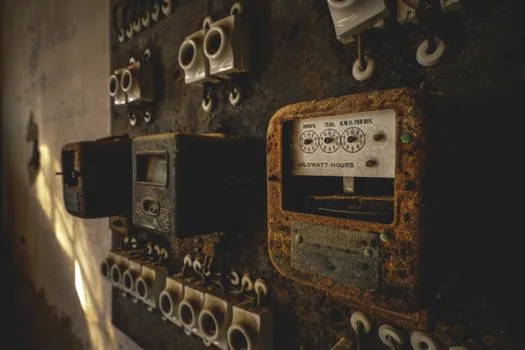
Hoyt Meter (HST, Panorama, Titan, 2000–6000 series) stocks multifunction digital power and energy meters, with adjacent lines covering DC/AC ammeters, voltmeters, frequency meters, power factor, VAR, watt, and switchboard combo meters, plus a separate Test and Measurement catalog of clamp meters, cable tracers, and LAN testers [S4]. Accuenergy manufactures industrial power and energy meter solutions in-house, and bundles a variety of current transformers and Hall-effect sensors, which removes the cross-vendor CT burden for switchboard builders [S8].
Landis+Gyr, Aclara (Hubbell), ABB, and Itron form the utility-scale smart-meter tier, with Landis+Gyr alone having deployed more than 7 million smart meters in the United Kingdom through large-scale utility programs [S5]. These four are not direct substitutes for industrial panel meters: they target AMI head-end systems and revenue metering, so procurement should treat them as a separate category from the panel-mount multifunction class.
Selection Criteria: Accuracy Class, Protocol, and PQ Depth
Buyers should match the meter to the measurement job, not the catalog headline. Three decision tiers dominate: (1) Class A PQ analyzers (METREL MI 2992 and equivalents) for harmonics, flicker, and signed PQ events; (2) Class 0.5/0.2 billing-grade panels (Accuenergy, Hoyt industrial, Phoenix Contact EM-series) for sub-billing and tenant metering; (3) Class 1 monitoring panels (Blue Jay APM-96Q, FRER EMM-4L, Seneca R204, CHYT, PILOT) for load trending and SCADA telemetry. Protocol-wise, Modbus RTU on RS485 is the lowest common denominator across all tiers; Profinet, OPC UA, and Modbus TCP appear in the European DIN tier; UL listing is concentrated in Seneca and Phoenix Contact catalogs for North American OEM build [S1][S6][S8].
For a side-by-side spec, compare METREL MI 2992 (Class A PQ, harmonic + flicker), Phoenix Contact EM-series (Modbus RTU/TCP, 600 V direct, multi-rate TOU), Blue Jay PQRM5300 33 (51 three-phase parameters, THD), and Seneca R204-2-L-P (Profinet, UL listed, universal input): they cover different ends of the accuracy-versus-protocol-versus-cost trade, and a single project rarely justifies more than one tier.
Who It Is For (and Who It Is Not)

Multifunction power meters in the panel/DIN form factor are for plant electricians, switchgear builders, and PV/BESS integrators who need three-phase voltage, current, power, PF, frequency, and energy on a single Modbus node without billing-grade certification. They are not direct replacements for revenue meters in utility AMI rollouts, and they are not substitutes for dedicated protective relays on feeder circuits, where the relay's 50/51/27/59 functions must remain independent of the metering chain. [S1]
The utility-scale tier (Landis+Gyr, Itron, Aclara, ABB) is for advanced metering infrastructure where AMI head-end software, RF/PLC communications, and regulatory certification dominate; buyers in this segment should reference the Smart Meter Suppliers and Manufacturers: 2026 Sourcing Map for the AMI-specific comparison. Industrial buyers looking at adhesives, sealants, and encapsulation compounds for meter CT and terminal potting will find the related Industrial Adhesive Suppliers: 2026 Spec Map and Sourcing Guide useful as a cross-reference.
Limitations, Lead Time, and Sourcing Risk
CT selection remains the largest hidden source of error: a Class 0.5 meter paired with a Class 3 CT collapses system accuracy to roughly Class 3 regardless of the meter's nameplate, so Accuenergy's bundled CT and Hall-effect sensor line is worth the premium on switchboard builds [S8]. DirectIndustry's supplier count is also worth interpreting carefully: 9 companies and 36 products sounds broad, but several entries (EMS-D6, EMS-D3, EMM-4L-96, MI 2992, R204-2-L-U/P, T203PM300-MU, APM-96Q, ADP-30) come from only 5 brand families, so the real sourcing diversity is narrower than the count suggests [S1].
Trackable signals for the next sourcing cycle: (1) protocol convergence on Ethernet-APL for Class A PQ analyzers in chemical and refinery bids, (2) Chinese OEM panel makers (CHYT, PILOT, Blue Jay) pushing 0.2S class accuracy at 96 mm form-factor price points, and (3) UL/UL-Canada dual listings becoming a hard requirement in North American switchboard OEM bids, matching Seneca R204-2-L-P's current positioning [S1][S7].