
For power generation applications, the strongest technical fit is a digital (numeric) protective relay compliant with IEEE C37.100 definitions, backed by electromechanical or solid-state auxiliary units for trip and lockout functions, and verified by a relay test set before commissioning [S2][S3].
Specifying engineers should weigh input quantity (current, voltage, frequency, power), operating principle (electro-mechanical, solid state, percentage, product), and performance characteristic (inverse/definite time overcurrent, distance, directional, under/overvoltage, ground fault), then match the device to the generator, transformer, or busbar it protects [S2]. A practical selection also reviews manufacturer depth: ten global suppliers (TE Connectivity, OMRON, Panasonic INDUSTRY, Finder, IDEC, Phoenix Contact, American Zettler, Lovato Electric, Song Chuan, and C-Lin) cover most power, signal, monitoring, and safety relay families found in generation switchgear [S1].
What "Industrial Relay" Actually Means in a Power Plant
IEEE C37.100-1992 defines a protective relay as "a relay whose function is to detect defective lines or apparatus or other power system conditions of an abnormal or dangerous nature and to initiate appropriate control circuit action," and a relay as "an electric device that is designed to respond to input conditions in a prescribed manner and, after specified conditions are met, to cause contact operation or similar abrupt change in associated electric control circuits" [S2]. In a power generation context, the same standard family distinguishes five functional categories: protective, monitoring, programming, regulating, and auxiliary relays, the last group covering timers, sealing units, lock-out relays, closing relays, and trip relays [S2]. This taxonomy is the cleanest way to separate generator protection (protective), tap-changer and bus regulation (regulating), and annunciator/control sequencing (programming, auxiliary) on a single line diagram.
For the broader catalog of industrial relay types used in plant auxiliaries (cooling-water pumps, lube-oil heaters, battery chargers, HVAC, fire pumps), manufacturers separate portfolios into power relays, signal relays, general-purpose relays, monitoring relays, safety relays, and solid state relays (SSRs) [S1]. Power generation auxiliary systems draw mostly from the power, monitoring, and safety families; the protection of the generator itself is handled by the IEEE C37.100 protective family, typically as a digital/numeric IED [S2].
Digital vs Electro-mechanical vs Solid-State: A Criteria-Based Comparison
Digital (numeric) protective relays use a microprocessor to analyze voltages, currents, or other process quantities and can manage several protective functions plus communications, monitoring, recording, and programmable logic in one device, while electro-mechanical relays are the earliest form, generally manage only one or two functions, and are still in large use in legacy installations [S2]. The decision therefore hinges on functional density, communications, and lifecycle, not raw "speed."
Comparison on the four criteria that drive most generation switchgear replacements:
1. Functions per device. Digital relays: multiple (overcurrent, distance, differential, under/overvoltage, frequency, sync-check) in one IED. Electro-mechanical: typically one function per relay. Solid state: one to a few, with better repeatability than electro-mechanical but without the communications stack of digital [S2].
2. Inputs supported. All three families accept current, voltage, power, frequency, pressure, temperature, flow, and vibration inputs; the difference is how those inputs are conditioned and combined, with digital relays accepting more inputs through modular analog/digital I/O [S2].
3. Performance characteristics. Inverse and definite time overcurrent, directional overcurrent, distance, under/overvoltage, ground/phase, high/slow speed, phase comparison, directional comparison, and segregated phase are available across the technology mix, but only digital relays implement the full set in firmware and allow settings changes without rewiring [S2].
4. Auxiliary ecosystem. Electro-mechanical and solid-state still win for simple trip, lockout, and sealing duties, and remain in the auxiliary relay category under IEEE C37.100 because they tolerate harsh DC battery environments and provide galvanic isolation that digital outputs do not [S2]. For plant-side control of pumps, fans, and battery chargers, this is where power supply coordination, contactors, and power distribution layout become co-decision inputs.
How the Top Manufacturers Map to Power Generation Use Cases

TE Connectivity and OMRON lead in general-purpose, power, and solid state relays for control panels and machinery, with OMRON emphasizing high switching capacity, compact design, and long operational life, making both preferred for system integrators in plant auxiliaries [S1]. Panasonic INDUSTRY targets miniaturized signal and power relays for space-constrained cabinets and test equipment, useful in excitation panels and AVR cubicles where board density is high [S1].
Finder, founded 1954, produces over 14,000 electromechanical and electronic devices in European facilities in Italy, France, and Spain, and is widely recognized for one of the highest numbers of quality approvals among relay makers, a relevant point when plant QA teams demand documented IEC/UL conformity [S1]. IDEC, Phoenix Contact, American Zettler, Lovato Electric, and Song Chuan round out the safety, monitoring, and latching relay families, while C-Lin, ranked among the top three domestic Chinese manufacturers with 445 registered patents and more than 150 engineers, supplies industrial control and solid state relays with UL, TUV, CCC, and CE certifications [S1]. For coal, gas, hydro, or thermal plants sourcing through EPCs that standardize on European or Japanese lines, Finder and OMRON typically anchor the bill of material; for projects in CIS, Southeast Asia, or Latin America, C-Lin and Song Chuan are common [S1].
Selection Criteria That Actually Decide the Buy
Four specifications, not brand familiarity, should drive the purchase order. First, the input quantity: current, voltage, power, frequency, pressure, temperature, flow, or vibration, since the wrong input type is the single most common cause of field misoperation [S2]. Second, the operating principle or structure, electromechanical, solid state, percentage, product, multi-restraint, or thermal, because this defines the trip curve family, the burden on the CT/VT, and the DC auxiliary consumption during a station-black start.
Third, the performance characteristic: inverse or definite time overcurrent for feeders and generators, directional overcurrent for paralleled sources, distance for transmission lines leaving the plant, under/overvoltage and frequency for generator and load-shedding schemes, and ground/phase for stator earth-fault protection [S2]. Fourth, certification and verification: relays should be commissioned with a relay test set that emulates voltage, current, frequency, and phase angle to confirm trip timing, with the test set itself providing computerized control, automatic sequencing, GPS synchronization, and SCADA integration for traceable records [S3]. For rotating machines tied into the plant power distribution network, this acceptance test is the line between a working differential scheme and a misoperation during the first external fault.
Standards, Testing, and the Relay Test Set Loop
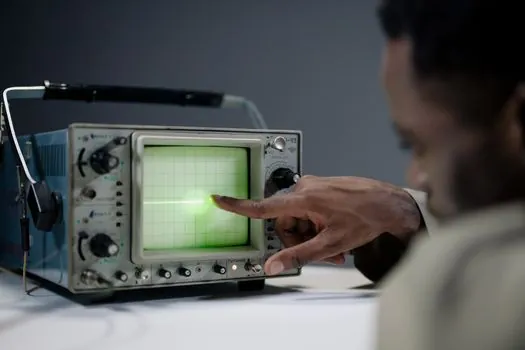
The IEEE definition of a protective relay (IEEE C37.100-1992) and the relay expansion (IEEE C37.100-1992 and C37.90-2005) are the baseline references a generation engineer should cite on every single-line and protection philosophy document [S2]. A modern relay test set verifies that the chosen relay meets those requirements by simulating voltage, current, frequency, and phase angle conditions and checking that the relay triggers the circuit breaker within the required time, applicable to electromechanical, static, and digital IEDs alike [S3].
Advanced testers add automated test sequencing, embedded GPS synchronization for end-to-end testing of line protection, report generation, parameter comparison against stored relay settings, and cloud-based test-result management, all of which improve traceability and long-term maintenance planning [S3]. Global market research referenced in 2025 projects the relay testing market to exceed several hundred million dollars by 2030, with demand driven by microprocessor-based relays, predictive maintenance, and smart substation automation in Asia-Pacific, the Middle East, and Africa [S3]. Engineers specifying protection for new generation assets should plan the test-set budget and the relay replacement roadmap on the same schedule, since the relay is only as good as the proof that it still operates within the IEEE-defined envelope.
Who This Spec Fits, and Where It Does Not
Digital/numeric protective relays with electro-mechanical or solid-state auxiliaries are the right fit for utility-scale thermal, hydro, gas, and combined-cycle plants where generator, transformer, and busbar protection must be coordinated, where SCADA/IEC 61850 communications are required, and where the auxiliary battery and trip circuits still need isolation that only an electro-mechanical lockout or trip relay provides [S2]. They are also the right fit for plant auxiliaries fed through a managed power distribution switchgear lineup, where power supply stability and power meter data feed the same protection logic. They are NOT the right fit for low-voltage sub-distribution to lighting or HVAC (use molded-case breakers and contactors instead), for consumer-grade appliance control, or for any application where a single electro-mechanical or solid-state relay is already meeting the trip class and no communications are required [S2].
For a quick cross-check, engineers sizing HV DC contactors for battery and UPS interfaces can compare architectures in Best Automotive HV DC Contactors: 2026 Spec Map, since both domains share trip-time, contact arrangement, and DC interruption constraints; for plant DC bus and battery charger coordination, Programmable DC Power Supply Certification Checklist for Structural Fabrication Jobs provides a parallel certification discipline that translates directly to substation DC auxiliaries.
Trackable signals to watch next: (1) IEC 61850 Edition 3 conformance statements on the digital relay shortlist, because GOOSE and sampled-values mapping drive substation architecture choices, and (2) the 2026 second-half release of relay test sets with native IEC 61850-9-2LE playback, which removes the need for external merging units during acceptance testing [S3].