
Chinese factories led by Hebei Xinda, Teflex Fluorotec, and Aohong Global now supply the majority of braided gland packing sold into pumps, valves, and agitators worldwide, alongside European technical mills such as IDT Industrie- und Dichtungstechnik that hold TA Luft, API 622, and FDA approvals for low-emission service [S1][S4][S5].
Gland packing (also called packing rings or compression packing) consists of braided or molded fiber rings compressed inside a stuffing box to seal rotating or reciprocating shafts, and it remains one of the most cost-effective sealing options across chemical, power, water, and slurry services [S2][S3].
Material Families and Operating Limits
Flexible graphite packing covers -200 to 450 °C at pressures up to roughly 200 bar and is the default for superheated steam and hot hydrocarbon valves, while pure or filled PTFE packing operates from -200 to 260 °C at pressures up to about 100 bar and is stable across the full pH 0-14 chemical range [S2][S1].
Aramid (Kevlar) and synthetic fiber packing spans -40 to 250 °C at pressures up to 100 bar and is specified where abrasive slurry or mining solids cut through standard fibers, and carbon-graphite-PTFE hybrids extend service to -100 to 300 °C at pressures up to 160 bar for high-pressure, low-leakage rotating shafts [S2]. Cross-sections are commonly supplied as 8 x 8 mm, 10 x 10 mm, and 12 x 12 mm squares, or as round rope from Ø 4 mm to Ø 20 mm in 5 m or 10 m coils [S2][S4].
Construction Types and Packing Geometry
Braided square packing (single or multi-strand) is the workhorse format for centrifugal pump stuffing boxes, while formed molded rings and pre-cut kits suit OEM valve assemblies and field rebuilds where ID/OD tolerances must be held tightly [S2][S4].
Woven tape and rope formats (Teflex offers 4-40 mm acrylic, PTFE, and aramid constructions in square, round, and ladder braids) cover custom stuffing boxes, and PTFE lantern rings are inserted between packing rings to feed flush water or barrier fluid and protect the shaft sleeve from scoring [S4]. For dynamic equipment, see the spec-first comparison in Gland Packing vs Mechanical Seals when a retrofit to a mechanical seal is on the table.
Supplier Tiers and Regional Sourcing Map

Tier 1 Chinese manufacturers (Hebei Xinda, Teflex Fluorotec, Aohong Global) ship direct ex-works at wholesale pricing with ISO 9001:2015 certification, vacuum-assisted fiber densification, and a full material matrix from white PTFE through graphite, aramid, carbon fiber, and acrylic [S1][S2][S4].
Tier 2 European technical mills such as IDT focus on low-emission grades certified to TA Luft, API 622, and FDA, published in a 3.37 MB product overview updated 2026-05-20, and target agitator and pump OEMs where fugitive-emission compliance is contractually mandated [S5]. Specialized importers and distributors in Africa, the Middle East, and South America source from both tiers; current tender activity, for example Botswana 2026 gland packing seal tenders, confirms steady public-sector demand in mining and water utilities [S6]. Procurement teams that also evaluate mechanical seal retrofits can cross-reference Servo Motor Suppliers 2026: Brand Tiers, Spec Trade-offs, and Sourcing Map for the broader rotating-equipment supplier landscape.
Selection Criteria: Matching Packing to Service
Four decision criteria separate the four main options: (1) maximum continuous temperature, (2) chemical compatibility with the process fluid, (3) shaft speed and PV (pressure x velocity) loading, and (4) abrasion from solids content. On that grid, flexible graphite wins high-temperature steam and hot oil up to 450 °C; PTFE covers the broadest chemical window up to 260 °C with the lowest friction; aramid leads on slurry and mining abrasion up to 250 °C; carbon-PTFE hybrids handle high-pressure hydrocarbons up to 160 bar with low leakage [S1][S2][S4].
For food, pharmaceutical, and potable-water service, FDA-grade white PTFE or graphite with FDA-compliant lubricants is mandatory, and oxygen service requires passivated, oil-free PTFE to prevent ignition [S1][S5].
Installation, Lubrication, and Failure Modes
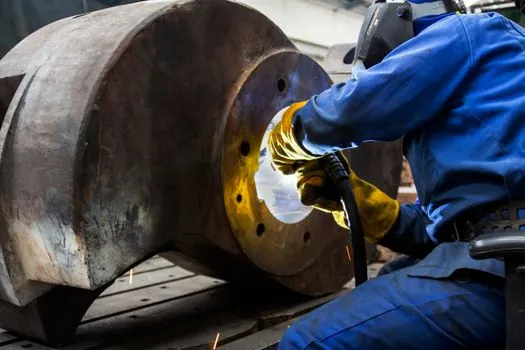
Correct gland packing installation follows a defined sequence: isolate and depressurize the equipment, remove old rings without scoring the shaft, cut new rings to the correct circumference with 45° scarf joints staggered 90° between rings, and torque the gland follower evenly so the packing is compressed uniformly around the shaft [S3].
Common failure modes are over-tightening (causes sleeve scoring and rapid heat buildup), under-tightening (allows controlled leakage to rise beyond emissions limits), wrong material selection (PTFE softens above 260 °C, graphite oxidizes above 450 °C in air), and dry running (unlubricated PTFE in reciprocating service wears in hours rather than weeks) [S2][S3]. Periodic drip leakage of 30-60 drops per minute is the usual steady-state target on centrifugal pump packing sets; lower rates signal over-compression and imminent shaft damage [S3]. When the process is being re-engineered for emissions compliance, the Additive Manufacturing Procurement Strategy: Make-or-Buy, Sourcing Levers and Spec-First framework applies cleanly to low-volume specialty seal geometries.
Standards, Approvals, and Documentation
European low-emission packing carries TA Luft (the German air-quality regulation for fugitive emissions) certification, while refinery and hydrocarbon process service typically requires API 622 compliance for soft-seated valve packing, and food or pharmaceutical contact mandates FDA-grade material declarations [S5].
Manufacturer quality systems are most commonly certified to ISO 9001:2015, and datasheets should always be requested with full material traceability including fiber origin, lubricant type, and any impregnation chemistry [S1][S5]. For more on how gland packings sit inside a broader fluid-handling assembly, the Molding Line Selection for Hardware Manufacturing: RIM, Injection, and Overmolding reference covers the molded component side of stuffing box hardware.
Trackable next signals: monitor the Botswana and adjacent African gland packing tender portals for 2026 public-sector award prices [S6], and watch for any IDT product-overview update after the 2026-05-20 release, which is the most recent dated technical datasheet on European low-emission packing in the public record [S5].
Spec-level background on the components involved: gland packing, lighting equipment and electric lamps, and cable gland.