A sludge pump moves the thick, solids-laden, often non-Newtonian residue produced by water and wastewater treatment: primary and waste activated sludge, digested sludge, and dewatered cake. Unlike a clean-water pump, it has to cope with high apparent viscosity, abrasive grit, stringy rags and fibers, and dry-solids contents that can range from around 1 percent in surplus activated sludge to over 40 percent in filter-press cake.
Because the medium changes character so sharply with solids content, no single pump type covers the whole range. Thin streams stay in the domain of non-clog centrifugal pumps, while thickened sludge and cake belong to positive-displacement types such as progressive cavity, rotary lobe, and piston pumps. This guide maps each grade of sludge to the pump principle, materials, and specifications that actually suit it.
This guide is written for industrial purchasing engineers and design engineers specifying pumps for municipal and industrial sludge. It covers 6 chapters, from what a sludge pump is, through pump-type classification, sludge grades and rheology, wetted materials, and spec-sheet decoding, to a selection decision sequence, with 7 selection FAQs and manufacturer comparisons. Performance and design references include ISO 9906:2012 (hydraulic acceptance test grades 1, 2, 3), ISO 5199 and ISO 2858 (centrifugal process pumps), the EN 12050 series (wastewater lifting plants), ATEX directive 2014/34/EU with the IEC 60079 series, and Water Research Centre report TR 185 for sludge pipework sizing.
Chapter 1 / 06
What is a Sludge Pump
A sludge pump is a pump engineered to move sludge: a thick, solids-bearing mixture that behaves very differently from clean water. The defining feature of sludge is that its solids are soft and organic rather than hard mineral grit, that it carries stringy material such as rags, wipes, hair, and fiber, and that its apparent viscosity rises steeply as the dry-solids content increases. The result is a fluid that, above roughly 2 to 3 percent dry solids, no longer behaves like water and cannot be moved efficiently by an ordinary centrifugal pump. The phrase "sludge pump" therefore does not name one machine; it names a duty, and several distinct pump principles compete to serve it.
It helps to separate sludge from the adjacent category of slurry. A slurry is a suspension of hard, abrasive mineral particles such as sand, ash, ore tailings, or coal fines in water, and the dominant engineering problem there is wear, answered with high-chrome iron or rubber-lined centrifugal pumps. Sludge, by contrast, is the soft organic residue of biological and physical-chemical treatment, and its dominant problems are viscosity, clogging, and the gentle handling of flocculated or polymer-conditioned solids. Many products are marketed for both duties, but the material that wears out first and the failure mode that stops the line are not the same, so the selection logic differs.
Structurally, a sludge pump has the same building blocks as any industrial pump: a wetted hydraulic end that contacts the medium, a drive end with bearings and a coupling to the motor, and a shaft seal between them. What changes for sludge is the geometry and material of the wetted end. Centrifugal sludge pumps use open, vortex, or single-channel impellers with large free passage so that rags and lumps travel through without bridging. Positive-displacement sludge pumps replace the impeller entirely with a sealed-chamber mechanism, a helical rotor inside an elastomer stator, a pair of meshing lobes, or a reciprocating piston, that traps a fixed volume and displaces it regardless of how viscous or thick the medium becomes.
The industrial context for sludge pumping is large. A municipal wastewater treatment plant moves sludge dozens of times across its solids train: lifting raw and primary sludge out of clarifiers, transferring waste activated sludge, feeding thickeners and centrifuges, recirculating and feeding anaerobic digesters, and finally pushing dewatered cake to trucks or dryers. Each of these duties presents a different dry-solids content, a different viscosity, and a different mix of grit and fiber, so a single plant routinely runs three or four pump types. Industrial sites add their own sludges from clarification, neutralization, paint shops, food processing, and mining concentrate handling.
Four engineering factors decide whether a sludge pump is the right choice: the dry-solids content and resulting rheology of the medium, the size and stringiness of the solids, the abrasiveness and chemistry of the stream, and the head and flow the system demands. Get the first one wrong, by specifying a centrifugal pump for cake-grade sludge or an oversized positive-displacement pump for thin influent, and the pump will either clog, lose its head, or wear out far ahead of schedule. The remaining chapters work through these factors in order so that a procurement specification maps cleanly onto a pump principle and a real product family.
Chapter 2 / 06
Sludge Pump Types
Sludge pumps split into two broad families: rotodynamic (centrifugal) and positive displacement. Centrifugal pumps add energy by accelerating the medium with a spinning impeller, then converting that velocity into pressure in the casing; they deliver high flow at moderate head but lose head rapidly as viscosity climbs. Positive-displacement pumps trap a fixed volume of medium and push it out mechanically, delivering near-constant flow against rising pressure and handling viscosity and high solids that would defeat a centrifugal pump. The table below compares the principal types used on sludge.
Pump Type
Family
Typical Max Dry Solids
Best-Fit Sludge Duty
Non-clog centrifugal
Rotodynamic
~3 to 5%
Raw, primary, thin WAS, station lifting
Submersible non-clog
Rotodynamic
~3 to 5%
Wet wells, recirculation, pumping stations
Progressive cavity
Positive displacement
up to ~40 to 45%
Thickened sludge, cake, metering, dosing
Rotary lobe
Positive displacement
~8 to 12%
Primary, screenings, digested, transfer
Piston / plunger
Positive displacement
~20 to 40%+
Dewatered cake over long distance, filter feed
Peristaltic (hose)
Positive displacement
~10 to 30%
Abrasive, polymer-dosed, shear-sensitive
Air-operated diaphragm
Positive displacement
~10 to 15%
Sumps, intermittent, low-flow transfer
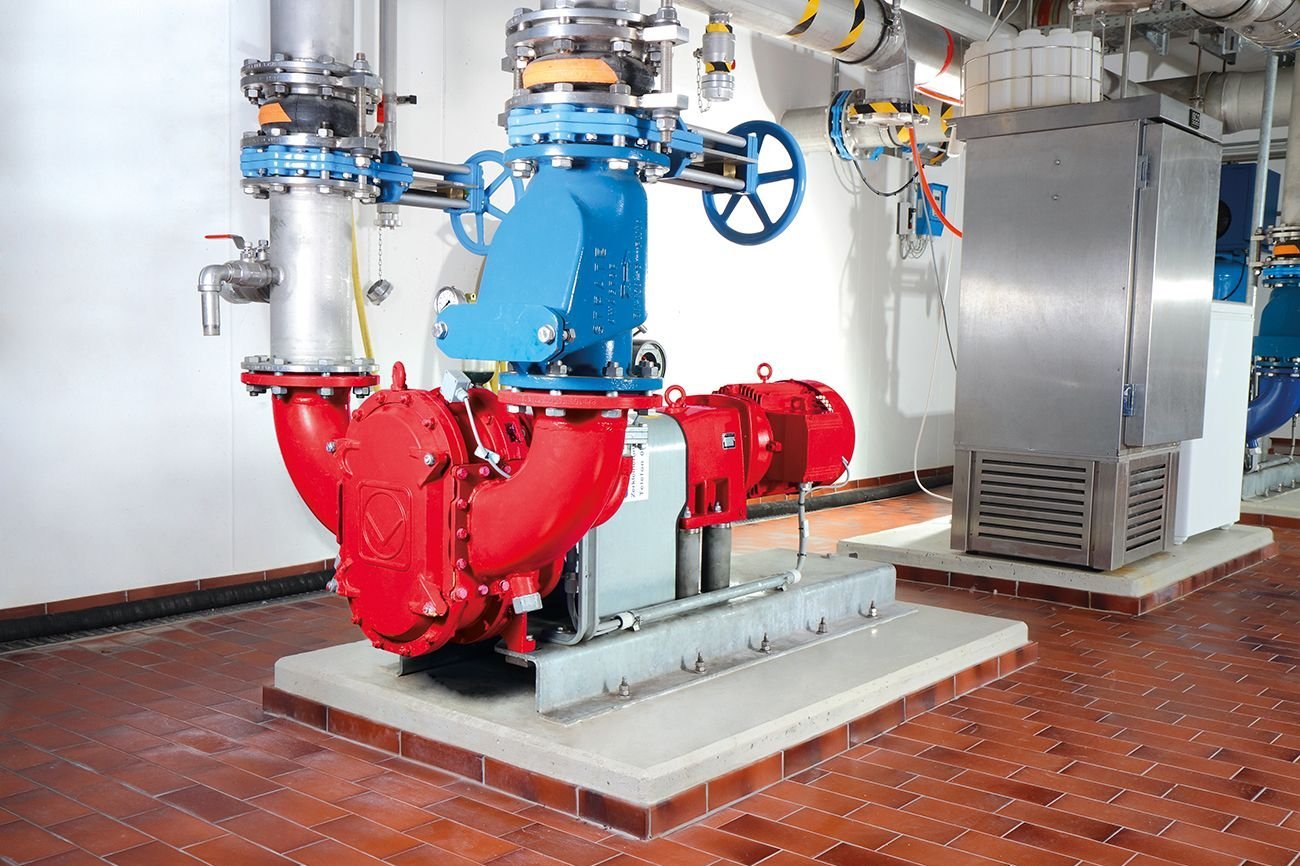
Non-clog centrifugal pumps use vortex, single-channel, or two-channel impellers that give a large free passage, commonly 50 to 100 mm, so rags and lumps pass without bridging. They are the workhorse for thin sludge and station lifting because they are cheap, robust, and high-flow. The trade-off is that head falls steeply once dry solids and viscosity rise, and a vortex impeller, which gives the largest passage by sitting recessed so solids never touch the vanes, sacrifices roughly 10 to 15 efficiency points compared with a closed channel impeller. Submersible versions of the same hydraulics dominate wet-well and recirculation duties.
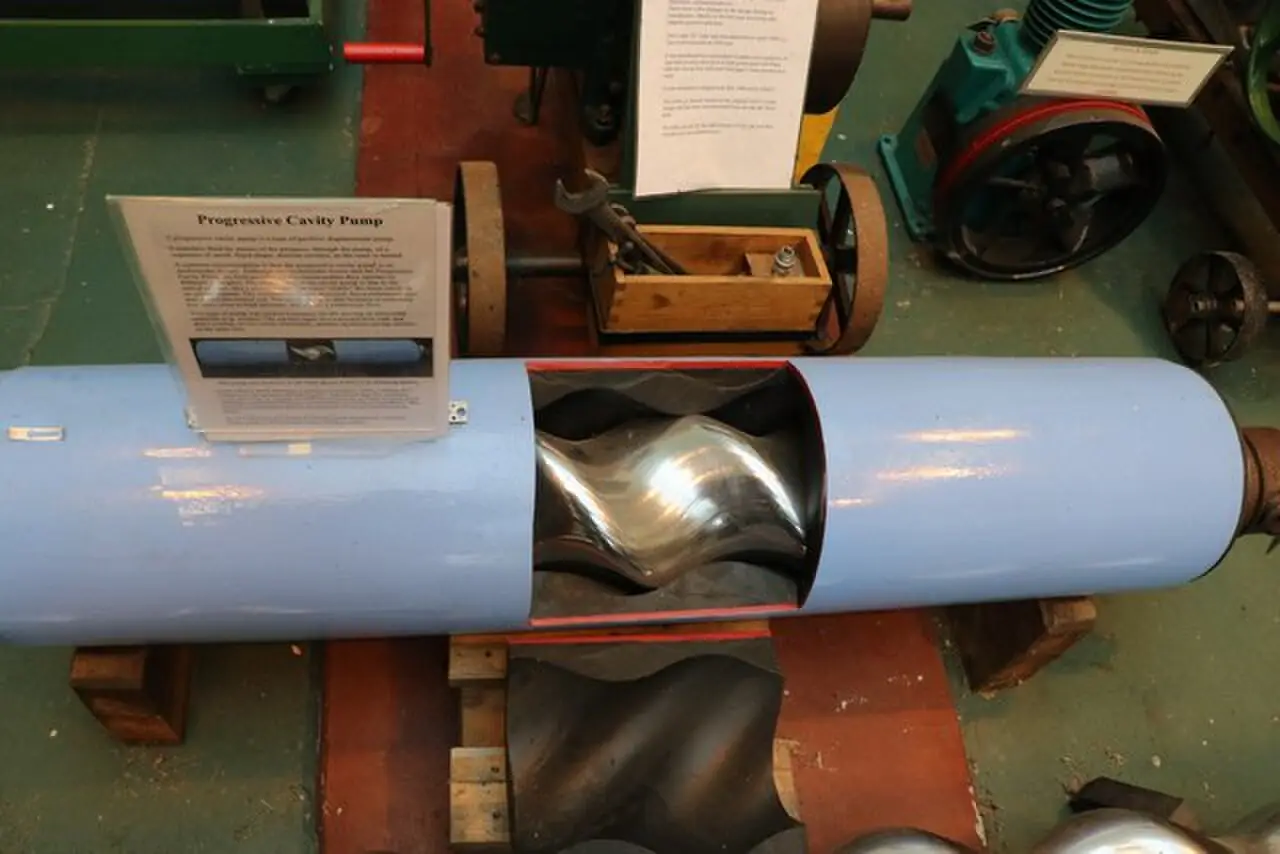
Progressive cavity pumps use a single-helix metal rotor turning inside a double-helix elastomer stator. The geometry forms a sequence of sealed cavities that march from suction to discharge as the rotor turns, giving smooth, low-pulsation, near-constant flow proportional to speed. They handle the widest range of any sludge pump, from thin liquor to dewatered cake at 40 to 45 percent dry solids, run with very low required NPSH, and meter accurately, which makes them the default for thickened-sludge and digester-feed duties. Their weaknesses are that stringy material can wrap the rotor, the rotor and stator wear and are application-specific, and a rebuild of even a modest 20 hp unit can take a mechanic four to six hours. Representative product is the NETZSCH NEMO family and the SEEPEX BN series.
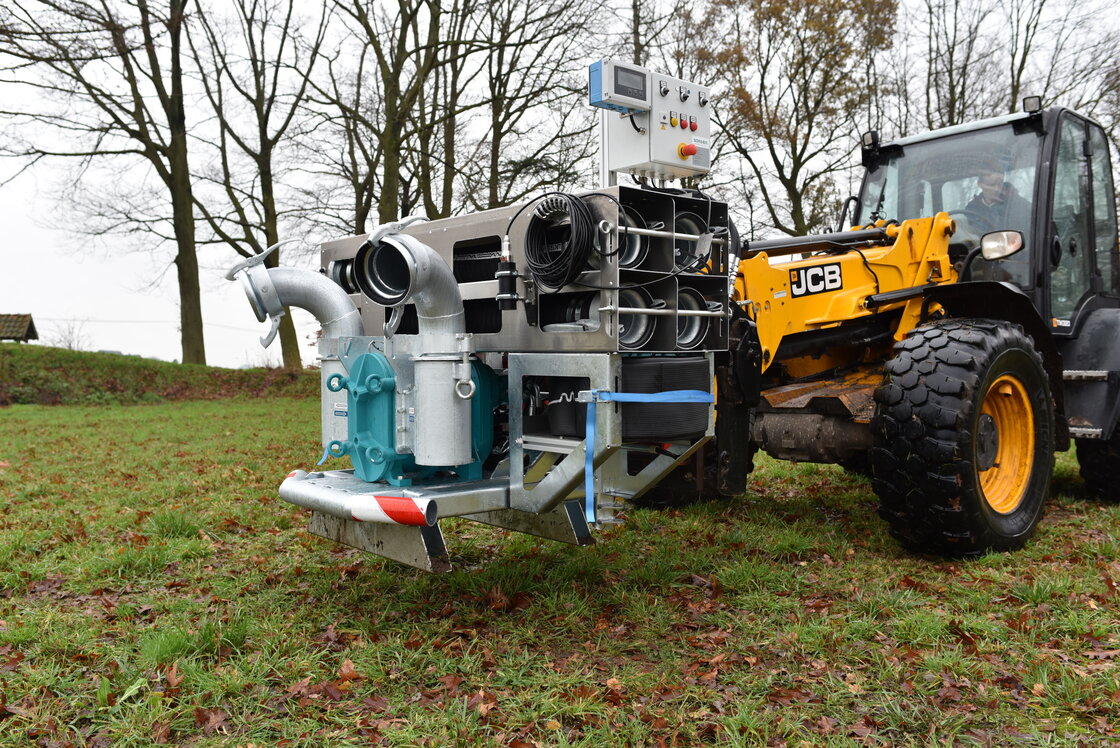
Rotary lobe pumps use two or three meshing lobed rotors that counter-rotate to carry medium around the casing. They are compact, run dry briefly, reverse for line clearing, and crucially offer maintenance-in-place: the wear parts swap through a front cover without removing the pump or pipework, which is a decisive advantage over progressive cavity pumps in service-constrained plants. They tolerate stringy primary sludge and screenings at 8 to 10 percent dry solids well. The trade-off is higher internal slip at high differential pressure and high viscosity, so they suit transfer and primary-sludge duty more than the very thickest cake. Representative product is the NETZSCH TORNADO, the Vogelsang VX series, and Boerger rotary lobe pumps.
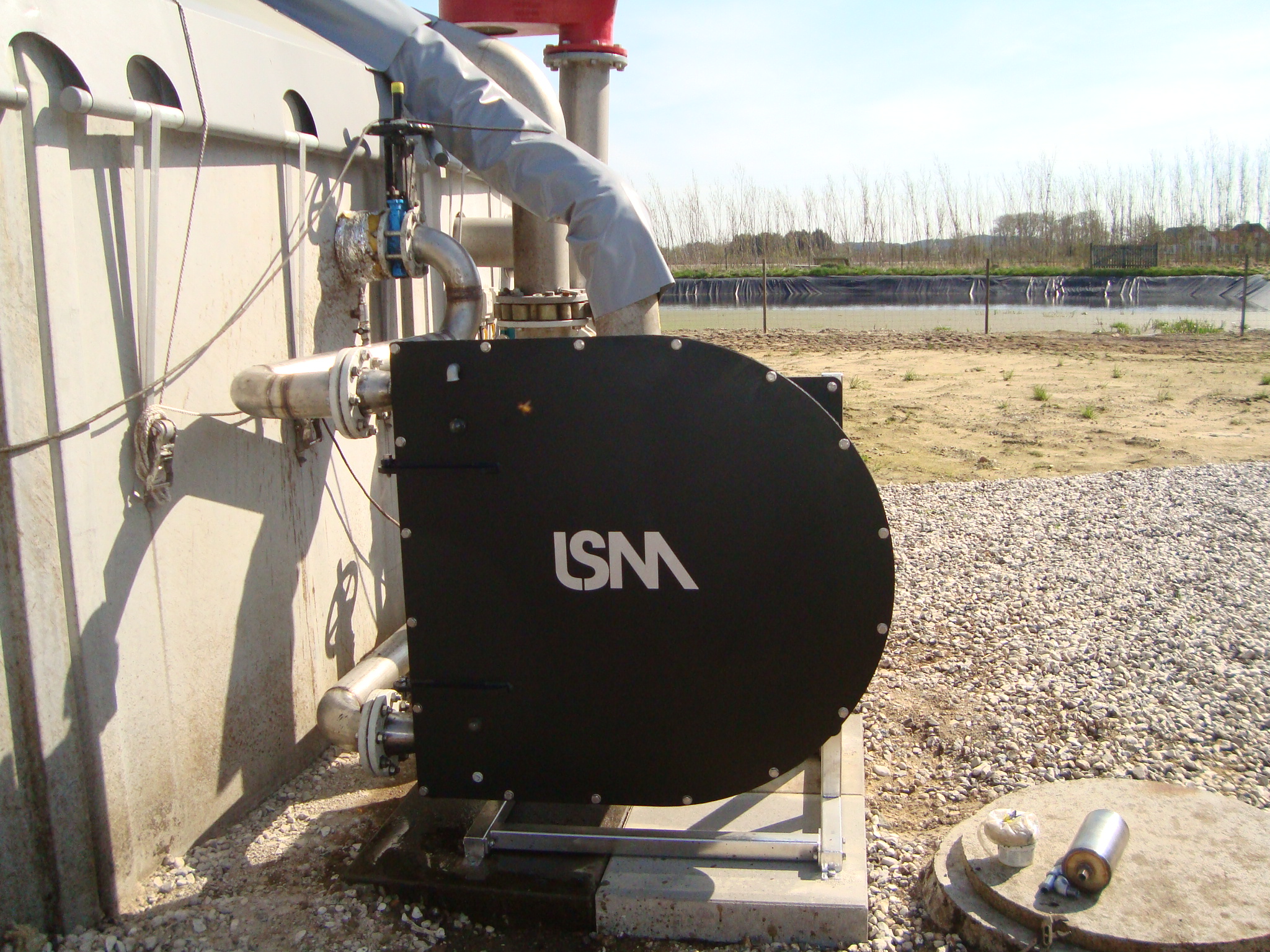
Piston and plunger pumps are high-pressure reciprocating positive-displacement pumps used where dewatered cake at 20 to 40 percent dry solids must travel long distances or be forced into a filter press or dryer. They develop the high pressure that stiff cake demands, often tens of bar, but they are pulsating and need accumulators or twin cylinders for smoother flow. Peristaltic hose pumps squeeze a reinforced hose with rollers, so the only wetted part is the hose itself, which suits abrasive and shear-sensitive polymer-dosed sludge and gives a true, leak-tight metering action. Air-operated diaphragm pumps serve intermittent sump and low-flow transfer duties where simplicity and dry-run tolerance matter more than efficiency.
Chapter 3 / 06
Sludge Grades and Rheology
The single most important number in sludge pumping is the dry-solids (DS) content, because it sets both the viscosity and the pump family. Sludge is classified along the treatment train into primary or raw sludge, secondary or waste activated sludge, digested sludge, thickened sludge, and dewatered cake, and each grade occupies a characteristic DS band. The table below summarizes the grades and the pump principle that typically suits each. The figures are representative ranges for municipal sludge; industrial sludges vary widely and should be confirmed by sampling.
Sludge Grade
Typical Dry Solids
Character
Typical Pump
Surplus / waste activated (WAS)
~0.5 to 1.5%
Thin, near-Newtonian, light flocs
Non-clog centrifugal
Primary / raw sludge
~3 to 6%
Rags, grit, scum, stringy
Rotary lobe or non-clog centrifugal
Thickened sludge
~5 to 10%
Viscous, non-Newtonian
Progressive cavity or rotary lobe
Digested sludge
~2 to 5%
Stabilized, H2S, gas bubbles
Progressive cavity or rotary lobe
Dewatered cake
~15 to 40%+
Plastic to chunky solid
Progressive cavity or piston
Primary sludge settles out of raw influent in the primary clarifiers and typically carries 3 to 6 percent dry solids, with about 95 percent moisture, plus the highest load of rags, grit, and scum of any grade. Waste activated sludge, drawn from the biological stage, is the thinnest stream at roughly 1 percent dry solids and behaves almost like dirty water, which is why a non-clog centrifugal pump still works on it. Once these streams are thickened to around 5 to 10 percent dry solids ahead of digestion or dewatering, their behavior changes character entirely.
The reason is rheology. Below about 2 to 3 percent dry solids sludge is close to Newtonian and clean-water hydraulics roughly apply. Above that, it becomes a non-Newtonian fluid with a yield stress, and apparent viscosity climbs steeply. Measured data make the point: at 4.5 percent solids the laminar viscosity is on the order of 0.8 to 2.7 Pa s, while at 9.5 percent solids it rises to roughly 6 to 22 Pa s, an order of magnitude higher for only a doubling of solids. A common practical guideline is that sludge with a viscosity around 6,000 centipoise or less remains comfortably pumpable; beyond that, pipe friction and required pressure escalate quickly.
This non-linear viscosity is exactly why centrifugal pumps fall away above 2 to 3 percent dry solids: a centrifugal pump loses head as viscosity rises, so it cannot sustain flow against the steep friction of thick sludge. Positive-displacement pumps, which displace a fixed volume per revolution regardless of viscosity, take over. It is also why pipework for sludge above 2 percent dry solids cannot be sized from clean-water friction tables. The Water Research Centre report TR 185, How to Design Sewage Sludge Pumping Systems, is the standard reference for applying the correct friction multipliers once dry solids reach 2 percent or more.
Digested sludge adds two further complications. Anaerobic digestion stabilizes the sludge and reduces its volume, but it also releases hydrogen sulfide and entrained biogas. Gas bubbles in the suction can blanket a centrifugal impeller and cause loss of prime, and they reduce the effective fill of a positive-displacement chamber, so digester-feed and recirculation pumps are usually progressive cavity or rotary lobe types chosen with this in mind. Dewatered cake at 15 to 40 percent dry solids is no longer a liquid at all: at the low end it resembles wet manure and at the high end a chunky solid, which is why it demands the high pressure of a piston pump or a hopper-fed progressive cavity pump with a forced-feed auger.
Chapter 4 / 06
Wetted Materials and Seals
Sludge is mildly abrasive and chemically variable, so material selection is about balancing wear life against corrosion resistance and cost. The wetted parts that matter are the casing and impeller on centrifugal pumps, the rotor and stator on progressive cavity pumps, the lobes and casing on rotary lobe pumps, and the shaft seal common to all. Because municipal sludge is near-neutral but grit-laden, a typical baseline build pairs a cast-iron casing with a hardened-steel or stainless rotor and an elastomer stator, and reserves higher alloys for aggressive industrial streams. The table below is a quick-reference starting point; always confirm against the maker's corrosion chart and the actual sludge analysis.
Sludge Condition
Recommended Wetted Materials
Notes
Municipal, near-neutral, gritty
Cast iron casing, hardened/stainless rotor, NBR stator
Baseline build, SiC/SiC seal
Abrasive, high grit / digested
High-chrome iron or hardened rotor, abrasion-resistant elastomer
Casing and impeller metals. Grey cast iron is the default casing for municipal sludge because it is cheap, castable into complex non-clog volutes, and adequately corrosion-resistant for near-neutral streams. Where grit content is high, as in digested sludge or industrial clarifier underflow, the wear surfaces move to high-chrome iron, which carries hard chromium carbides that resist erosion far better than plain iron. Corrosive industrial sludge with acids, chlorides, or hydrogen sulfide pushes the wetted parts to 316L austenitic stainless or duplex 2205, the latter giving both higher strength and better chloride pitting resistance. The correct choice is always set by the specific concentration, temperature, and grit load, not by a generic label.
Progressive cavity rotor and stator. The rotor is the wear partner that is hardest to ignore: it is commonly tool steel or stainless with a hard chrome or tungsten-carbide coating to resist the grit in sludge. The stator is an elastomer, with NBR (nitrile) as the general-purpose choice, EPDM where the sludge is hot or chemically harsher, and special abrasion-resistant or FKM grades for demanding industrial media. Stator life is the dominant maintenance cost on these pumps, so abrasion-resistant elastomers and oversized stators are common in gritty service. Tight rotor-to-stator interference improves volumetric efficiency but generates heat, so running a progressive cavity pump dry or against a closed valve quickly burns the stator.
Shaft seals. The seal is where sludge pumps most often fail, because abrasive solids attack the sealing faces. The baseline is a single mechanical seal with silicon-carbide-versus-silicon-carbide faces, which resist grit far better than carbon. For abrasive, high-grit, or hazardous sludge, a double or tandem mechanical seal with a clean barrier or buffer fluid keeps solids off the primary faces and provides containment if the inner seal fails. Submersible pumps typically use a double mechanical seal in an oil-filled chamber. Gland packing is still seen on older or low-cost installations but leaks by design and is being displaced by cartridge mechanical seals. Secondary elastomers, the O-rings and gaskets, follow the same chemistry logic: NBR or EPDM for municipal duty, FKM or FFKM for aggressive or hot media.
Chapter 5 / 06
Key Specification Parameters
Sludge-pump datasheets carry many figures, but only a handful drive the selection and the lifecycle cost: flow rate, total dynamic head or differential pressure, dry-solids and viscosity rating, free passage or maximum particle size, NPSH, slip and volumetric efficiency, drive power and speed, and the materials and certifications already covered. Each is explained below in the way it actually appears on a quotation.
Flow rate and head. Flow is quoted in cubic meters per hour (or US GPM); head in meters (or feet) for centrifugal pumps and as differential pressure in bar for positive-displacement pumps. The trap with sludge is that the duty point must be evaluated on the actual sludge, not on water: above 2 percent dry solids the friction head in the pipe is far higher than the clean-water figure, so a clean-water curve overstates the pump's real capability. Use a friction multiplier or Water Research Centre TR 185 to find the true system curve before fixing the duty point. Hydraulic performance and its tolerances are governed by ISO 9906:2012, which defines acceptance grades 1, 2, and 3 for flow, head, efficiency, and power.
Dry-solids and viscosity rating. Every positive-displacement sludge pump is sold against a maximum dry-solids and viscosity window, because the geometry and drive torque are sized for it. A progressive cavity pump rated to 40 percent cake will be grossly oversized and inefficient on 2 percent liquor, and a rotary lobe pump rated to 10 percent will slip badly on stiff cake. Always state the dry-solids content, and where possible the measured apparent viscosity, on the enquiry. Remember that viscosity and temperature interact: feeding a pump medium outside its rated viscosity can cause the rotor and stator to overheat and seize.
Free passage and particle size. For centrifugal sludge pumps, free passage, the largest sphere that clears the wet end, is the anti-clog metric and is usually 50 to 100 mm for non-clog impellers; it should not be smaller than the discharge bore. Positive-displacement pumps quote a maximum particle size set by internal clearance instead, and stringy material is a separate concern handled by rotor geometry or upstream maceration. Specify the largest credible solid the pump must pass, including rags and plastics, not just the average particle.
NPSH and slip. Net positive suction head available must exceed the head required or the pump cavitates, eroding impeller or rotor and losing output. Centrifugal sludge pumps can demand several meters of NPSH and are sensitive to entrained gas in digested sludge; progressive cavity pumps need very little, typically 0.5 to 3 m, because they accelerate the medium gently. Slip is the positive-displacement counterpart: at low speeds near 200 rpm, delivered flow can drop 25 to 40 percent below the theoretical swept volume as viscous back-leakage bleeds across the clearances, so always size motor and pump on delivered flow, not catalog displacement.
Drive, speed, and signal. Sludge pumps are almost always driven through a variable-frequency drive so flow can track the process, and the motor is rated to IEC 60034 with an efficiency class such as IE3 or IE4. The remaining interface items that belong on the specification are summarized below.
Motor power and IE class: sized on delivered flow and worst-case differential pressure, with margin for stator wear and viscosity peaks; IE3 or IE4 per IEC 60034.
Speed and VFD: low pump speed extends wear life on abrasive sludge; a VFD trims flow and reduces water-hammer on start-stop.
Ingress protection: IP55 for dry-installed motors, IP68 for submersible pumps in wet wells.
Hazardous-area rating: ATEX (EU directive 2014/34/EU), IECEx, or NEPSI for digester, biogas, and classified zones, all referencing the IEC 60079 series.
Process and design standards: ISO 5199 and ISO 2858 for centrifugal process builds, the EN 12050 series for packaged wastewater lifting plants.
One specification that is easy to miss and expensive to ignore is the pulsation and shear behavior. Piston and to a lesser extent rotary lobe pumps pulsate, which can damage flocs, fatigue pipework, and upset downstream dosing; progressive cavity and peristaltic pumps run smoothly and gently, which is why they are preferred where polymer-conditioned flocs must survive intact.
Chapter 6 / 06
Selection Decision Factors
To turn the preceding chapters into a specific model, work through the sequence below. Most selection errors are not single wrong numbers but decisions taken at the wrong level, such as fixing a pump type before the sludge has been characterized. These eight steps double as a fixed RFQ template for sludge-pump enquiries.
Characterize the sludge first: grade (WAS, primary, thickened, digested, cake), dry-solids content, apparent viscosity if known, grit and fiber load, temperature, and chemistry including hydrogen sulfide or solvents. This determines everything downstream.
Choose the pump family by dry solids: below about 2 to 3 percent dry solids a non-clog centrifugal pump is the economical choice; above it, move to positive displacement, then pick progressive cavity for the thickest and most viscous duty, rotary lobe for stringy primary sludge and fast maintenance, and piston for long-distance cake.
Fix flow and head on the real sludge: set peak flow and total dynamic head or differential pressure, correcting friction for dry solids above 2 percent using a multiplier or Water Research Centre TR 185, and size on delivered flow after slip, not theoretical displacement.
Set free passage and particle handling: specify free passage at least equal to the discharge bore for centrifugal pumps, or maximum particle size and stringy-material tolerance for positive-displacement pumps, including upstream maceration if rags are heavy.
Select materials and seals: baseline cast iron with stainless or hardened rotor and NBR stator for municipal duty; high-chrome iron or abrasion-resistant elastomers for grit; 316L or duplex with FKM seals for corrosive streams; silicon-carbide single or double mechanical seals chosen to the abrasion level.
Verify NPSH and gas handling: confirm available NPSH exceeds required, allow for entrained biogas in digested sludge, and prefer low-NPSH progressive cavity pumps on lifted or gassy suctions.
Specify drive, control, and protection: VFD-driven IE3 or IE4 motor to IEC 60034, IP55 or IP68 enclosure, dry-run and over-pressure protection, and ATEX, IECEx, or NEPSI certification for digester, biogas, or classified areas.
Cost it over the lifecycle (TCO): purchase price plus stator or impeller wear parts, seal kits, energy at the real duty point, and the downtime and labor of each rebuild. A progressive cavity pump that is cheap to buy but needs a six-hour stator change yearly can cost more over five years than a rotary lobe pump with maintenance-in-place.
One last commonly overlooked dimension is serviceability, which on sludge pumps is decisive because the wear parts are consumables. Maintenance-in-place on rotary lobe pumps, where the wear plates and lobes swap through a front cover without disturbing the pipework, can turn a multi-hour shutdown into a short one, whereas a progressive cavity rebuild typically takes a mechanic four to six hours and demands application-specific rotor and stator stock. Confirm local spare-part availability, elastomer lead times, and field-service support before committing. NETZSCH, Vogelsang, Boerger, and SEEPEX cover the positive-displacement range, while Xylem Flygt, KSB, Sulzer, Grundfos, and Wilo cover non-clog and submersible centrifugal sludge pumps; verify the specific series, dry-solids rating, and certification on the maker datasheet, because each series targets a narrow viscosity and solids window.
FAQ
What is the difference between a sludge pump and a slurry pump?
The two terms overlap, but the distinction is the nature of the solids. A slurry pump moves a suspension of hard, abrasive mineral particles (sand, ore tailings, ash) in water, where the dominant design problem is wear, so the answer is hardened high-chrome iron or rubber liners and a heavy centrifugal build. A sludge pump moves the soft, organic, often stringy and high-viscosity residue of wastewater treatment, where the dominant problems are viscosity, clogging by rags and fibers, and gentle handling of flocculated solids. As dry-solids content rises above roughly 2 to 3 percent the flow turns non-Newtonian and a centrifugal pump loses head fast, so true sludge service usually shifts to positive-displacement types such as progressive cavity, rotary lobe, or piston pumps.
How do I choose between a progressive cavity pump and a rotary lobe pump?
Both are positive-displacement and both run on thick sludge, so the decision is driven by the medium and the maintenance philosophy. Progressive cavity pumps handle the widest viscosity and dry-solids range, up to roughly 40 to 45 percent DS on dewatered cake, run with very low NPSH (about 0.5 to 3 m) and pulsation, and suit metering and long uphill runs, but a rotor or stator change can take a mechanic several hours and the parts are application-specific. Rotary lobe pumps are more compact, tolerate stringy primary sludge and screenings at 8 to 10 percent DS, and offer maintenance-in-place where the wear parts swap without removing pipework, but they slip more at high pressure and high viscosity. Choose progressive cavity for the thickest, most viscous, low-pulsation duties and rotary lobe where fast service and foreign-matter tolerance dominate.
What is free passage and why does it matter for sludge pumps?
Free passage, also called solids or sphere passage, is the diameter of the largest sphere that can travel through the wet end without jamming. It matters because raw and primary sludge carry rags, wipes, plastics, grit, and fiber that bridge across small clearances and block the pump. For non-clog centrifugal sludge pumps a vortex or single-channel impeller typically gives 50 to 100 mm free passage, and the rule of thumb is that free passage should not be smaller than the discharge bore feeding the rising main. Vortex impellers give the largest passage because the impeller sits recessed and the solid never touches the vanes, at a cost of roughly 10 to 15 efficiency points versus a closed channel impeller. Positive-displacement pumps quote a maximum particle size set by chamber clearance rather than a sphere passage.
Which wetted materials and seals suit abrasive or corrosive sludge?
Municipal sludge is mildly abrasive and near-neutral, so cast iron casings with stainless or hardened steel rotors, NBR or EPDM stators, and a silicon-carbide-versus-silicon-carbide mechanical seal cover most duties. Grit-laden, digested, or industrial sludge raises abrasion, so move to high-chrome iron or hardened rotors, abrasion-resistant stator elastomers, and double mechanical seals with a barrier fluid. Chemically aggressive streams such as digester sludge with hydrogen sulfide, or industrial sludge with acids or solvents, call for 316L, duplex stainless, or elastomer choices verified against a corrosion chart, plus FKM or FFKM secondary seals. Always confirm the seal face, flush plan, and elastomer against the specific sludge, temperature, and any polymer conditioning chemicals.
How do I size a sludge pump and account for viscosity and slip?
Start from peak flow and total dynamic head, then correct for sludge. For sludge above about 2 percent DS the friction head in the pipe is far higher than for water, so apply a friction multiplier or use Water Research Centre TR 185 rather than clean-water tables. For positive-displacement pumps, remember slip: at low speeds near 200 rpm delivered flow can fall 25 to 40 percent below the theoretical swept volume because viscous back-leakage bleeds across the clearances, so size the pump and motor on delivered, not theoretical, flow. Keep velocity high enough to avoid grit settling, usually above 1 to 1.5 m/s, but low enough to limit wear, and confirm the available NPSH exceeds the required value, which is small for progressive cavity pumps but significant for centrifugal sludge pumps on a flooded or lifted suction.
Which standards and certifications apply to sludge pumps?
Hydraulic performance and acceptance testing follow ISO 9906:2012, which defines tolerance grades 1, 2, and 3 for flow, head, efficiency, and power on rotodynamic pumps. Chemical and process-duty centrifugal builds reference ISO 5199 for mechanical design and ISO 2858 for end-suction dimensions up to 16 bar. Wastewater lifting plants and packaged stations reference the EN 12050 series. Pumps in digester, biogas, or hazardous zones need ATEX certification under EU directive 2014/34/EU, or the international IECEx scheme and China NEPSI for the same IEC 60079 explosion-protection requirements. Motors are rated to IEC 60034 with an efficiency class such as IE3 or IE4, and submersible enclosures to IP68. For potable or food-adjacent sludge confirm the relevant material approvals separately.
Which manufacturers make industrial sludge pumps?
For progressive cavity and rotary lobe sludge pumps the established suppliers are NETZSCH (NEMO progressing cavity and TORNADO rotary lobe), Vogelsang (VX rotary lobe), Boerger (rotary lobe), and SEEPEX (BN progressing cavity). For non-clog and submersible centrifugal sludge and wastewater pumps, Xylem Flygt, KSB, Sulzer, Grundfos, and Wilo are widely used in municipal plants. High-pressure piston pumps for dewatered cake at 15 to 40 percent DS are supplied by Putzmeister and SEEPEX, among others, and peristaltic hose pumps for abrasive or shear-sensitive sludge by Watson-Marlow and Verderflex. Verify the specific series, dry-solids rating, and hazardous-area certification against the maker datasheet before purchase, because each series targets a narrow viscosity and solids window.
Sludge Pump Manufacturers
Source-backed product routes. Open a company dossier for procurement scope and cited evidence.
EBARA Pumps Americas Corporation (EPAC) strives to deploy the best water pumps, wastewater pumps, pump systems, and technologies to meet the needs of our growing communities.