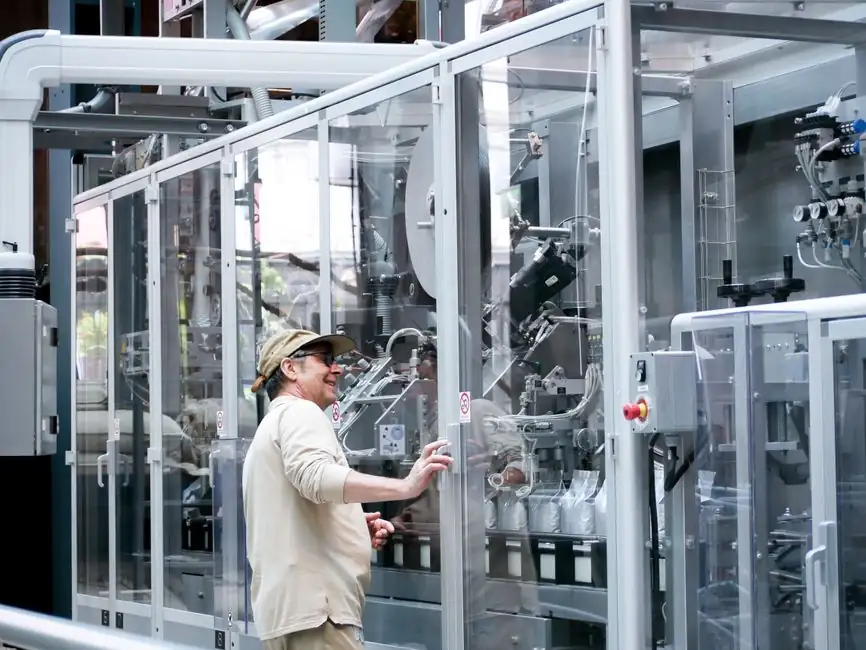
The labeling machinery market produces an estimated $15 billion in annual revenue worldwide, anchored by multi-line OEM integrators and a long tail of regional builders that ship into bottling, pharmaceutical, cosmetics, and e-commerce fulfillment lines [S3]. Buyers evaluating a labeling machine in 2026 should treat vendor selection as a downstream of container geometry, label format, and line throughput, not as a brand decision.
Supplier concentration is moderate: a handful of European OEM houses cover global bottlers, while a deeper bench of US and Asian builders serve small-to-mid converters and warehouse operators. CTM Labeling Systems (Salem, OH) ships automated labelers to more than 100 Amazon fulfillment centers and builds a semi-automatic tabletop wrap labeler rated to 50 PPM with a color HMI [S1].
Market Tiers and What Each Tier Solves
The supplier stack resolves into three tiers: global OEM integrators (Krones AG, Sidel, KHS GmbH, Herma, Domino Printing Sciences) shipping complete bottling cells with throughputs in the tens of thousands of containers per hour; mid-tier specialty builders (Accutek, Accraply/Harland, Videojet, Auto Labeler Technologies, Tronics, Altech) focused on pressure-sensitive, shrink-sleeve, or print-and-apply subsystems; and regional / catalog builders (CTM, Universal Labeling, Primera, ZONESUN, ProSource-listed Acasi and Auto Labe) handling wrap-around, top/bottom, pail, and short-run desktop applicators [S2][S4][S7].
Primera occupies the specialty desktop niche with color label printers and benchtop applicators for low-volume producers, while ZONESUN sells single-side, double-side, and wrap-around benchtop units through e-commerce channels for craft bottlers [S5][S9]. For warehouse print-and-apply, the integration question is dominated by WMS/MES protocol support rather than label head mechanics: CTM's printer-applicators expose multiple communication types for direct hand-off to warehouse management software for shipping labels and barcodes [S1].
Spec Anchors That Drive Selection
Four specifications separate a workable vendor shortlist from a guess: throughput in PPM or containers/min, label format (pressure-sensitive, shrink-sleeve, wrap, hot-melt, print-and-apply), container geometry range, and integration interface. CTM's 360a Model Y applicator uses a modular base core with interchangeable merge, tamp-blow, and air-blow nose modules so a single machine can be reconfigured across label placement profiles without changing the dispenser [S1].
Universal Labeling Systems markets custom-engineered machines and applicators specifically to manufacturers and contract packagers that need non-standard footprints or unusual container handling, with application speeds tied to the chosen head and conveyor geometry [S6]. CR Systems' catalog splits automatic and semi-automatic units, with semi-auto wine and bottle labelers targeted at small-to-medium output (typically under 30 PPM), reserving inline rotary heads for larger bottlers [S8]. Buyers should anchor on container diameter and label length first, then on throughput, since changing either later usually forces a head replacement rather than a parameter tweak.
Industry Coverage and Application Map
End-market coverage from the named supplier set spans food and beverage, pharmaceuticals, cosmetics, cannabis, automotive, household goods, and e-commerce fulfillment [S1]. Industrial directory listings in 2026 list 81 distinct labeling machine manufacturers on Metoree's US index, confirming the long-tail pattern: most lines are served by regional builders with 5-20 person engineering teams, not by the top-three OEM houses [S10].
For a complete purchase workflow beyond the supplier shortlist, see the dedicated Labeling Machine Sizing and Selection spec guide, which maps PPM targets to head type. Buyers running water bottling lines specifically should cross-reference the water-bottling-line labeling buyer map for rotary-vs-inline trade-offs, and pair the labeler spec with adjacent packaging-line hardware such as construction-machinery and equipment for end-of-line palletizing cells.
Integration, Standards, and Connectivity Constraints
FDA mandates specific data on food, beverage, and pharmaceutical labels for traceability, lot coding, nutritional facts, and tamper evidence, which sets a hard floor on what any selected labeler must print and verify at line speed [S3]. Print-and-apply units from CTM therefore expose multiple warehouse-management communication types so variable data (barcodes, shipping addresses) can be pulled from the host WMS rather than re-keyed [S1].
Buyers commonly underestimate changeover time: each new label stock or container diameter on a wrap-around head typically requires a re-thread and a sensor recalibration, which is why modular nose-module designs (CTM 360a Model Y) and quick-change mandrels dominate the 2026 catalog [S1][S8]. Where the line is shared across SKUs, factor the changeover interval into the effective PPM, not the headline speed.
Limitations and Failure Modes to Spec Against
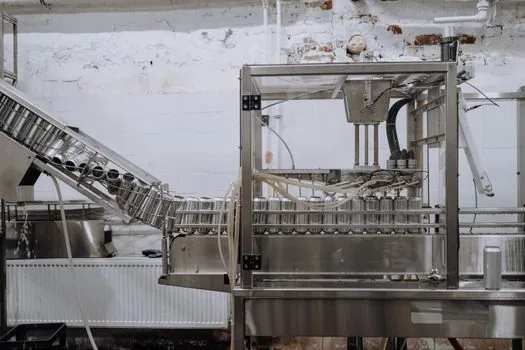
Three failure modes recur across supplier categories: mislabel detection (no vision verification), label-web breaks on pressure-sensitive stock (no low-stock or splice sensor), and WMS handshake drops on print-and-apply stations. IQS Directory and PMMI ProSource both stress that buyers should request a clear statement of integration interfaces, speed compatibility, flexibility, and downtime-reduction features before purchase, not after [S3][S4].
Regional builder machines (ZONESUN benchtop units, CR Systems semi-automatic labelers) are generally not designed for 24/7 three-shift operation: duty cycle, frame mass, and servo sizing are tuned for craft and small-batch runs, not for OEM-line OEE targets above 85 percent [S8][S9]. A vendor mismatch on duty cycle is the most common source of post-installation retrofit cost, and the easiest to catch at the RFQ stage by asking for a stated OEE or MTBF figure.
Decision Criteria and Comparison Anchors
Aligning the shortlist against four criteria keeps the comparison defensible: (1) throughput tier, (2) label format coverage, (3) container geometry range, and (4) integration/communication options. Against those criteria, Krones and Sidel lead on throughput and full-line integration, Herma and KHS lead on pressure-sensitive and shrink-sleeve precision at high line speeds, while CTM, Universal Labeling, and Accutek lead on configurability for contract packagers running mixed-SKU short batches [S2][S6][S7].
For desktop and craft lines, Primera's color label printers plus applicator accessories cover runs under roughly 500 labels per day; ZONESUN benchtop wrap and side labelers cover small bottlers up to a few hundred bottles per hour [S5][S9]. The right anchor is the smallest spec that meets the worst-case SKU on the line, not the headline speed on the brochure.
What Buyers Should Request in the RFQ
Standard RFQ language should require: stated PPM at the specific label/container combination, label format coverage (pressure-sensitive, shrink-sleeve, wrap, hot-melt), supported container diameter and height range, communication protocol list (Ethernet/IP, PROFINET, Modbus TCP, OPC-UA, WMS API), and a guaranteed OEE or uptime figure. IQS Directory explicitly recommends communicating production requirements clearly and conducting on-site or virtual line audits before commitment, a step that the 2026 supplier set broadly supports through quote-based and ProSource-listed pre-sales engineering [S3][S4].
Trackable next signals: monitor PMMI ProSource category updates and Metoree's manufacturer index for new entrants and the next round of packaging-line integration announcements through Q4 2026; cross-check any shortlisted OEM against the most recent warehouse robotics line design rules if the labeler will sit upstream of an automated palletizer.
The underlying component specifications are covered under lamps and light fittings.