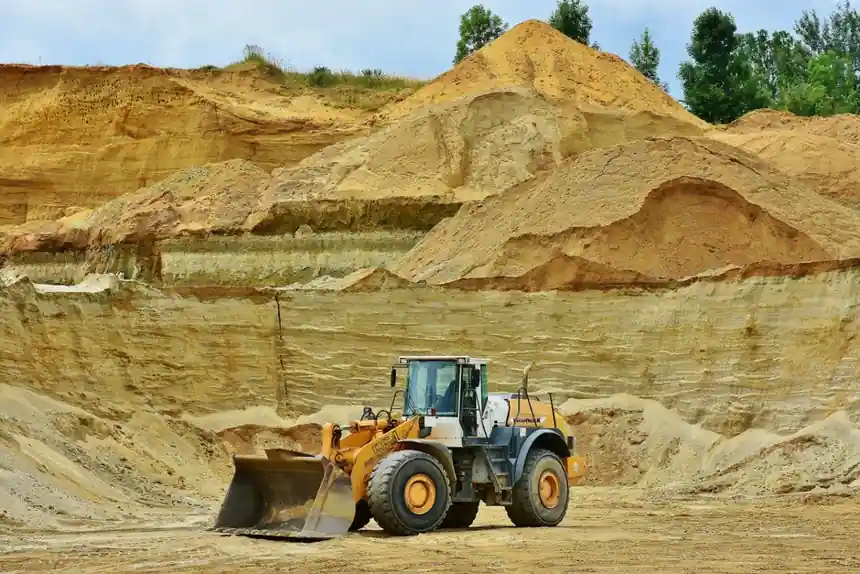
Open-pit haul roads, dust-suppression water trucks, and underground dewatering headers share one flow-measurement problem: the pipework cannot be cut, the medium is often dirty, and the area is frequently classified for explosive dust or methane. Clamp-on transit-time ultrasonic flowmeters meet all three constraints, which is why ISO 9001, ISO 14001, and CE certified panel-mount units like the Gentos pFlow F3P are commonly specified on mining water trucks and reclaim circuits, with ±2% accuracy across 0.03–5.0 m/s on DN20–DN80 lines [S3]. For explosive gas or coal-dust atmospheres, the Xuzhou KY YHL6 portable carries the Chinese MA (coal mine safety), KA (mining product safety), and ExibI Mb (intrinsically safe) marks, with a flow range of 0–999.99 m³/h at ±2.0% and velocity range of -32 to +32 m/s at ±1.0% [S2].
Endress+Hauser positions ultrasonic flow measurement as independent of electrical conductivity, pressure, density, and temperature, covering process and utility liquids, gases, and steam across chemical, oil and gas, and water-and-wastewater plants [S1]. KROHNE reinforces the same envelope: 2-path inline meters for high-pressure feedwater and condensate, plus custody-transfer variants for hydrocarbon service [S6]. Both are credible references for the heavy-industrial end of the mining duty cycle where custody-class accuracy (sub-0.5%) is required.
What "best" actually means on a mine site
"Best" on a mine site is not the same as "best" in a custody-transfer skid. Three constraints dominate the selection: (1) the meter must be safe for the area classification, which in underground coal and many hard-rock mines means ExibI Mb or an equivalent IECEx/ATEX Group I M2 rating, not just Group II surface-industry zones; (2) the meter must accept the actual pipe material (carbon steel, stainless steel, copper, PVC) without pipe cutting, because depressurising a slurry line or a dewatering main is a multi-shift operation; (3) the meter must hold accuracy on a dirty, aerated, or solids-bearing medium within realistic limits. Typical ultrasonic industrial accuracy is ±0.15% to ±0.5% for multi-path inline designs in clean liquids, while clamp-on units on well-maintained carbon steel usually deliver ±1.0–1.5% and ±3–5% on corroded 40-year-old lines [S4].
Against magmeters, ultrasonic clamp-on wins on three mine-specific points: it measures hydrocarbons, diesel, and demineralised water (magmeters require conductive media, so they cannot measure demin water or oil); it imposes zero pressure drop because the sensors sit on the pipe wall; and installation requires no welding, no flange work, and zero process shutdown, which alone can save £8,000 per hour in lost production on a 150 mm, 1,500 l/min line per published ROI comparisons [S5]. The trade-off is that the pipe wall condition, scale, and air pockets directly affect the acoustic path, so a clamp-on meter is only as good as the prep on the spool.
Spec comparison: portable IS, clamp-on panel, and inline custody
For the typical mining specifier, the decision collapses to three product types, each mapped to a duty class: [S4]
Portable intrinsically safe (e.g. Xuzhou KY YHL6): accuracy ±2.0% on flow, ±1.0% on velocity, 0–999.99 m³/h range, 12-hour battery life, magnetic clamp-on sensor, non-touch measurement on steel, stainless steel, cast iron, PVC, copper, aluminium; certified MA/KA/ExibI Mb for explosive dust or gas environments [S2]. Suits spot surveys, contractor dewatering audits, and short-term compliance checks.
Clamp-on panel/split (e.g. Gentos pFlow F3P): ±2% accuracy across 0.03–5.0 m/s, DN20–DN80 pipe range, 0.2% repeatability, 1.44-inch colour LCD at 128×128, PoE network cable carries both power and data, supports HTTP and MQTT protocols for fleet telemetry, transducer operating temperature 0–60 °C, transmitter -10 to +50 °C, 0–99% RH non-condensing [S3]. Best fit for fixed water-truck fill stations, dust-suppression spray bars, and pit-wall water lines.
Inline multi-path custody (e.g. Endress+Hauser Prosonic Flow, KROHNE 2-path ultrasonic): ±0.15% to ±0.5% on clean liquids, suitable for fiscal metering per AGA Report No. 9 (gas) and API MPMS Chapter 5.8 (liquid custody transfer) [S1][S4][S6]. Best fit for process water skids, concentrate pipelines, and tailings lines only when the fluid is well-conditioned and free of large air pockets.
Mine-specific failure modes and the fixes that matter
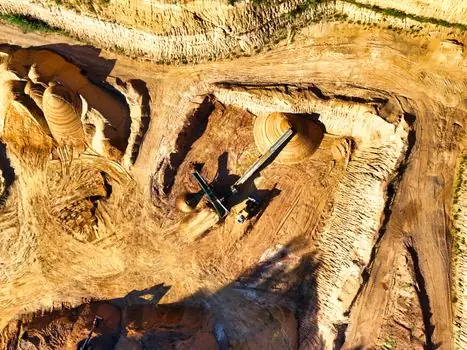
Three failure modes account for most clamp-on service calls in mining: signal attenuation from corroded or lined pipe walls, air entrainment in slurry and tailings service, and acoustic-coupling grease failure on hot pipes. The first is addressed at the survey stage, because heavily corroded walls, rubber linings with air gaps, or bitumen-coated cast iron attenuate the ultrasonic pulse to the point where the meter cannot resolve transit-time, and the operator must either replace the spool section or specify an inline meter [S4]. The second is non-negotiable for Doppler versus transit-time selection: Doppler ultrasonic meters handle activated sludge and mining tailings with 2–8% solids, while transit-time units require a clean, degassed single-phase liquid and will give erratic readings on aerated slurries [S4]. The third is mechanical: the standard transducer cable on the F3P is 9 m, with a 2 m PoE network cable, and the transducer is rated 0–60 °C, so on hot process lines above 60 °C the specifier must move to a high-temperature transducer or a remote-mounted head [S3].
For diesel and oil custody on mine sites, ultrasonic also wins on safety grounds. Magmeters will not measure hydrocarbons at all, and turbine or vortex meters require inline installation with pressure drop, which on a haul-truck refuel bowser or a light-vehicle diesel tank is operationally awkward. A clamp-on ultrasonic on the fill hose gives ±1–3% of reading with no moving parts and no break into the line [S5]. Cost bands to plan for: a clamp-on ultrasonic configuration typically lands in the £3,000–£6,000 band depending on meter size and options, while a magmeter on the same line starts above £1,000 and rises past £20,000 for large-bore units [S5].
Selection criteria: who this is for, and who it is not for
Specifying an ultrasonic flowmeter is the right call for water-truck flow logging, dust-suppression spray-bar balancing, pit dewatering headers, underground coal-mine dewatering where ExibI Mb or equivalent IECEx/ATEX Group I is mandatory, process-water skids on clean liquids, and custody transfer of diesel or light hydrocarbons. The encyclopedia entry on ultrasonic flowmeters frames the technology envelope, while the broader ultrasonic sensor page covers the transducer physics that drives accuracy on corroded pipe walls. For slurry and tailings with more than roughly 2% solids, transit-time is the wrong tool and a Doppler or magnetic flowmeter should be evaluated instead [S4].
If the project involves mobile equipment selection around the same flow loops, the related spec paths for mining dump truck selection for snow removal and mining dump truck specs for pipeline construction cover the haul-truck side of the same water-management problem. For a broader variant comparison of clamp-on versus inline versus insertion probes, the ultrasonic flowmeter variant, spec, and fit map walks through the same trade space from a different angle.
Standards, certification, and sourcing signals
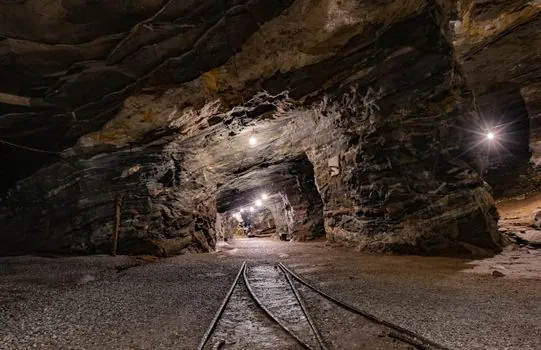
Three certification layers should appear on every mining-spec ultrasonic data sheet: ISO 9001 for the manufacturer's quality system, ISO 14001 for environmental management, and CE for European market access, as printed on the pFlow F3P product page [S3]. For underground coal and many metalliferous mines, the Chinese MA mark, KA mark, and ExibI Mb certification are the relevant safety approvals on the YHL6 portable, which is also a useful signal of a manufacturer's familiarity with mine-fire-damp and coal-dust atmospheres [S2]. For new European builds, ATEX 2014/34/EU and IECEx equipment-protection-level markings should be cross-checked against the area classification drawing, and the same multi-path inline meters used for custody transfer typically reference AGA Report No. 9 for gas and API MPMS Chapter 5.8 for liquid hydrocarbons [S4]. The global industrial ultrasonic flow meter market reached USD 1.24 billion in 2025 with a projected CAGR of 6.5% to USD 2.19 billion by 2034, driven by oil and gas modernisation, chemical plant expansion, and the broader push to digital, non-intrusive flow measurement [S4].
Trackable signals for the next procurement cycle: the rise of PoE-powered and MQTT/HTTP-capable clamp-on meters that remove the need for separate power and telemetry wiring on water trucks [S3]; the continued growth of cloud dashboards (the F3P integrates with the MeterTube APP and Gentos Cloud) for litres-per-ton-of-ore-moved efficiency audits [S3]; and the slow substitution of turbine and vortex meters on clean liquid duties by transit-time ultrasonic, which avoids the £8,000-per-hour production loss that an inline meter change-out imposes on a live pipe [S5].
For component-level specifications, see mining dump truck.