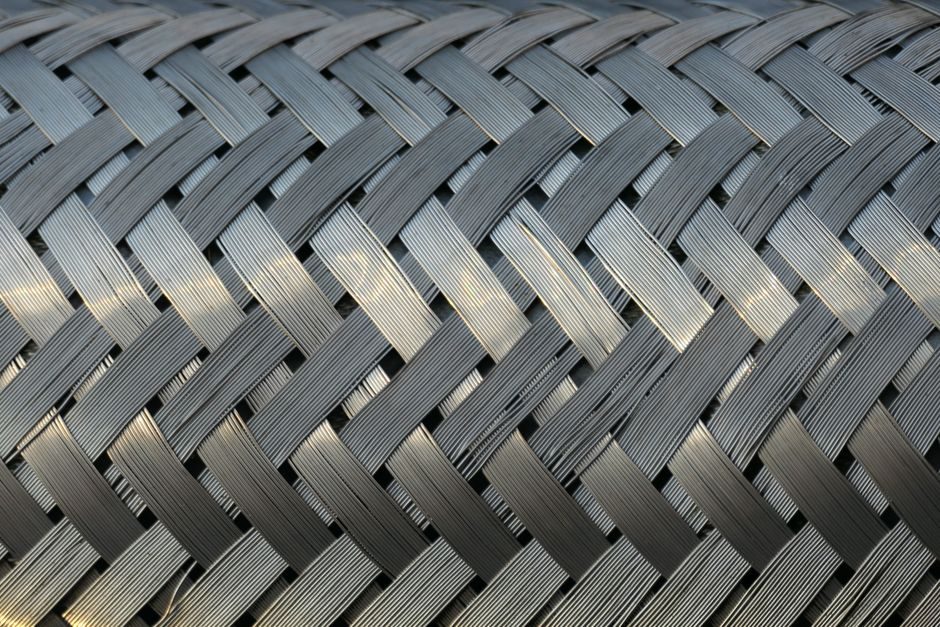
Pharmaceutical washdown, cleanroom and sterile-manufacturing zones require welded mesh that is AISI 316/316L stainless steel, finished to a hygienic surface roughness (commonly Ra ≤0.8 µm or finer), and supplied with full material traceability to satisfy GMP, FDA and EU GMP Annex 1 expectations [S2][S3].
Welded mesh is the default construction for machine guards, trolley baskets, Sterile-Transfer-Device (S-Tray) racks, autoclave trays, vial-cage liners, cable-tray dividers and cleanroom return-air grilles because the resistance-welded intersections hold aperture geometry under repeated 121 °C steam cycles better than woven cloth [S1][S2].
Material Grades and Why 316L Beats 304 in Pharma Washdown
AISI 304 (1.4301) and 316L (1.4404) are the two stainless families most commonly offered for pharmaceutical welded mesh; 316L contains 2–3% Mo which raises pitting-resistance equivalent (PREN) to roughly 25 versus about 18 for 304, the threshold many QA managers set for chloride-bearing cleanroom disinfectants such as NaOCl and peracetic acid blends [S2].
Pharmaceutical buyers who only need dry-room partitioning or non-contact guarding can still rationalise 304 to cut cost, but wet-processing, autoclave and barrier-crew areas are normally locked to 316L on the material spec [S2].
Aperture, Wire Diameter and Weld Geometry That Actually Pass Inspection
Common pharma-grade welded mesh specifications sit in a 10 mm × 10 mm to 50 mm × 50 mm aperture band with wire diameters between 2.0 mm and 5.0 mm, the range where the resistance weld can be drawn and pickled without leaving crevices that trap residue [S1][S2].
Two execution points separate commodity mesh from a GMP-acceptable panel: (1) every cross-wire is resistance-welded at the intersection with visible weld nugget coverage on all four faces, and (2) post-weld the panel is electrolytically descaled, passivated per ASTM A967 and electropolished to reach the required Ra figure, with the electropolish step alone typically removing 0.0008–0.0012 in of surface material to smooth the weld flash [S2]. For readers who want a deeper walkthrough of how wire diameter, aperture, weld pattern and code compliance interact on a single spec sheet, the wire-aperture-weld-code path primer is a useful companion reference.
Surface Finish, Passivation and Cleanability Benchmarks
Pharma QA typically accepts three hygienic finishes on welded mesh: 2B mill (Ra ≈ 0.4–0.8 µm), bright annealed (Ra ≈ 0.3–0.6 µm) and electropolished (Ra ≤ 0.3–0.4 µm), with the latter specified when the panel sits inside an ISO 5 / Grade A air-flow zone or contacts primary containers [S2].
Passivation is not optional: ASTM A967 (nitric or citric) restores the chromium-oxide layer disturbed by welding, and 316L welded mesh destined for WFI or injectable-drug contact areas is also subjected to a 30-minute boil test in distilled water to validate that no carbon contamination bleeds out of the weld HAZ [S2]. The cost adder is real — electropolish and A967 passivation together typically add 25–40% to the panel price over 2B mill — but they are the cheapest way to make a mesh panel defensible during an FDA / EMA inspection.
Standards, Codes and Documentation Buyers Should Demand
Three documents dominate the pharmaceutical welded-mesh compliance trail: ASTM A580/A580M for stainless wire, ASTM A967 for chemical passivation, and a project-specific surface-roughness certificate (Ra measured per ISO 4287/4288 with a 0.8 mm cutoff filter, λc) [S2].
For vessel-internal or autoclave-tray applications where the mesh also acts as a process-fluid screen, buyers should additionally request ASME BPE or equivalent surface-finish certification and a 3.1 material certificate to EN 10204, which together prove both the metallurgy and the hygienic execution. The mechanical-side counterpart — particularly when the same mesh is being used as machine-guard panels in an OEB-4 / OEB-5 containment suite — is covered by EN ISO 13857 for safeguarding opening sizes; pharma plant engineers often run both specs in parallel when one mesh panel does double duty as guard and as process fixture [S2].
Who It Is For — and Where Welded Mesh Is the Wrong Choice
Welded mesh is the right answer for: machine-guard panels, autoclave baskets, vial-cage trays, cleanroom return-air grilles, mesh-belt conveyor surfaces in tablet-coating lines, and Sterile-Transfer-Device (S-Tray) racks — anywhere a rigid, dimensionally stable panel must survive 121 °C / 30 min steam cycles [S1][S2].
Welded mesh is the wrong answer for: fine filtration below 100 µm, where woven stainless-steel cloth is the correct product; high-vibration CIP spray-ball cages, where a perforated plate is mechanically kinder; and any application that requires a load-bearing structural member, where carbon-steel or alloy-steel framing replaces the stainless mesh as the load path [S2]. As a rule of thumb, switch to a perforated plate the moment the panel spans more than ~600 mm unsupported in a washdown zone, because welded-mesh panels above that span start to deflect and trap cleaning fluid in the dish.
Maker Map and Sourcing Levers for 2026
Indian suppliers such as SK Weldedmesh Pvt. Ltd. (Kolkata) ship mild-steel and stainless welded mesh in standard panels, with the company explicitly advertising pharmaceutical and food-grade applications alongside industrial supply [S1].
Global mill options in the same spec band include Chinese mills producing AISI 316L electropolished panels from 1 m × 2 m up to 1.5 m × 3 m, European specialists (Bopp, Fleyer, Weldmatt) offering 3.1 traceability and electropolishing in-house, and US converters (Brikksen, McNichols, TWP) who buy mill coil and finish domestically to shorten lead time for North-American fill-finish projects [S1][S2]. Three sourcing levers move the price most in 2026: (1) spec a mill-finish 2B surface and passivate on-site for non-contact guards to save 20–30%; (2) standardise on a 25 mm × 25 mm × 3 mm aperture/wire combination to drop the panel into a stocked mill run; (3) consolidate volumes to quarterly releases so the mill can schedule a single heat of 316L, which also makes full 3.1 traceability cheap to issue. Buyers running stainless mesh alongside other process equipment can route specifications through a single stainless-steel reference to keep grade calls and Ra calls consistent across machine guarding, process screens and architectural mesh.
Quick Comparison: 304 vs 316L vs Mesh-Belt Welded Construction
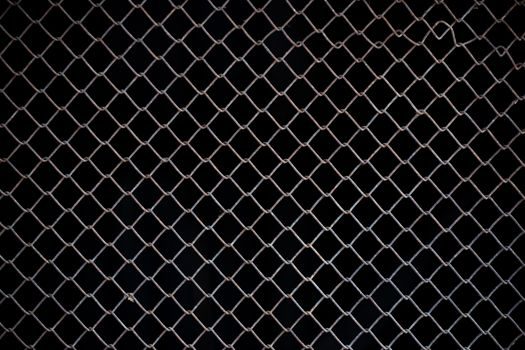
Three options dominate pharmaceutical mesh spec sheets. (1) AISI 304 welded mesh — lowest cost, PREN ≈ 18, acceptable for dry-room guards and non-contact partitions, fails NaOCl wipe-down service faster than 316L. (2) AISI 316L welded mesh — 2–3% Mo, PREN ≈ 25, the GMP default for washdown, autoclave and any panel within an OEB-4 / OEB-5 containment envelope, costs roughly 30–50% more than 304. (3) Mesh-belt conveyor construction — a continuous spiral or flat-wire belt built from the same 316L wire, used where the mesh is the conveyor surface itself in tablet coating, frying or sterilising tunnels, and is specified as a complete assembly rather than a panel [S1][S2].
Selection logic for the specifier: pick 304 only when chloride exposure, steam sterilisation and parenteral-product contact are all absent; pick 316L electropolished whenever any one of those is present; pick a mesh-belt assembly when the mesh is the moving surface, not a stationary guard. For projects that also pull in carbon-steel structural framing for mezzanines or machine bases, keep the stainless and carbon specifications strictly separated so that galvanic couples are not accidentally created at clamp points.
Failure Modes, Limitations and Inspection Triggers
Three failure modes account for most pharma welded-mesh rejections. (1) Pitting and crevice corrosion at the weld HAZ, normally appearing inside 12–18 months in NaOCl washdown; preventable by holding to 316L + ASTM A967 passivation + electropolish [S2]. (2) Mechanical distortion under thermal cycling — flat panels bow 1–3 mm across a 1 m span after ~200 autoclave cycles, which is why deep-draw baskets are built as a one-piece pressing instead of welded mesh. (3) Surface contamination of electropolished panels by iron-tool contact during installation; QA usually requires a ferroxyl test or a wipe-test for iron at IQ.
Buyers should also confirm that the mesh supplier can issue an Ra certification on the actual panel shipped, not just on the raw coil, because the resistance-welded intersection raises local Ra by 0.1–0.3 µm versus the parent wire. If the inspector measures that value above the spec, the panel is rejected even if the coil paperwork looked clean.
Two trackable signals to watch into the second half of 2026: the revision cycle of EU GMP Annex 1 (the cleaned-up contamination-control strategy is driving more buyers to electropolish 316L for the 1 m radius around Grade A zones), and the spread of domestic Indian mill capacity for 316L electropolished coil, which is now pulling delivered-into-EU prices for finished panels down by an estimated 8–12% year-on-year [S1][S2].