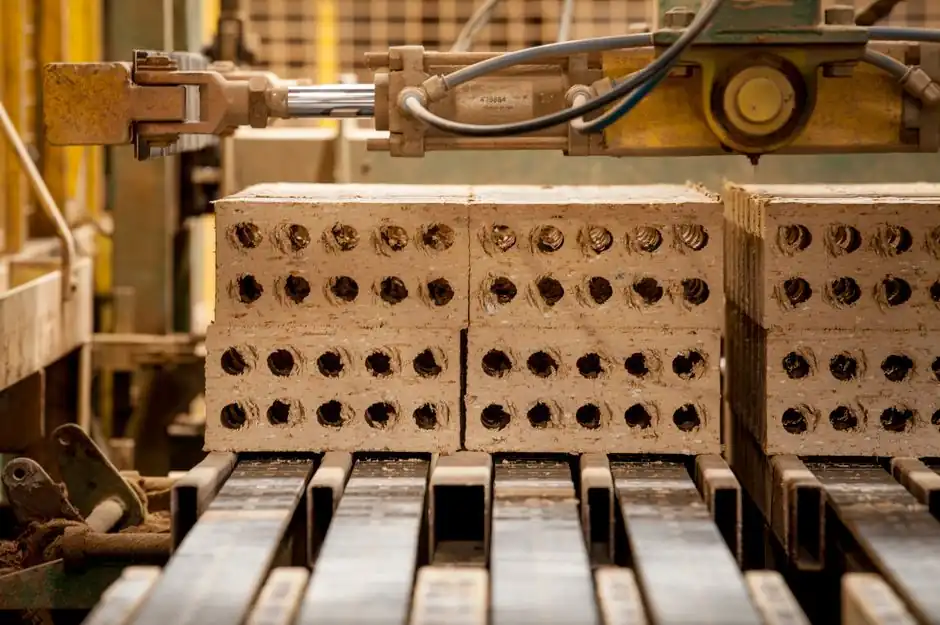
Cleanroom wall and ceiling specification in 2026 is driven by ISO 14644-1 air cleanliness class, room pressure cascade, and the chemical resistance of every exposed surface, with three dominant build paths: stick-built masonry, modular panel systems, and hybrid stick-built-plus-laminate retrofits [S4].
Specifiers working at ISO Class 5 and cleaner typically lock to ≤0.5 m³/h/m²/Pa panel air-leakage, 100% RH sag resistance, and tested resistance to H₂O₂ vapor, per current OEM datasheets released within the past 18 months [S1].
Defining the scope: what "block and brick" means inside ISO 14644
In a cleanroom context, "block and brick" covers three discrete layers: the structural shell (load-bearing masonry), the air-handling envelope (ceiling grid and wall panels), and the hygienic finish (coated or laminated face). Stick-built cleanrooms have used masonry since the 1960s, but modular panel systems now dominate new ISO Class 5 to Class 8 builds because they are re-locatable and arrive factory-qualified [S4].
For ISO Class 2 zones such as semiconductor and high-potency pharma suites, the ceiling tile layer is a Rockfon CleanSpace Block specification tested to ISO Class 2 particle emission, with an air-leakage target under 0.5 m³/h/m²/Pa at 5 to 40 Pa differential when paired with HDC 2 hold-down clips [S1].
Material-by-material comparison: AAC block, fired brick, and laminate-faced panel
Autoclaved aerated concrete (AAC) is the default stick-built wall block for cleanroom peripheral and technical corridors, valued for low density (~400 to 700 kg/m³) and fire class A1, with surface skim-coated to seal pores before vinyl or epoxy topcoat application [S4]. For a primer on AAC physical behaviour, see the AAC block reference page.
Fired clay brick remains specified in chemical-heavy and mechanical-robust zones (e.g. loading bays, acid-mist areas) because it tolerates >1000°C, takes direct masonry paint, and resists forklift impact better than AAC or hollow concrete masonry. The trade-off is weight (~1800 to 2000 kg/m³) and slower install versus modular panels. Background on fired clay units is summarised in the fired brick entry.
For ISO Class 5 to Class 7 production suites, 50 to 100 mm non-load-bearing panels with a steel or aluminium honeycomb core, finished in high-pressure laminate (HPL) or PVC-faced steel, are the typical OEM offering. These panels must meet ≤0.5 m³/h/m²/Pa air-leakage, 100% RH non-sag, and ISO 2812-1 chemical immersion testing classified to VDI 2083 Part 17 [S1].
Selection criteria: the four engineering gates

Gate 1 is air cleanliness class. ISO 14644-1 Class 2 ceilings need smooth, non-shedding, non-particulating surfaces with documented ISO Class 2 emission data, ruling out most site-painted masonry and most fibrous tiles [S1].
Gate 2 is room pressure cascade. The wall and ceiling envelope must hold 5 to 40 Pa differential for ISO Class 5 to Class 7 rooms without measurable deflection or leak; the ceiling grid and clip system carry that load, not the masonry shell.
Gate 3 is chemical resistance. Daily disinfectants in pharma and life-science suites include formalin 37%, ammonia 25%, hydrogen peroxide 30%, peracetic acid 15%, sodium hypochlorite 15%, and isopropanol 100%; only surfaces tested to ISO 2812-1 and classified "Excellent" per VDI 2083 Part 17 should be accepted [S1].
Gate 4 is decontamination regime. Vaporized H₂O₂, UVC, and ozone cycles degrade many polymer finishes; the tile must show no impact on H₂O₂ aeration time and no degradation under UVC/ozone [S1].
Modular vs stick-built: lead time, cost, and relocation
Modular panel systems can ship and install in roughly two weeks for predesigned ISO Class 7 and Class 8 rooms, against 6 to 12 weeks for a stick-built equivalent including masonry shell, skim coat, paint, and floor pour [S4]. Modular systems are also re-locatable, which is why modular cleanroom construction is more popular now than at any previous point per current OEM commentary [S4].
Stick-built masonry is typically chosen when the cleanroom is a permanent part of a larger GMP facility, when the wall must carry process piping, or when impact and chemical attack from forklifts and solvents exceeds the panel surface rating. AAC and fired-brick peripheral walls wrapped with a factory-panel inner skin is a common hybrid.
For a primer on traditional load-bearing block and brick wall construction behind cleanroom panels, see the encyclopaedia entry; for monolithic masonry units, the fired brick reference covers spec ranges and standards.
Who should choose which path: matching user to system
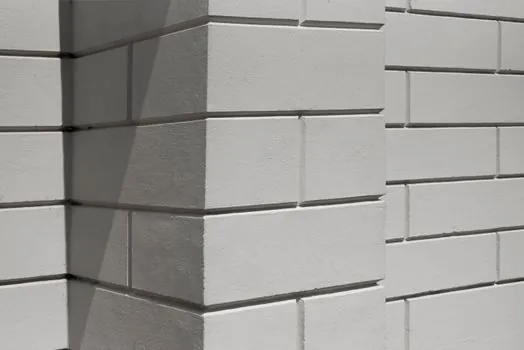
Semiconductor and hard-disk fabs at ISO Class 3 to Class 5 should specify raised-access floor + panel ceiling + monolithic polymer floor, with stick-built masonry only for the outer envelope, since panel ceilings (Class A sound absorption, 0.9 αw, ISO Class 2 emission) already meet the inner-surface requirement [S1].
Pharma and biotech at ISO Class 5 to Class 7 (EU GMP Grade B/C) typically pair a stick-built AAC or fired-brick outer wall with an inner modular panel skin to give both impact resistance and validated cleanability [S4].
Medical device assembly, plastics manufacturing, and electronics contract manufacturers at ISO Class 7 to Class 8 generally go fully modular to capture lead-time and relocation flexibility, with predesigned rooms shipping in roughly two weeks [S4]. Stick-built masonry is a poor fit if the user expects to expand or relocate within 5 years.
Failure modes and constraints specific to cleanroom masonry
Site-painted masonry is the most common failure mode: even a small amount of peeling or outgassing invalidates ISO Class 5 and cleaner. Skim coats must be specified, and the inner surface must be a tested panel or tile, not painted block. [S1]
Ceiling tiles that fail differential pressure: any tile not clipped to the grid with the rated hold-down clip count can deflect or lift at 40 Pa, breaking the pressure cascade and contaminating the suite. The HDC 2 clip pattern must be matched to room size and tile dimensions [S1].
Cleaning method mismatch: high-pressure wash above 80 bar, or with the spray closer than 1 m, voids the surface warranty; foam cleaning is capped at 12 cycles per year, steam cleaning at twice per year, and high-pressure wash monthly only on A-edge installations [S1].
Standards and verification trail
Every panel and tile spec should ship with: ISO 14644-1 air classification, ISO 2812-1 chemical resistance test data, VDI 2083 Part 17 classification, EN 13501-1 reaction-to-fire (e.g. B-s1,d0), and a documented light-reflection and cleanroom wash-cycle test report [S1].
HEPA-grade ceiling air, the other half of the cleanroom envelope, is typically H14 per EN 1822 in laminar-flow fields serving critical zones [S2]. Stick-built vs modular wall construction should be cross-checked against the user's GMP or regulatory framework (EU GMP Annex 1, US FDA 21 CFR 211, or ISO 13485 as applicable), with the masonry layer treated as a building element and the panel layer as the qualified process envelope.
For related industrial spec work, see the UHMWPE selection for rail reference and the spherical plain bearing selection for wind power guide, both of which follow the same panel-by-criteria decision pattern used here.