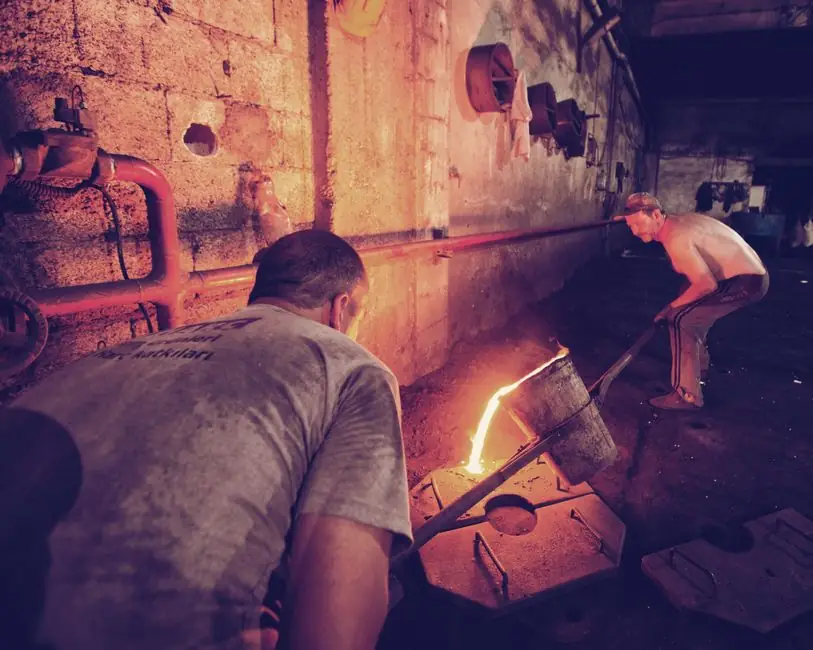
Aluminum squeeze casting machines dominate automotive structural-part output, while brass and bronze squeeze casters remain a specialist tool for bushing and gear production [S4]. On a like-for-like vertical press, the alloy you pour dictates the die steel grade, the cooling circuit design and the shot profile, not the press frame itself [S2].
Both process families share the same direct and indirect variants and the same low-velocity, high-pressure fill regime that separates squeeze casting from conventional high-pressure die casting [S3]. The real selection work happens in the auxiliary equipment, the melt-handling cell and the alloy-specific tool steel specification, all of which move with the alloy family [S1].
Process frame and clamp-force sizing
Clamp force on a production squeeze caster is sized in tons, not kilonewtons, and the same physical press will accept either alloy family with a retooled shot sleeve and die set [S2]. Reference vertical cells from Chiuta cover a CT-150 to CT-1600 tonnage range, with the 150 t unit commonly configured as a brass cell and the 800-1600 t units aimed at structural aluminum [S2].
Loukus Tech's vertical squeeze caster is documented at 1500 t clamp force and 1200 t injection or squeeze force, with a 3 ft x 3 ft platen capable of casting parts up to 5 in (12.7 cm) thick, a footprint that suits large aluminum body-structure castings rather than small brass bushings [S5]. Indirect squeeze casting fills the die through a vertical or horizontal shot sleeve at lower velocity than HPDC, and the shot cylinder scale has to match the projected area of the part plus runner system [S3].
Melt temperature and die material selection
Aluminum alloys squeeze cast in the 620-720 deg C range, well below the 880-980 deg C window for standard brasses, and this delta drives die preheat, H13 tool-steel tempering and cooling-channel layout [S3]. The same hot-work die steel (typically H11 or H13) serves both alloy families, but brass operations cycle the die through much wider thermal swings and demand more frequent stress-relief routines [S2].
For aluminum-alloy work the die is treated almost as a heat sink, with shot-to-solidification times measured in seconds and cycle rates pushed to 60-120 shots per hour on automated cells [S3]. Brass squeeze casting runs slower, partly because of the higher melt superheat needed to keep zinc-containing alloys in the liquid window and partly because of the more aggressive die cooling required to chase the freezing point back down [S2].
Porosity, mechanical properties and the velocity factor
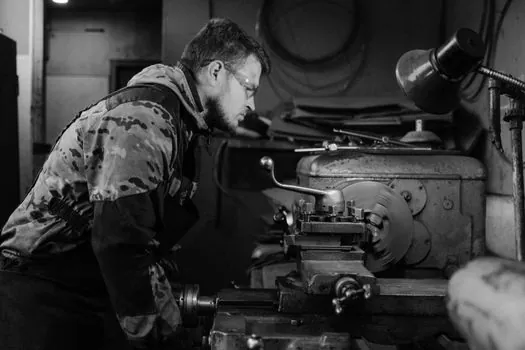
Slow shot speed combined with sustained intensification pressure is the defining engineering advantage of squeeze casting, and it applies equally to brass and aluminum, giving near-zero porosity and tensile properties that approach forged stock [S3]. The ScienceDirect topic page lists brass and bronze alongside aluminum as the canonical squeeze-cast alloy families, with bushing and gear applications called out for the copper alloys [S4].
Direct squeeze casting pours melt into the lower die, closes the upper die and applies pressure over the whole cavity during solidification, which gives the best heat transfer and is the variant most often used for high-integrity aluminum structural castings [S3]. Indirect squeeze casting, by contrast, injects melt through a thicker gate at lower velocity than HPDC, and is the configuration most brass and bronze job shops run because it tolerates the longer fill paths typical of bushing and gear geometry [S3].
Application split: automotive structure vs bushing and gear
Automotive structural parts (knuckles, control arms, subframe nodes, battery trays) are the volume driver for aluminum squeeze casting cells, where high pressure during solidification replaces the porosity that would otherwise force an HPDC part into a forged or cast-welded design [S3]. The Case Metal Processing Laboratory documents systematic experimental work on metal flow and heat transfer in aluminum squeeze casting, confirming it as the dominant research target [S6].
Brass squeeze casting stays the niche choice for water-system bushings, valve bodies, synchronizer rings and worm gears where the copper-alloy tribology and corrosion behavior outweigh the weight penalty [S4]. The 2009 SAE/ATA paper on squeeze cast automotive applications treats brass and bronze as specialty alloys in a process otherwise defined by aluminum and magnesium, which matches what is still seen in production catalogs [S7].
Comparison matrix: brass vs aluminum squeeze casting
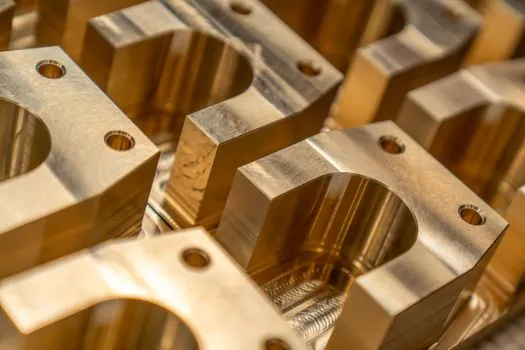
On four decision criteria, brass and aluminum squeeze casting cells diverge sharply enough that the alloy choice usually decides the cell before the press OEM does: [S3]
Cost per shot: aluminum squeeze casting wins on raw material cost (AlSi7Mg or A356 melt is roughly one-third the price of C836 or C844 brass per kg) and on energy per shot because of the lower melt temperature, so it is the default for any high-volume part over 0.5 kg [S4]. Brass squeeze casting only pencils out when the part needs copper-alloy tribology, dezincification resistance, or a self-lubricating bushing surface that aluminum cannot deliver [S4].
Tooling life: H13 die life is longer on aluminum because the lower peak die temperature reduces thermal fatigue cracking; brass cells typically log 20-40 percent fewer shots between die refurbishments on the same die geometry [S2]. Loukus Tech's aluminum and magnesium squeeze casting work is built around MMC preform infiltration, which imposes even tighter thermal control than a plain structural casting [S5].
Throughput: aluminum cells are commonly automated at 60-120 shots per hour for small structural parts, while brass cells on similar clamp tonnage usually run 15-40 shots per hour because of the longer pour, dwell and cooling window [S3].
Process control fit: indirect squeeze casting maps cleanly onto both alloy families, but the shot profile and vacuum level monitoring discipline on die casting cells is more mature for aluminum, with brass cells more often relying on operator-set intensification pressure and manual ladle pour [S3].
Limits, failure modes and what squeeze casting cannot fix
Squeeze casting cannot compensate for poor gating: if the gate is too thin or the overflow is undersized, even a 1500 t clamp frame will produce shrinkage porosity in the last-to-feed zones, especially in brass where the wider freezing range of leaded brasses opens up centerline voids [S3]. The process also does not eliminate the need for die temperature control: cold dies on aluminum give misruns, hot dies on brass give solder sticking and soldering defects [S2].
For foundries weighing a new cell build, the practical limit is that brass squeeze casting only makes sense when order mix is dominated by copper-alloy bushings, gears or valve trim, otherwise the cell should be specified for aluminum and brass parts run on separate gravity or low-pressure equipment [S4]. Loukus Tech supplements its three squeeze presses with two low-pressure casting machines (800 kg and 200 kg capacity) and a gravity casting line for parts up to 250 lb, which is a useful template for any shop planning a mixed-alloy cell [S5].
Standards, sourcing and what to verify on the data sheet
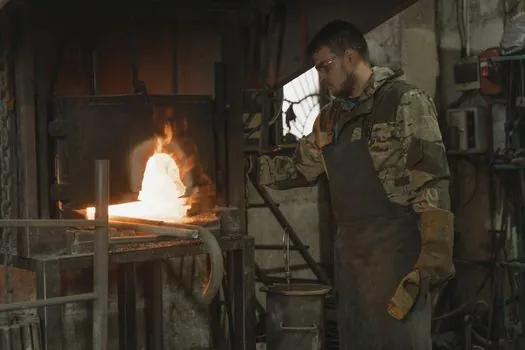
There is no single ISO or ASTM standard that pins "brass vs aluminum" squeeze casting cell selection; the governing documents are the alloy specifications (ASTM B176 for copper-alloy die castings, ASTM B85 for aluminum-alloy die castings) plus the customer's internal porosity and pressure-tightness acceptance criteria [S3]. The process description itself is generic: a single-step hybrid of casting and forging in which the melt solidifies under hydraulic pressure between the press platens [S3].
For a new cell, the verifiable data points to lock down on the OEM data sheet are: clamp tonnage, injection or squeeze force, platen size, maximum shot weight, shot sleeve diameter, die-opening stroke, and the intensification pressure profile, all of which appear on the Chiuta CT-series datasheet family from CT-150 through CT-1600 t [S2]. Two trackable signals to watch into late 2026: any new high-tonnage vertical cells aimed at large aluminum castings, and any move by copper-alloy job shops to add indirect squeeze casting to replace sand-cast bushing production [S5].
Component reference pages worth checking: aluminum die casting machine.