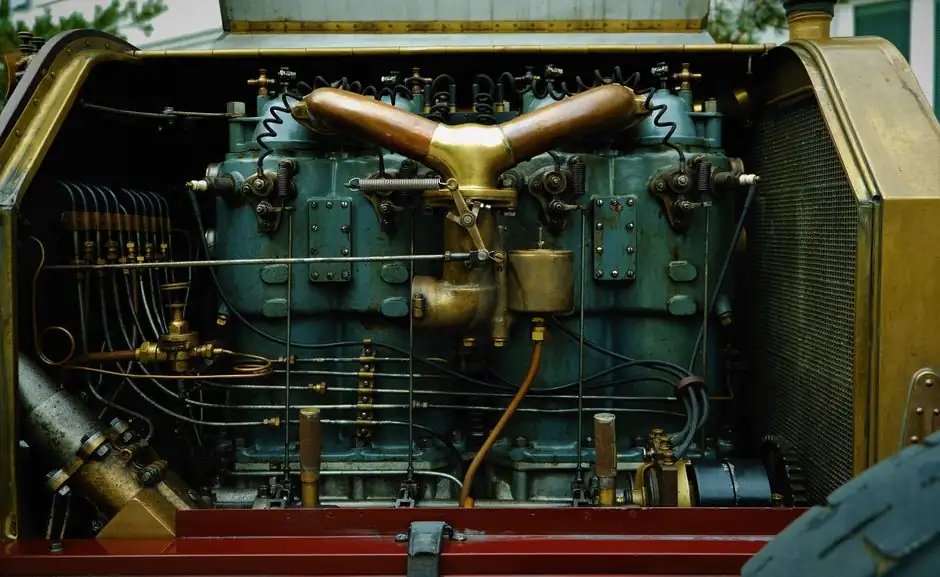
Brass valve body production on a squeeze casting machine typically lands in an 8-25 shots per hour, per-cavity window for small bodies (0.2-3 kg pour weight), with cycle time dominated by 5-10 minutes of pressure-hold solidification rather than the injection stroke itself [S5].
For copper-based alloys such as CDA 836 / CDA 844 leaded brass, foundries quote valve bodies from roughly 1 oz up to about 60 lb, with the small-body sweet spot sitting between 1 in³ and a 6 in x 4 in x 3 in envelope, the size range that fits comfortably inside a 150-500 ton vertical clamp [S3][S6].
What "Output Per Hour" Actually Means on a Brass Squeeze Cell
Squeeze casting is a single-step process that combines casting and forging: molten metal is poured into a die, the die closes, and pressure is held throughout solidification, with the applied pressure during the cooling phase typically sitting in the 20-30 MPa range and a dwell time of 5-10 minutes being the working window for most alloys [S5]. That dwell is the rate-limiting step, not the inject.
Direct (vertical-plunger) squeeze casting gives the best density because pressure is applied across the whole cavity; indirect squeeze casting uses a shot sleeve and is closer to a die casting machine cycle, which raises shots per hour but lowers the densification benefit [S2]. For leaded brass valve bodies, direct vertical squeeze casting is the common choice because lead needs the slower, pressurized fill to avoid segregation.
Clamp Force, Cavitation, and the Real Throughput Math
Commercial vertical squeeze casting machines are sold in tonnage steps that match valve body size: 150 t, 200 t, 250 t, 350 t, 500 t, 650 t, 800 t, 1000 t, and 1600 t, with the smaller frame sizes (150-500 t) covering the majority of brass valve body work up to roughly 5 kg pour weight [S1]. The 1500 t class machines cited for large structural castings are well above what a small brass valve body needs [S6].
Per-cavity-per-hour throughput in practice: with a 6-8 min cycle (2 min pour-and-close, 5-6 min pressure hold, 1 min open-and-eject), a single cavity on a 250-350 t vertical press delivers 7-10 shots per hour. A 2-cavity die on the same press roughly doubles that to 14-20 shots per hour. Automated cells running smaller bodies (under 1 kg) with 4-cavity dies can push toward the 25 shots/hr/cavity ceiling cited by integrated brass valve shops, but only when melt supply and trim/drill cells are not the bottleneck.
Why Brass Responds Differently from Aluminum in the Same Press
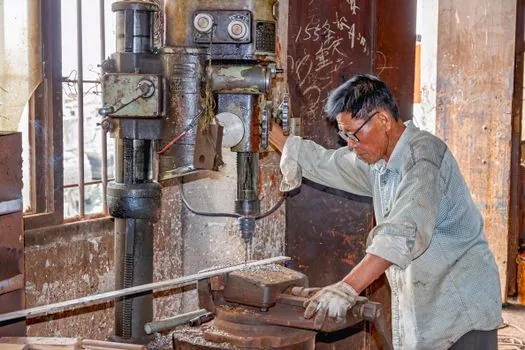
Brass (copper-zinc with lead additions for machinability) has a higher density than aluminum (about 8.4-8.7 g/cc for CDA 836 vs. about 2.7 g/cc for typical aluminum die casting machine alloys), a higher melting point range (roughly 880-940 °C for leaded brasses), and a much narrower solidification window, which means the 20-30 MPa pressure window must be applied and held correctly or porosity and hot-tear risk climb [S5].
Indirect squeeze casting, run on a machine similar to a vacuum die casting machine but with lower shot velocity, is the closest analog to HPDC for brass, and is preferred when the goal is higher shots per hour at the cost of some densification [S2]. Magnesium and copper-based alloys share the non-turbulent fill benefit that indirect squeeze casting gives, but leaded brass in particular is sensitive to velocity, so direct vertical squeeze casting is the more common path for pressure-rated valve bodies.
Selection Criteria: Squeeze Casting vs. HPDC vs. Sand for Brass Valve Bodies
For leaded brass valve bodies in the 0.2-3 kg range, the three practical routes are squeeze casting, high-pressure die casting on a brass-capable die casting machine, and green sand molding. Green sand is the lowest-cost route for low volumes and for sizes up to 18 in x 16 in x 8 in and 60 lb, and uses heat-activated resin-coated sand cores for internal passages [S3]. HPDC gives the highest shots per hour but produces more porosity, which is a real problem for pressure-rated valve bodies.
Criteria-based comparison for small brass valve bodies (typical, not absolute): (1) Densification: squeeze casting > HPDC > green sand. (2) Shots per hour per cavity: green sand and HPDC both run above squeeze casting, with HPDC the highest and squeeze casting typically 8-25 shots/hr/cavity. (3) Pressure rating suitability: squeeze casting is the strongest fit for PN16/PN25 and higher pressure classes because of low porosity. (4) Tooling cost and lead time: green sand patterns are cheapest, squeeze casting dies sit in the middle, HPDC dies are the most expensive but longest-lived. The combined effect is that squeeze casting wins on pressure integrity and surface finish, but loses on raw shots-per-hour against HPDC. For reference on the aluminum side, Aluminum HPDC Tonnage for Thin-Wall Castings: 2026 Selection Note walks the tonnage math for a related alloy family, and Aluminum Squeeze Casting Pressure Window for Near-Zero Porosity covers the same 20-30 MPa pressure window from the aluminum side.
Process Variables That Move the Hourly Number

Five variables swing the per-hour output on a brass squeeze cell. (1) Pour weight: a 0.3 kg valve body finishes its pressure-hold faster than a 3 kg body, raising shots per hour at the cost of more pour cycles. (2) Melt temperature: pour at the low end of the alloy's recommended range (often 900-940 °C for CDA 836) to shorten solidification time, but stay above the zinc-fuming threshold to avoid dross. (3) Die cooling: internal waterlines and die-coating discipline directly cut the 5-10 min pressure-hold window [S5]. (4) Hydraulic system response: a stable hydraulic valve system is what enables continuous, high-speed production with minimal downtime on a 24/7 die-casting factory floor, so servo or high-response proportional valves on the clamp and injection circuits pay back in shorter, more repeatable cycles [S4]. (5) Cavity count: a 4-cavity die on a 500 t press is the practical upper limit for small valve bodies before tonnage-per-cavity drops below safe margins.
The Die Casting Cell Automation: Spray, Extract, and Trim Stations Compared reference shows the same logic from the HPDC side: a fast press paired with a slow trim or spray station collapses the effective shots per hour, and squeeze casting cells have the same problem, only worse because the die-open window is shorter.
Failure Modes and Limits to Watch on a Brass Squeeze Cell
Brass squeeze castings fail in characteristic ways. Cold shuts form if fill velocity is too low or pour temperature drops below the alloy's flow limit. Porosity and micro-shrinkage show up when the 20-30 MPa pressure window is not held through the full 5-10 min of solidification [S5]. Lead segregation in CDA 836 / CDA 844 appears as banding if the fill is turbulent, which is why direct vertical squeeze casting with a low-velocity fill is preferred over indirect for these alloys [S2]. Zinc fuming is a real risk above about 950 °C and shows up as surface porosity and dross inclusions, so melt temperature is a hard ceiling, not a suggestion.
Die life on a brass squeeze cell is shorter than on an aluminum cell of the same tonnage, because the higher melt temperature and longer pressure-hold cycle add thermal fatigue cycles to the die. For foundries weighing capital layout, CE Marking vs UL Listing: 2026 Decision Matrix for Industrial Machinery Buyers is the right starting point before a press ships, and the Aluminum Induction Holding Furnace: 680 to 750 °C Operating Window reference is a useful contrast, even though brass needs a higher holding range.
Trackable Signals for Sizing a Brass Squeeze Cell in 2026

Two signals to watch before specifying a new brass squeeze cell. First, the global die-casting machine market is in a long-term growth cycle on the back of lightweighting, NEV gigacasting, and reshoring, with market projections cited above 30 billion RMB by 2027, and brass valve production shares some of the same hydraulic and control supply chain [S4]. Second, integrated valve foundries are pushing cavity counts up and cycle times down, so a 2026 RFP for a 250-500 t vertical squeeze press with a 4-cavity die and a 90-120 MPa hydraulic clamp circuit is a realistic spec for small leaded-brass valve bodies, and the gravity die casting machine family of machines is the right comparison point if leaded-brass pressure integrity is the bottleneck rather than raw shots per hour.