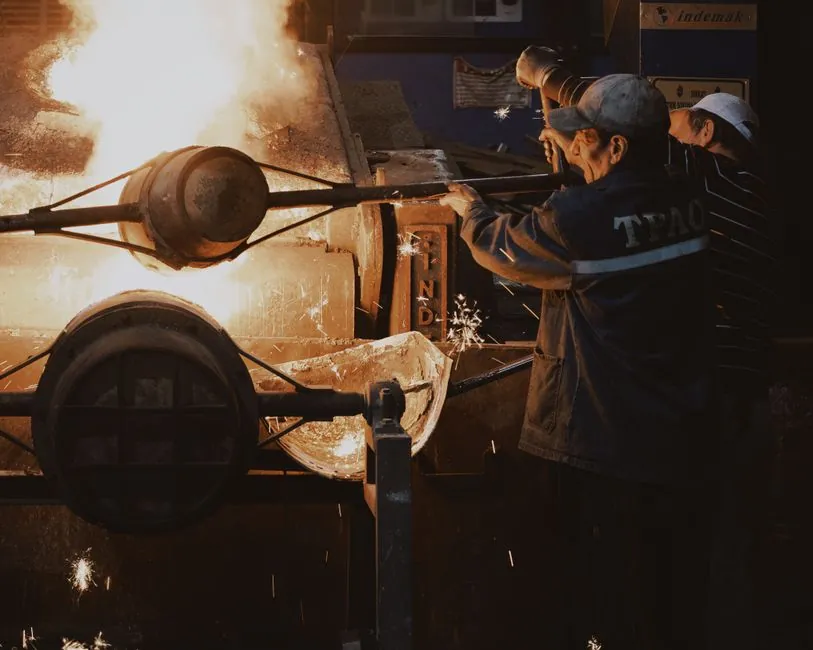
Brass squeeze casting, sometimes called liquid-metal forging, is a single-step process where molten copper-zinc alloy is poured into a pre-heated die and solidified under sustained hydraulic pressure of typically 50-100 MPa, producing plumbing fittings with tensile strength commonly above 300 MPa and porosity below 0.5% [S1][S2][S4].
Plumbing fittings, including elbows, tees, couplings, and valve bodies, are among the highest-volume brass components, where the combination of dezincification resistance, pressure-tightness, and machinability determines alloy and process selection [S3][S5].
Process Definition and Why Brass Fits
Squeeze casting is a hybrid of gravity die casting and closed-die forging: the molten alloy fills the cavity under low velocity, then a hydraulic ram applies pressure throughout solidification, which suppresses gas porosity and shrinks the casting against the die wall [S1][S4]. The same source notes that copper, magnesium, and aluminum are the most commonly squeeze-cast metals, with copper-zinc brass alloys well represented for water-system hardware [S4].
For plumbing fittings, brass (typically C36000, C37700, or leaded DZR grades such as CW602N) offers a melting point around 880-940 °C, well below pure copper at approximately 1084 °C, which extends die life and allows slower, more controlled fill of thin-wall socket and tee geometries [S3]. Squeeze casting is also referred to as "liquid forging" in the Chinese supply chain, where most brass plumbing fittings are produced [S6].
Direct versus Indirect Squeeze Casting for Fittings
Direct squeeze casting pours molten brass into the lower die half; the upper die closes and pressurises the entire cavity, giving the best heat transfer and the most consistent mechanical properties [S4]. Indirect squeeze casting uses a vertical or horizontal shot sleeve, similar to a die-casting cold chamber, but with a thicker gate and lower injection velocity, which suits higher-volume plumbing fitting runs where cycle time dominates unit cost [S4].
For a standard 1/2" brass elbow or tee, direct squeeze casting typically yields a Class A pressure-tightness rating with no impregnation needed, while indirect squeeze casting can hit similar densities at cycle times closer to high-pressure die casting (HPDC) once the sleeve is sized for the part [S1][S4]. A typical brass plumbing fitting has a wall thickness of 2-5 mm, which is well within the fill range of both direct and indirect squeeze casting when the gate is properly lands located [S3].
Material and Property Comparison versus Competing Routes
Brass squeeze castings trade off against brass HPDC, brass sand casting, and brass forging on four decision criteria: porosity, tensile strength, cycle time, and tooling cost. Against HPDC, squeeze casting delivers markedly lower porosity (sub-0.5% versus 1-3% typical for HPDC) and eliminates the need for vacuum or impregnation on most potable-water fittings, at the cost of longer cycle times (typically 60-180 s versus 15-60 s for HPDC) [S2][S3][S4].
Against sand casting, squeeze casting cuts machining allowance because the as-cast surface is smoother and closer to net shape, reducing the typical 2-4 mm finish stock on a sand-cast elbow to 0.5-1.5 mm, which lowers per-part labour cost on threaded ends [S5]. Against forging, squeeze casting produces more complex internal passages (such as the seat pocket in a ball valve body) in one shot, but does not reach forged-bar tensile strength of 400-500 MPa, sitting instead in the 300-380 MPa range for common plumbing brass alloys [S3][S4].
Standards, Alloys, and Specification Anchors
Potable-water brass fittings in most markets are specified against EN 12165 (wrought and cast copper-zinc alloys), EN 12164 (rod), and the drinking-water compliance list such as UBA / 4MS for lead-leaching control, with DZR grades like CW602N (CuZn36Pb2As) required where dezincification resistance is specified [S3][S5]. Threaded ends typically follow ISO 228 (BSP) or ASME B1.20.1 (NPT), and pressure ratings for the fitting assembly are validated against ASME B16.15 or EN 1254-3, depending on the market [S5].
For process control, squeeze casting parameters map onto ASTM B964 flow-rate characterisation for the molten alloy, useful when a foundry needs to confirm that a new brass melt fills thin socket sections without cold shuts before committing to a die run. Real-world squeeze casting process monitoring also borrows shot-profile and vacuum-level methods developed for HPDC, since the same data acquisition concepts (die-casting instrumentation, real-time cavity pressure) apply when an indirect squeeze cell is instrumented.
Selection Criteria: When to Choose Squeeze Casting
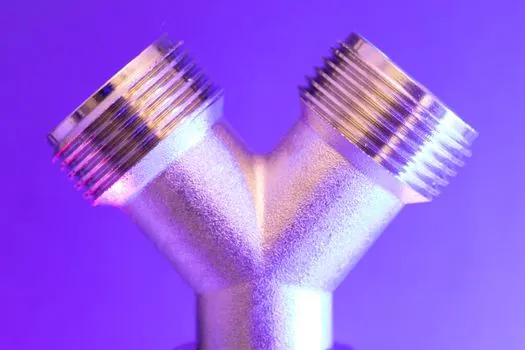
Brass squeeze casting is the right answer when a fitting must be pressure-tight without impregnation, when dezincification resistance is mandatory for hot-water service, and when production volume is high enough (typically above 50,000 pieces per year per part number) to amortise the higher die and press cost versus sand casting [S2][S3]. It is the wrong answer for low-volume prototype runs below a few thousand parts, where 3D-printed sand molds or short-run sand casting are cheaper, and it is unnecessary for simple rod-stock fittings where extruded or forged brass bar is faster to machine.
Foundries that already run aluminum squeeze casting for structural automotive parts can adapt the same pressure window and die-steel (typically H13) to brass, since brass fills cleanly below 100 MPa on the same presses. Practical die-steel selection for brass is often easier than for aluminum HPDC, because the lower melt temperature reduces soldering and heat-checking risk on the die surface.
Operational Limits and Common Failure Modes
The two dominant failure modes in brass squeeze cast plumbing fittings are gas porosity (which causes leak test failures on the pressure-test bench) and dezincification in service, where selective leaching of zinc from the alloy leaves a porous copper skeleton and a fitting that fails under torque or pressure [S3][S5]. Gas porosity is controlled by melt degassing, die venting, and sustained pressure during solidification, with squeeze casting's high background pressure typically driving porosity below the 0.5% threshold where standard 1.5 x working-pressure hydrostatic tests pass without impregnation [S1][S4].
Dezincification is a material and heat-treat issue, not a casting-process issue, and is addressed by specifying DZR brass (such as CW602N with arsenic addition) and avoiding post-cast thermal exposure above roughly 450 °C, which is well above any service temperature a plumbing fitting will see [S3]. Surface defects on squeeze cast fittings are usually tied to die wear or oxide inclusions, both of which are monitored through standard casting quality control sampling rather than special tooling.
Tooling, Press, and Throughput Economics
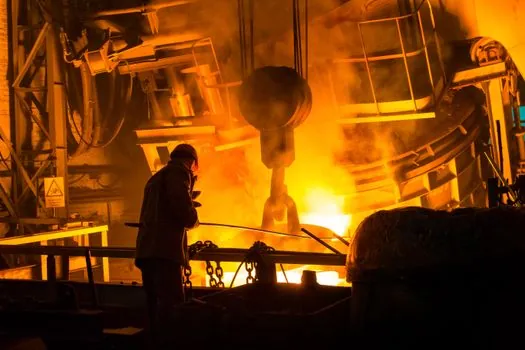
A typical indirect squeeze casting cell for brass plumbing fittings uses a 500-1500 ton hydraulic press, a die pre-heated to 200-300 °C, and a melt dosing furnace held at 920-960 °C for standard brass alloys [S1][S4]. Die life for brass squeeze casting is commonly 50,000-100,000 shots before refurbishment on properly heat-treated H13 tool steel, which is comparable to aluminum HPDC and well above the 5,000-15,000 shots typical for gravity die casting of the same brass fittings.
Throughput for a 1/2" brass elbow in indirect squeeze casting on a 1,000-ton press runs at roughly 8-15 parts per minute once warm, while a direct squeeze casting cell with similar tonnage typically runs 3-6 parts per minute but with tighter metallurgy. Tooling cost is higher than gravity die casting (commonly 1.5-2x) but lower than forging dies for comparable geometry, and the lack of impregnation or weld-repair step on most parts cuts secondary operation cost by 10-20% [S2][S3].
Trackable signals for buyers evaluating a brass squeeze casting supplier include the porosity sampling method on the hydrostatic test (typically 100% on potable-water lines), the DZR alloy designation on the material certificate, and the die-life record on the H13 tool, which together indicate whether the foundry is running a mature squeeze process or a gravity die cast process rebranded for marketing.
Spec-level background on the components involved: squeeze casting machine, casting aux, and casting ladle.
Background reading: AC Torque Motor Continuous Stall Rating for Winding Tension Control.