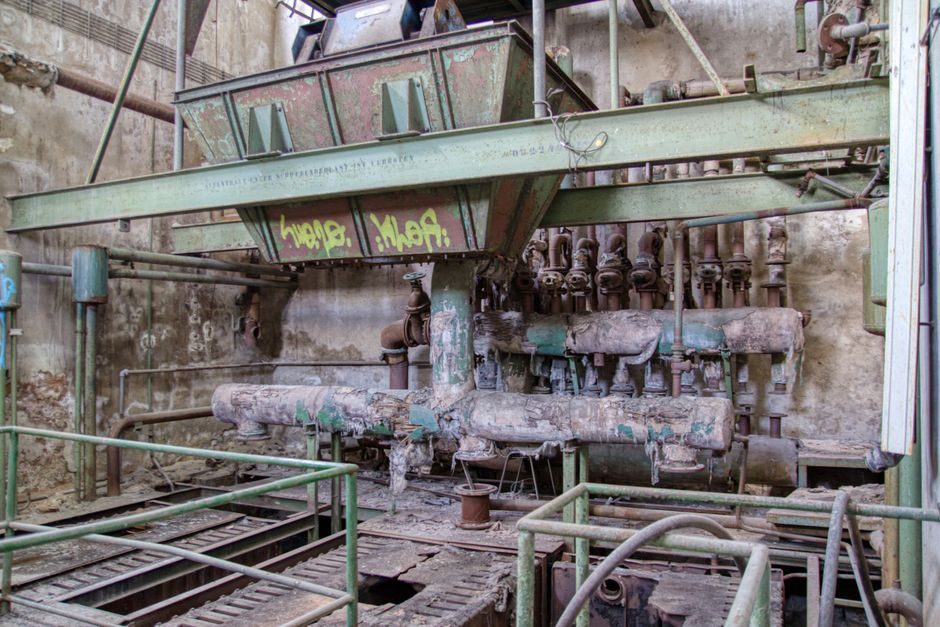
A control station swap inside a live hazardous-area cabinet must preserve the existing conduit entry geometry, gas group (IIA/IIB/IIC) and T-class envelope; mismatches on any of those three force a re-classification study of the surrounding area [S1][S3].
On a retrofit, the dominant decision is whether to reuse the legacy cast-aluminum housing footprint with an Ex e retrofit kit, or to install a new Ex de or Ex ib station that bundles the new PLC I/O termination, pilot devices and motor starters in one certified enclosure [S3][S6].
Match Certification Envelope to Existing Area Classification
EPL Gb equipment with Ex e or Ex de marking is required for Zone 1, while Ex tb covers dust Zones 21 and 22; reusing a T4 station inside a T6 boundary is a documented compliance failure path [S1][S4]. Standard off-the-shelf Feice eJX-series connection boxes are rated for Zone 1 and Zone 2 gas atmospheres, dust areas 21 and 22, and temperature groups T1 through T6 depending on variant, giving broad coverage for most refinery and chemical retrofits [S1].
For North American brownfields, the parallel ratings are Class I Division 1 (C1D1) and Class I Division 2 (C1D2); the EPCS-3XPB-BBR example from Larson Electronics is rated 600 V and listed for C1D1, which sets the upper ceiling for push-button station retrofits on 480 V motor control circuits [S5]. NEC/CEC plus OSHA govern the U.S. envelope, while IECEx and ATEX (2014/34/EU) cover EU and IECEx member states — both paths are accepted by EPCS-series documentation [S3].
Enclosure Material: Aluminum, Stainless, or GRP
Material choice on a brownfield is rarely free — it is constrained by the existing cable glands, paint spec and corrosion regime. Three families dominate the market: cast aluminum (legacy and low cost), 304/316L stainless steel (corrosion and offshore), and glass-fiber-reinforced polyester (GRP) for chemical and wastewater exposure [S3][S6].
The Pepperl+Fuchs SR series uses stainless steel and is rated for Zone 1, Zone 2, Zone 21, Zone 22 and Class I Division 2, with Ex de / Ex ib / Ex tb protection methods — typically the cleanest swap when replacing a pitted 316 box in a coastal refinery [S6]. The GR-series glass-fiber-reinforced polyester station covers the same zone envelope at lower mass and with intrinsic corrosion immunity to most acids, making it the workhorse for indoor chemical skid retrofits [S6]. A cast-aluminum eJX unit remains the lowest-cost path when the existing paint system, gland entries and ambient group are unchanged [S1].
Protection Concept vs. I/O Density: Ex e, Ex de, Ex ib
Three protection concepts compete for brownfield I/O aggregation. Ex e (increased safety) accepts standard industrial components inside the enclosure, fits high-density PLC remote I/O, and dominates greenfield skid builds [S6]. Ex de combines Ex e terminal compartments with Ex d (flameproof) switching compartments — preferred where the operator interface (push-buttons, selector switches) is in the hazardous zone while the wiring side stays "standard industrial" [S3][S6]. Ex ib (intrinsically safe) limits circuit energy below ignition thresholds, fitting low-signal instrumentation loops but not 480 V motor contactor coils [S3].
For a PLC upgrade the rule of thumb is: keep Ex ib for 4-20 mA and HART field instruments, use Ex e for the marshalling cabinet that aggregates them, and reserve Ex de for the operator panel that mixes pilot lights, e-stops and contactor control on the same door [S3][S6]. Routine inspection of flame paths, threads, gaskets and seals is required on Ex d and Ex de enclosures, with NEMA/IEC standards calling for annual or semi-annual intervals depending on service severity [S3].
Conduit, Glands and the Brownfield Mechanical Interface
The mechanical interface — not the electronics — is what burns retrofit schedules. For NEC/CEC compliance, only certified explosion-proof fittings, conduit seals, or Ex-rated cable glands are acceptable on C1D1 and Ex d enclosures [S3].
On a 1990s-vintage cast-aluminum station, the thread pattern is typically NPT 3/4" or 1"; modern IECEx units use M20 or M25 metric entries, so a brownfield installer either sources NPT-to-metric adapters or commits to re-tapping the gland plate — a four-hour per-hole task once the area is de-classified and gas-freed [S3][S6]. For projects where the conduit cannot be disturbed, specify stations that retain the legacy NPT hub pattern; the EPCS-3XPB-BBR example ships with a configurable termination-hub option for this reason [S5]. Heat-resistant cables with Ex-rated glands, paired with a barrier gland on the hazardous-side conduit, are the baseline for Ex d and Ex de stations [S3].
Operator Interface Components: Push-Buttons, Selectors, E-Stops
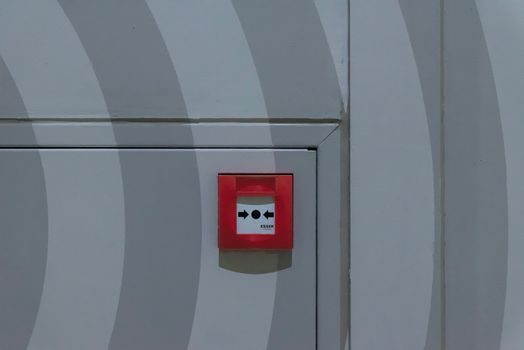
Inside the enclosure, the control station hosts a defined catalog: momentary or maintained push-buttons (Start/Stop, NO/NC contact blocks), 2-position and 3-position selector switches, illuminated push-buttons, emergency-stop switches, pilot lights, and combination control devices [S3].
A typical 3-pushbutton C1D1 station like the EPCS-3XPB-BBR delivers three operators on a 600 V rated body, with the contact block determining the control signal (NO for start, NC for stop) — a clean drop-in for legacy 3-element motor control panels [S5]. For PLC retrofits, the trend is to keep hard-wired e-stops and start/stop on the operator panel as a safety layer independent of the PLC scan, while routing status-only signaling through the new I/O — this preserves SIL coverage during the cutover window [S3]. Where the existing station has dual-button (Start/Stop) assemblies, dual-element replacements are readily available and avoid rewiring back to the PLC [S3].
Decision Matrix: Aluminum vs. Stainless vs. GRP on a Brownfield
Three criteria decide the enclosure on most brownfield upgrades: (1) corrosion regime, (2) mass and mounting footprint, (3) entry pattern. Cast aluminum scores best on cost and legacy pattern reuse, but is disqualified above pH 4 / pH 9 chemical exposure and in offshore salt-spray zones [S1][S3]. Stainless 316L (SR series) handles offshore, pharma and any washdown area, accepts both metric and NPT gland plates, but adds 30-50% cost and roughly 2x mass versus aluminum [S6]. GRP (GR series) is the lowest-mass option, fully corrosion-immune to most inorganic acids, and avoids cathodic-bonding concerns on offshore decks — but does not accept the legacy NPT hub pattern without an adapter plate [S6].
Selection rule for retrofit work: keep aluminum when the existing cabinet paint and gland entries are serviceable; switch to stainless when the housing shows pitting or when the process fluid is sour (H2S, NACE MR0175 environments); pick GRP when the new PLC I/O is housed indoors in a chemical skid where mass and corrosion, not legacy pattern, drive the spec [S1][S3][S6].
Inspection, Maintenance and Lifecycle Costs

Explosion-proof control stations are not install-and-forget. Flame-path threads, cover flanges, gaskets and seals require routine visual inspection, with NEMA and IEC standards calling for annual inspection under benign service and semi-annual inspection under harsh or vibration-loaded service [S3]. Gland entries must be re-torqued after the first thermal cycle, and any field machining of the enclosure (extra conduit holes, drain plugs) voids the certification unless performed by the OEM or a documented repair scheme [S3].
For brownfield PLC upgrades, this means the maintenance window of the new station is identical to the legacy one — but the failure mode shifts. A worn flame path on the old Ex d housing was caught on visual inspection; a modern Ex e retrofit shifts risk to terminal torque and creepage distances, which require a different checklist. Spare-part strategy should stock at least one complete operator insert (push-button + contact block + lens) per station family, since these are the most field-replaceable elements and the longest-lead items when sourced from the original OEM [S3][S5].
When NOT to Reuse the Legacy Enclosure
Three brownfield conditions disqualify reuse of the existing explosion-proof enclosure: (1) a process change that pushes the gas group from IIA to IIB or IIC, or the T-class from T4 to T5/T6, where the legacy housing lacks the certification margin; (2) visible flame-path damage — nicked threads, scored flanges, missing bolts — that cannot be restored to the original tolerance; (3) a new I/O density that exceeds the legacy enclosure's creepage and clearance distances, forcing terminal re-spacing that violates the existing Ex e certificate [S1][S3].
In any of these cases the right move is a full station replacement to a current certified unit (Ex de SR series or Ex e GR series), not a field repair [S6]. Greenfield-style design discipline — treating hazardous-area spec as critical-path engineering rather than late-stage compliance — applies equally to brownfields where the I/O count and gas envelope are changing; cutting corners on the enclosure to save four hours of conduit work is the most common root cause of post-retrofit certification findings [S7].
Track next: confirm with the plant's hazardous-area classification drawing (HAZOP or area classification document) the exact gas group and T-class of the cabinet's location before issuing the station PO, and verify the new station's entry pattern against the existing conduit layout during the site walk — both checkpoints are the single largest source of brownfield retrofit rework [S3][S6]. For comparison context on choosing the right I/O termination hardware around the station, see this terminal block selection criteria for packaging line retrofits and the related industrial pressure switch selection guide.
Spec-level background on the components involved: explosion proof button, explosion proof distribution, and explosion proof electrical.