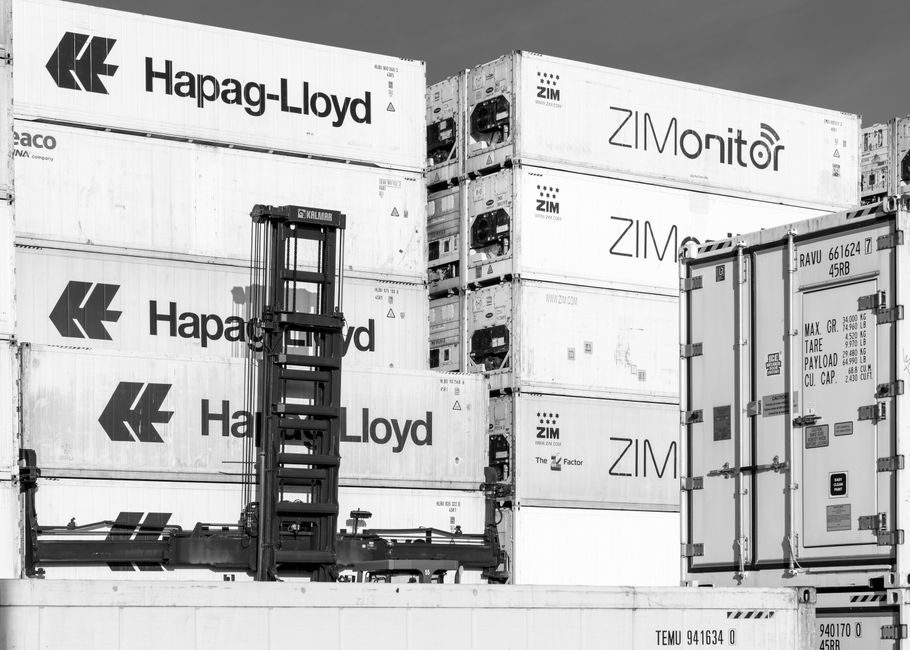
Bucket elevators for cold chain and frozen-food handling must use stainless or food-contact belt/chain assemblies, fully enclosed casings, and slow-to-medium speed operation to limit product damage and condensation ingress, with capacity sized in BPH or MTPH against the throughput window [S1][S3].
Cold chain covers a wide product band: fresh produce at 0 to 4 °C, chilled dairy at 2 to 6 °C, frozen seafood and meat at -18 to -25 °C, and ice cream at -25 °C or colder. The selection driver is not lift height alone, it is the combined envelope of product temperature, surface moisture, fat content, and whether the line is a wash-down or sanitary zone [S1][S5].
Selection Inputs Required Before Sizing a Cold Chain Bucket Elevator
Eleven inputs must be locked before any bucket elevator selection: material type, bulk density (kg/m³ or lb/ft³), required capacity in cubic feet per hour or BPH, discharge height, material temperature, moisture content %, maximum lump size, % of lumps, ambient temperature range, material abrasiveness/corrosion behaviour, and duty hours per day [S1].
Cold chain operation adds two more gates that industrial grain duty rarely lists: condensation management on cold metal surfaces, and wash-down frequency. A standard Screw Conveyor Corporation data sheet already calls out material temperature and moisture content as separate fields, which is the right discipline for frozen and chilled duty [S1]. IS 7167 also lists dozens of bulk solids with their own density and lump-size handling notes, providing a reference for matching elevator type to product class [S5].
Centrifugal vs Continuous Discharge: Matching Type to Product
Centrifugal discharge bucket elevators run at 314 to 718 FPM (1.59 to 3.65 m/s) and suit free-flowing, dry, non-fragile products, while low-speed positive discharge units under 30 m/min handle fragile, lumpy, or sticky materials without throw losses [S2][S7].
For frozen berries, IQF vegetables, or ice cream inclusions, the centrifugal type is the wrong pick: brittle product shatters and fines build up in the casing. The continuous-discharge or low-speed positive-discharge geometry keeps the bucket orientation controlled through the head inversion, so a 12x7 in (304.8x177.8 mm) bucket at 630 FPM (3.20 m/s) used in the 6,000 BPH grain duty is the upper mechanical limit, not the cold chain default [S2]. BEUMER separates its range at the 130 °C product temperature line and the 25 mm lump-size line, with chain-belt (HGBW) and central-chain (ZKBW) variants for high-capacity heavy duty, and continuous-discharge (MABW) variants for controlled gentle discharge [S6].
Material and Surface Specs for Sanitary Cold Chain Service
For cold chain food contact, buckets, casings, and fasteners are typically 304 or 316 stainless steel, with belt material selected as food-grade PU, PVC, or solid woven polyester, and chains specified as nickel-plated or stainless for corrosion resistance in wash-down duty [S1][S3].
A Ryson-style fully enclosed design with overlapping pivoting buckets keeps condensate, lubricant, and foreign debris out of the product stream, which is the operating logic for chilled and frozen zones where the casing surface itself is at or below the dew point [S3]. Belt vs chain selection in cold chain generally follows humidity and wash-down frequency: belt units suit dry cold storage, chain units suit wash-down or wet processing lines where belt grip and tracking would degrade. The 11-item layout check used by Ryson (lift height, center distances, material specs for buckets/belts/chains/casing, drive package, loading/discharge geometry, safety devices, capacity and speed, foundation loads) is a working template for cold chain RFQs [S3].
Capacity Sizing: BPH, Pulley Diameter, and Bucket Spacing
Capacity is sized by belt FPM, pulley diameter, and bucket spacing on a fixed pitch: 10 in (254 mm) pulley with 6x4 in bucket at 12 in spacing delivers 500 BPH (13 MTPH), while 48 in (1219.2 mm) pulley with twin 16x8 in buckets at 8.5 in spacing reaches 30,000 BPH (816 MTPH) at 718 FPM (3.65 m/s) [S2].
The Chief CBE standard models scale linearly: 500 BPH = 10 in pulley, 1,000 BPH = 16 in pulley, 6,000 BPH = 36 in pulley, 12,000 to 15,000 BPH = 42 to 48 in pulley, 20,000 to 30,000 BPH = 48 in pulley with twin bucket rows [S2]. For cold chain, the usual envelope is 500 to 7,500 BPH (13 to 204 MTPH), so most projects land in the 10 to 36 in (254 to 914.4 mm) pulley band. A typical 2,000 BPH (54 MTPH) unit on a 16 in pulley at 414 FPM (2.10 m/s) with 9x6 in buckets at 10 in spacing is a sensible midpoint for a small frozen-vegetable line, while a 7,500 BPH (204 MTPH) dairy or seafood operation would step up to a 36 in pulley at 630 FPM (3.20 m/s) with 12x7 in buckets at 10 in spacing [S2]. The same capacity gate applies to bucket elevator selection for e-commerce fulfillment, where throughput per square metre of footprint drives the same pulley-diameter decision.
Drive, Speed, and Chain Selection for Low-Temperature Duty
Low-speed positive discharge elevators under 30 m/min need chains rated for smooth operation through extended bucket inversion, while medium-speed continuous discharge units at 30 to 60 m/min balance capacity with controlled discharge using closely-spaced buckets that demand precise chain dimensional tolerance [S7].
Cold chain operation should bias toward the lower half of that band: at -18 °C casing temperature, standard chain lubricants thicken and grease viscosity climbs sharply, so the BEUMER product-temperature gate at 130 °C only defines the upper limit, the cold-side limit is set by lubricant and chain metallurgy, not by the OEM type chart [S6][S7]. For wash-down zones, specify food-grade H1 grease and stainless or zinc-nickel plated chain; for dry cold storage, a standard carbon-steel chain with sealed bearings is acceptable. Drive package sizing should follow the chief CBE table: horsepower and bearing diameters scale with pulley diameter and belt speed, and the 48 in (1219.2 mm) pulley at 718 FPM (3.65 m/s) duty requires the heavier bearing class [S2].
Constraints, Failure Modes, and Limits to Watch
Bucket elevators are not the right tool for very sticky, slurry, or high-fat products that coat and freeze to bucket walls, and they cap out at moderate vertical lift and moderate capacity versus a true vertical conveyor, so very tall cold storage silos typically pair a bucket elevator with a chain conveyor or bucket elevator leg and an upper cross-feed [S3].
Four cold-chain-specific failure modes deserve their own gates: (1) condensation drip from the casing roof contaminating open buckets below, mitigated by enclosed casings and slight casing pressurization with dry air; (2) ice build-up on the boot pulley when warm moist air enters a cold elevator, mitigated by air seals and insulated boots; (3) belt or chain embrittlement at sustained -25 °C, mitigated by low-temperature-rated elastomers and food-grade lubricants rated for the operating window; (4) wash-down corrosion at fasteners and hinges, mitigated by 316 stainless hardware and overlap-sealed bucket pivots [S1][S3]. The 11-field OEM data sheet also calls out duty hours and environmental temperature range, both of which are first-order constraints in cold chain, not afterthoughts [S1][S3].
Standards, Sourcing, and Comparable Reference Specs
IS 7167 (1974) provides a selection-and-use code for bucket elevators with material-specific density and lump tables, and most cold chain OEMs publish US-style data sheets covering material type, BPH capacity, discharge height, material temperature, moisture, lump size, duty hours, and drive package as the minimum spec set [S1][S5].
For comparison, a parallel decision discipline appears in the overhead conveyor spec map for chemical shipping, where temperature, corrosivity, and wash-down frequency drive the same stainless vs coated-carbon choice. Cold chain sits between industrial grain duty (centrifugal, high speed, dry) and chemical/ sanitary duty (low speed, enclosed, frequent wash), and the spec that finally gets signed off should name the conveyor-chain metallurgy, the bucket-fastener grade, the casing seal class, and the lubricant approval for incidental food contact [S3][S6][S7].
Trackable next signals: confirm whether the line is wet or dry cold storage, lock the worst-case product temperature, and decide chain vs belt before any RFQ goes out. The 500 to 7,500 BPH pulley band from the CBE table is the realistic cold chain window; anything above that almost always means a twin-bucket 48 in pulley unit, which then needs heavier bearings, a larger drive, and more headroom in the building layout [S2].
Detailed specification references: cold chamber machine.