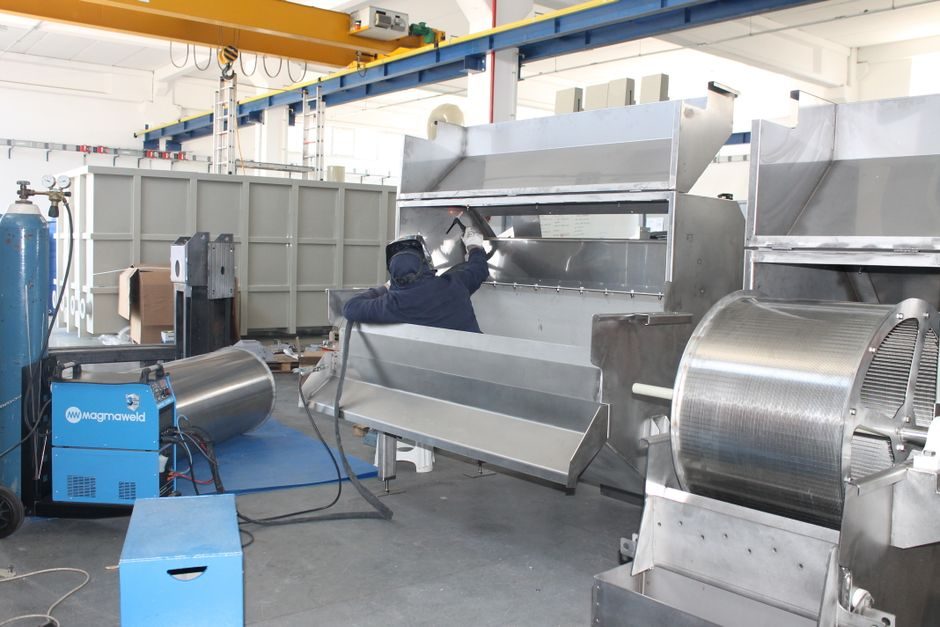
The July 2026 DirectIndustry index carries 23 manufacturers and 28 vertical bucket elevator models, with BEUMER Group, FEECO International, Cimbria and Cidiesse Engineering anchoring the engineering-grade tier [S1]. Lifting-height filters on the same index show units spanning sub-10 m mill-duty legs to >100 m cement-plant and power-station legs, and the top tagged applications are bulk-material conveying (19 listed products), general conveying (16), food-grade (15), chemical process (5) and mineral material (4) [S1].
Chinese supplier directories have become the default for mid-tier capacity work: Made-in-China lists hundreds of bucket elevator and grain elevator factories filtered by drive type, lift mechanism and carrying capacity [S2], and Alibaba's 2026 feed bucket elevator supplier page returns 100+ matching vendors — many inside a US$10M–US$50M revenue band, with response rates quoted at 77.5% on individual store cards [S4]. Buyers chasing cement, clinker and abrasive duty also get a dedicated 100-supplier index on Alibaba, where NE plate-chain ring designs dominate the heavy-duty shortlist [S6].
Engineering-Grade Tier: European and US System Builders
BEUMER Group, FEECO International, Cimbria (Denmark) and Cidiesse Engineering (Italy) are the four names that consistently carry full FAT documentation, FEM/ISO structural calculations and process-guarantee clauses on vertical bucket elevators [S1]. Lifting-height filters on the index resolve into mill-duty legs below 10 m, mid-range 20–60 m industrial units, and high-leg cement, fertilizer and grain terminals above 60 m — the same envelope a process engineer should use to pre-classify bidders [S1]. Application tags confirm that bulk material (19 products), conveying (16), food products (15), chemical process (5) and mineral material (4) are the dominant design points; mills and power plants are smaller but tighter-spec niches at 1 and 3 listed models respectively [S1].
For Indian mid-cap EPCs the equivalent engineering-grade cohort runs through S.J. Conveyors (Mumbai, in business since 1983) and Sinha BMH Systems — both list belt-type and chain-type bucket elevators, vibrating feeders, scissor lift tables and conveyor spares as a single integrated package, which is the typical way Indian system builders win turn-key material handling jobs [S5][S9]. Indian B2B portals such as Dial4Trade separately index bucket elevator spares (11 SKU lines), a signal that a healthy after-market, not just OEM capacity, is part of the buying decision [S8].
China Cluster Tier: Capacity, MOQ and Revenue Bands
The Made-in-China bucket elevator supplier page is structured as a parametric filter — driving type, capacity (persons/t/h), application, speed, lift mechanism, control mode, carrying capacity and door type — which lets a buyer cut straight to NE plate-chain, TD-belt or TH-ring units without wading through unrelated passenger lifts [S2]. A feed-bucket-elevator wholesale sweep on the same platform turns up CE-marked stainless-steel rice and solid-food units, confirming that food-grade 304/316 builds are a real, documented sub-segment and not a marketing line [S7].
Alibaba's category pages back-fill the volume side: a "bucket elevator for corn" search returns 100+ verified global manufacturers, with conveyor/elevator factories clustered in Henan, Shandong and Jiangsu [S3], and the dedicated feed-bucket-elevator index shows typical Chinese elevator vendors running at US$10M–US$50M total revenue with top export markets in Southeast Asia (20%), South America (15%) and Eastern Europe (15%) [S4]. The clinker/cement index on the same platform highlights NE plate-chain ring designs as the default for sand, cement and coal service, the same topology that Chinese plate-chain foundries supply to domestic cement groups [S6]. See the cross-comparison in this bucket elevator selection field guide for how chain vs belt topology maps to those abrasive-duty applications.
Spec Bands and Decision Criteria by Application
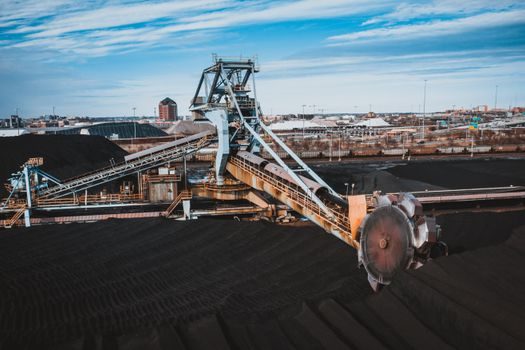
Four hard spec gates separate the engineering-grade OEMs from the China cluster. (1) Capacity envelope — centrifugal-discharge units dominate the <100 t/h food and feed band, while continuous-discharge and internal-discharge designs cover the 100–800 t/h cement and mineral band where most [S1][S6] catalog activity sits. (2) Lifting height — DirectIndustry's filter resolves in metres, with high-leg cement and grain terminals demanding backstop pulley diameters above 800 mm and head-shaft speeds locked against sling-angle slip [S1]. (3) Casing and boot sealing — clinker and cement units almost universally ship with NE plate chain rather than belt, because abrasive lump sizes between 25–80 mm chew through rubber belt splices within months [S6]. (4) Material of construction — food-grade rice and feed units default to 304 stainless contact surfaces, with CE marking stated on Made-in-China listings, while cement and mineral units stay on Q235/mild-steel fabricated casings [S7].
Two further gates are non-obvious. Build documentation distinguishes bidders: BEUMER and FEECO supply FEM/ISO calculation packs and FAT videos as standard, whereas Alibaba-tier Chinese vendors usually ship a generic O&M and a 12-month warranty card [S1][S4]. After-market depth is the other one — Indian vendor Sinha BMH explicitly markets itself as a system integrator rather than a single-machine OEM, and Dial4Trade indexes 11 spare-parts SKUs for the same installed base, evidence that a service network, not a catalogue page, is the real risk lever [S8][S9].
Who This Tier Is For — and Who Should Walk Away
BEUMER / FEECO / Cimbria / Cidiesse are the right fit for cement-group turn-key projects, port-handling terminals, fertilizer and alumina refineries, and any plant where FEM structural calcs, ATEX/IECEx zoning for combustible dust, and full FAT are written into the purchase order [S1]. They are overkill for a small feed mill running one 10 t/h leg on a single-shift duty cycle — that buyer should look at the China cluster [S4][S7] or the Indian mid-cap S.J. Conveyors / Sinha BMH tier [S5][S9], where the BOM is simpler, lead time is shorter and the documentation scope matches the project size. Buyers who need grain, food-contact or pharma-grade 316L surfaces should stay on the Made-in-China CE-stainless subset [S7]; buyers moving hot clinker or sinter above 200 °C should not buy a belt elevator at all and must default to NE plate chain [S6].
Limitations, Failure Modes and Sourcing Risks
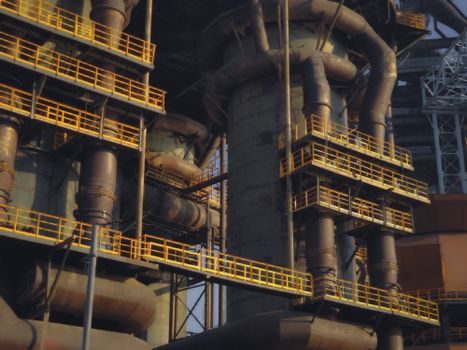
Three failure modes are consistent across the data set. Belt bucket elevators on cement, clinker or sinter duty fail by belt-cover abrasion and splice rupture inside 12–24 months, which is why NE plate-chain designs dominate the Alibaba cement index [S6]. Centrifugal-discharge units on lumpy feed above 50 mm backflow at the head pulley, so the spec must lock bucket geometry and head-shaft rpm — not just "throughput" — and the OEM must own that calculation [S1]. Casing and boot sealing is the third, often under-spec'd gate: the Indian B2B spare-parts index turns up 11 SKU lines for casings, bearings and boot pulleys, a tell that field failures concentrate at the boot, not the head [S8].
Sourcing risk runs through the supply side rather than the spec sheet. Chinese cluster vendors in the US$10M–US$50M band report a 77.5% response rate and typically quote 4–6 weeks ex-works on standard belt units, but documentation, FAT witness trips and post-shipment spares are the variables that decide total cost [S4]. Indian mid-cap system builders (S.J. Conveyors, Sinha BMH) absorb that risk by selling a packaged conveyor-and-elevator scope, which is why EPCs in the sub-500 t/h segment keep routing through them [S5][S9]. For a separate cluster view, the China cable and wire supplier map sits in the same Made-in-China ecosystem and follows the same revenue-band logic.
Trackable Signals to Watch Next
Two signals are worth tracking into the second half of 2026. First, DirectIndustry's filterable bucket-elevator catalogue is now the cleanest cross-vendor index for verifying that an engineering-grade bidder (BEUMER, FEECO, Cimbria, Cidiesse) still publishes a current model on the same parameters — a re-check on the lifting-height and product-application filters in October will show whether any of them have dropped off, which is an early warning on M&A or product-line rationalisation [S1]. Second, watch the Alibaba/Made-in-China cluster for new plate-chain foundry entries: a clinker-bucket-elevator search that adds new NE plate-chain vendors with verified-supplier badges is a leading indicator that Chinese foundries are scaling for the next cement-capacity build cycle in South-East Asia and East Africa [S2][S6].
For component-level specifications, see bucket elevator, pressure transmitter, and flow meter.