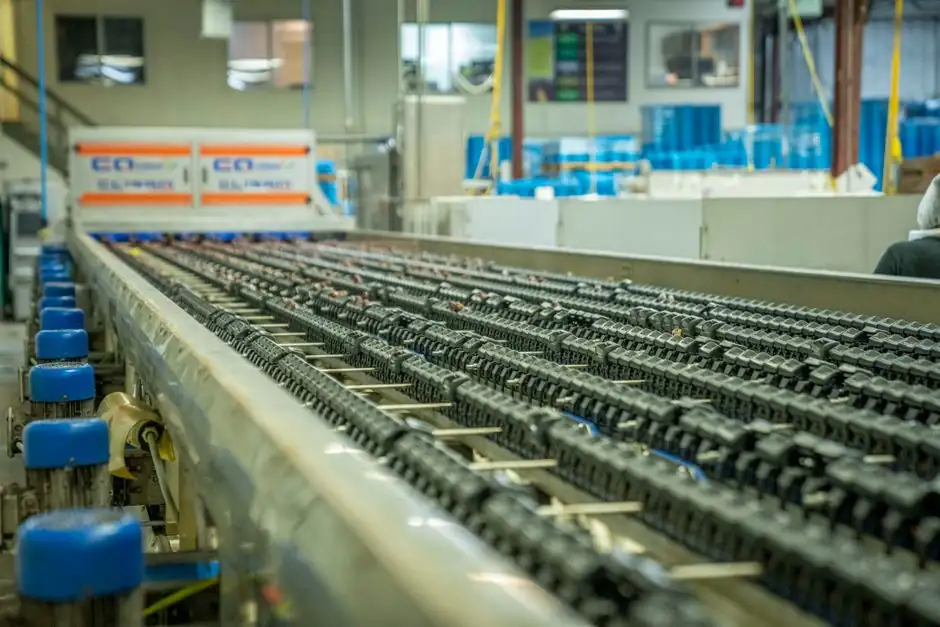
A screw conveyor (auger) moves material by a rotating helical flight inside a trough or tube, while a conveyor chain (drag, scraper, en-masse, or apron) pushes or carries material along an enclosed or open casing on a powered loop chain, with the two technologies covering different envelopes of capacity, incline, abrasiveness, and sanitary duty [S3][S8].
Both product lines are actively listed by Chinese OEM factories on Made-in-China and ECVV in 2026, with screw conveyor price points starting near US$800-2,000 per set for food-grade inclined units, and chain-conveyor systems typically quoted at US$1,000-5,000 per piece as part of a multipurpose conveying line that also covers roller, belt, and bucket units [S2][S4][S6].
Working Principle and Mechanical Layout
A screw conveyor is built from a drive device, end and intermediate bearing seats, spiral shaft, screw flights, feed and discharge ports, and a U-trough or tubular casing, with the screw shaft rotating so material slides forward along the trough bottom under the push of the flight and does not rotate with it because of gravity and casing friction [S3]. For vertical arrangements, screw body speed is raised so centrifugal force plus casing friction overcome gravity, which is why vertical screw conveyors are limited to roughly 8 m of lift and are used only for free-flowing powders and granules [S3].
Conveyor chain systems, including the pipe chain, scraper, and chain plate variants, move material by attaching flights, discs, or pans to a single or double strand of chain running through an enclosed casing, and the same family covers horizontal en-masse conveying, inclined drag conveying, and Z-type vertical bucket lifting at the high end of capacity [S8]. Wuxi Changrong lists pipe chain, scraper, chain plate, screw, and bucket elevator on one product menu, which reflects how Chinese suppliers treat the two technologies as a complementary bulk-material handling family rather than a single replacement choice [S8].
Material, Temperature, and Sanitary Operating Envelope
Standard horizontal screw conveyors are rated for an ambient of -20 to +40°C and a conveyed material temperature of -20 to +80°C, which makes them usable on most ambient grain, flour, and plastic-pellet duties but rules them out for hot clinker, hot ash, or molten-slag services [S3]. A vertical screw conveyor, by contrast, has higher rotational speed, higher specific energy consumption, and lower throughput per diameter, so it is restricted to free-flowing granular feeds with short lift heights, generally at or below 8 m [S3].
Conveyor chain and pipe chain conveyors take the high-temperature, high-abrasion, and long-distance slots. Chain conveyors built around forged link chain and flights, like those supplied by ECVV-listed Chinese factories, are routinely paired with bucket elevators, rotary valves, and silo unloaders for grain, cement, and fertilizer service, with the chain element itself specified for the abrasive load and not the casing [S6][S8]. The structural distinction matters: chain conveyor selection for abrasive, hot, or high-tonnage service is covered in this chain conveyor spec map, and the same article-to-article pattern is used here for the screw-side decision tree.
Capacity, Incline, and Length Comparison
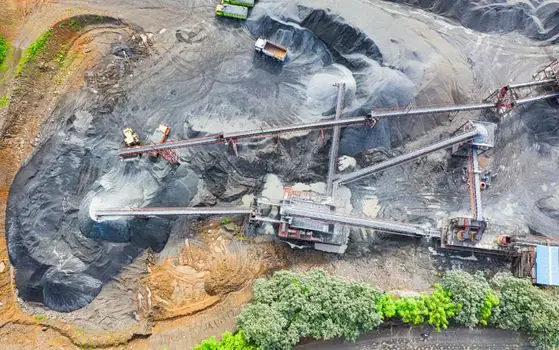
For the same casing diameter, a screw conveyor delivers a fraction of the throughput of an en-masse chain conveyor, and the gap widens with length because screw flight deflection, torsional wind-up, and intermediate bearing losses accumulate with every metre of trough. Pipe chain and en-masse chain conveyors routinely run tens of metres horizontally, and the Z-type chain-bucket variant reaches vertical lifts well past the 8 m ceiling of a vertical screw auger, which is the clearest non-negotiable line between the two technologies [S3][S8].
On the commercial side, food-grade POM spiral cooling towers are listed in the US$3,000-8,000 per piece range with a 1-piece MOQ, while standard inclined screw conveyors for bakery, candy, and similar light-duty service sit at US$800-2,000 per set, and multipurpose conveyor lines bundling roller, screw, chain, bucket, and belt variants in a single quote land in the US$1,000-5,000 per piece band [S2][S4]. Those price points confirm that screw and chain are sold as overlapping but not interchangeable product lines, with chain systems more often quoted in higher-tonnage bulk-handling packages and screw systems dominating the smaller, sealed, sanitary, and inclined-cooling niches.
Failure Modes and Maintenance Footprint
Screw conveyors suffer from a small, well-known set of failure modes: chain swing on the drive coupling, flight wear at the trough bottom, intermediate hanger bearing seizure, and overloading at start-up. Chain swing is particularly dangerous on screw-auger drive trains because the swing couples into chain-tripping and chain-cracking events on adjacent bucket elevator chain, so no-load commissioning followed by staged reload is the standard commissioning sequence on these units [S1].
Conveyor chain systems fail differently: chain elongation, flight or paddle wear, return-side carry-back, and sprocket or shaft seal leakage dominate the maintenance log, and the repair cycle is dominated by chain replacement rather than bearing service. That is why mid-size Chinese OEM lines list both products in parallel: the screw line is sold for low-maintenance sealed service, and the chain line is sold where access for chain replacement is acceptable in exchange for higher capacity, steeper incline, or hotter material.
Selection Criteria and Use-Case Map
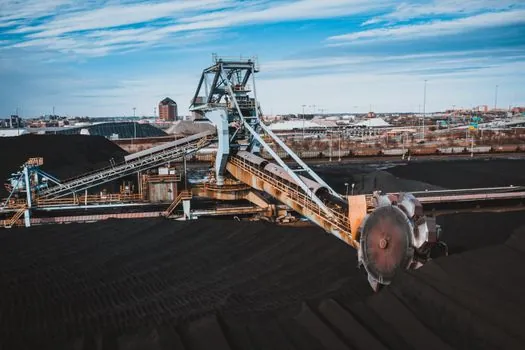
Pick a screw conveyor when the duty is short, horizontal or gently inclined, sealed, sanitary, or low-tonnage, with material free-flowing and ambient temperature inside the -20 to +80°C material band, and accept the 8 m vertical limit if a vertical lift is needed [S3]. Pick a conveyor chain (en-masse, drag, or pipe chain) when the duty is long, high-tonnage, steeply inclined or vertical, hot, or abrasive, and accept the open or semi-enclosed casing in exchange for throughput and reach [S8].
For a sealed, sanitary, or dust-tight duty that also runs hot or abrasive, neither pure technology fits cleanly, and a tubular enclosed chain conveyor or pipe chain unit typically beats a screw conveyor, which is why Wuxi Changrong and similar Chinese OEMs sell pipe chain and chain plate units as a separate product line from their screw conveyors rather than as a substitute [S8]. For light-duty food, bakery, and packaging handling, a modular belt or roller conveyor is often a better first look than either, as detailed in this belt conveyor spec map, and the same source-grade product split is reflected in supplier catalogs that list belt, chain, and screw under the same catalog header [S4].
Standards, Sourcing, and Supplier Map
Conveyor chain product lines on Made-in-China are dominated by ISO 9001-certified Chinese manufacturers such as Suzhou Junling Intelligent Equipment and Huzhou De-Nen Logistics Equipment, both of which list chain, roller, and belt conveyors as core product lines and offer OEM/ODM service for export buyers [S7][S9]. Screw conveyor suppliers, including Mu Jia Automation Technology (Shanghai), list food-grade POM and stainless-steel inclined screw units with sample availability and typical MOQ of 1 piece or 1 set, with delivery tied to the FOB price band rather than a fixed catalog price [S2].
Trackable signals for buyers in the second half of 2026 include the continuing appearance of new multipurpose conveyor listings on Made-in-China that bundle roller, screw, chain, bucket, and belt units into a single configurable line, and the steady expansion of pipe chain and chain plate variants on Wuxi-based OEM menus, both of which point to Chinese suppliers positioning the screw vs chain decision as a per-duty configuration question rather than a winner-takes-all technology choice [S4][S6][S8].
Spec-level background on the components involved: chain conveyor, conveyor chain, and chain belt.