Ready-mix concrete is a batched blend of cement, water, sand, and graded aggregate dosed at a central plant and delivered by truck in a workable state, defined by the same supplier-side dictionary note that traces the term to factory-proportioned construction materials [S2]. For buyers in 2026 the order is no longer a commodity call to the nearest plant; the 2030 forecast of USD 704.2 billion in global market value sits on a widening gap between basic C25/30 supply and engineered mixes with verified slump retention, SCM substitution, and admixture performance tied to placement method.
Three plant-controlled variables decide whether a delivered load is fit for purpose or a rejection waiting at the chute: target compressive strength class, the workability window measured by slump at point of discharge, and the maximum nominal aggregate size for the section being poured. Each is set by the structural drawing and the placement method, not by the dispatcher. Holcim's 2026 concrete solutions page treats strength, durability, and application-specific performance as the same decision tree, with the supplier configuring admixture systems and aggregate grading to match [S1].
Mix Types and What They Actually Buy You
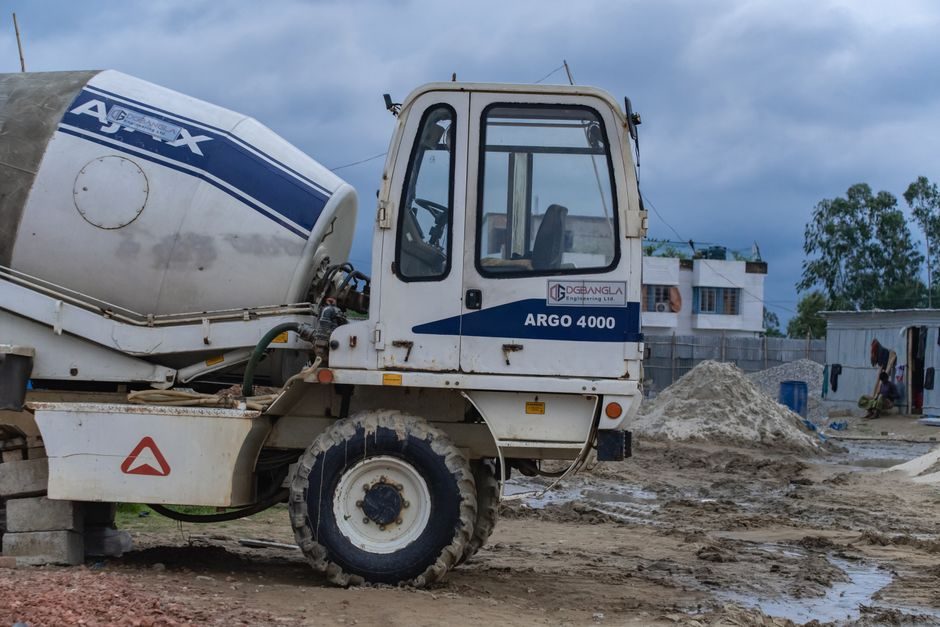
Allied Market Research's 2022 segmentation, still the reference typology in 2026, sorts the global RMC market into three mix types — transit mix, central mix, and shrink mix — and two delivery vehicles, the in-transit barrel truck and the volumetric mixer [S4]. Transit mix keeps the drum rotating at agitating speed after batching, with water held back or added at site; central mix discharges a fully mixed, homogeneous product into the agitator, which cuts water-cement scatter and is the default for high-strength and self-consolidating mixes. Shrink mix is a half-blend done in the truck mixer at slow speed to free drum capacity, used where haul distance is short and slump loss is controlled.
For most projects, the practical choice is between a central-mix plant truck and a volumetric mobile mixer. Central-mix gives batch ticket traceability, plant-calibrated dosing, and consistent air entrainment; volumetric gives on-site dose adjustment, zero slump loss in transit, and the ability to switch mix class between pours on the same call — useful on small sites where the spec changes between strip footings and a slab. The trade-off is QA documentation: volumetric outputs require on-site cube or cylinder tests the supplier logs, while central-mix outputs are backed by the plant's own mill cert chain.
Strength, Slump, and Aggregate: The Three Numbers That Lock the Spec
Specifying ready-mix starts with three numbers in this order: cylinder strength class, target slump at discharge in millimetres, and maximum nominal aggregate size. Common structural grades run C25/30 to C40/50 for cast-in-place frames and walls, with C50/60 and above reserved for columns in high-rise cores and pre-stressed elements. Slump for a boom-pumped mix typically lands at 150–180 mm; for a slab direct-chute poured with minimal vibration, 75–100 mm is the safer working range to avoid segregation; for self-consolidating concrete the slump-flow is reported in millimetres of spread, not traditional slump. [S1]
Maximum nominal aggregate size is set by the smallest dimension in the pour — cover, rebar spacing, and section thickness all constrain it. A 20 mm maximum is the default for most reinforced pours; 10 mm or 14 mm is specified where cover is tight or mesh is dense. Admixture systems from Mapei's ready-mix line target fluidization and slump retention in hot-weather and long-haul conditions, with separate product families for normal-set, retarding, and accelerating exposure conditions [S5]. Crate space for the concrete admixture decision is set by ambient temperature, haul time, and how much retardation the placement method tolerates.
Admixtures, Fibres and the SCM Question
Modern ready-mix is rarely a four-component system; the cementitious portion is increasingly blended with supplementary cementitious materials (SCMs) — fly ash, ground granulated blast-furnace slag, silica fume — and the water content is reduced with plasticizers to keep workability at low w/c ratios. Mapei structures its ready-mix admixture catalogue around exactly this triad: fluidizers that keep the wet mix pumpable, retarders that extend the workability window in hot weather, and accelerators for cold-weather or early-strip pours [S5].
Fibre reinforcement — steel macro-fibre for slab-on-grade crack control and polypropylene micro-fibre for fire-spalling and plastic-shrinkage control — is dosed at the plant and shows up as a separate line on the batch ticket. The buying decision is whether to take the fibre-inclusive mix from the supplier or dose on site; the former gives documented dosage and uniform dispersion, the latter cuts cost on small pours at the price of QA traceability. Crate space for the concrete fibre question is whether the structural drawing actually requires the fibre to carry load (then it must be on the mix design sheet), or whether it is a serviceability crack-control measure (then macro-synthetic or steel fibre at the supplier's standard dose is acceptable).
Application Match: Commercial, Residential, Industrial
Allied's 2022 typology splits demand into commercial and infrastructure, residential, and industrial applications, with the largest share sitting in commercial and infrastructure work [S4]. The mix design implications are concrete: infrastructure pours — bridge decks, retaining walls, road pavements — typically need lower w/c ratios, air entrainment for freeze-thaw durability, and tighter slump control for slipform or pavers; residential foundation and slab work tolerates a wider slump window and a more forgiving mix; industrial floors and yards push toward high-early strength, abrasion-resistant toppings, and steel-fibre-reinforced slabs. Local suppliers like Haley Construction Inc. position their portfolio across residential driveways, commercial foundations, and aggregate sales, illustrating the typical regional supplier's full-stack offer [S6].
For a buyer, the implication is that the application class drives the mix class, not the other way around. A residential driveway mix at C25/30 with a 75 mm slump is not the same product as a commercial slab mix at C32/40 with a 150 mm slump and 5% air entrainment, even if both are sold out of the same plant. The order should state the application, the placement method, the target strength at 28 days, the slump at discharge, the maximum nominal aggregate, and any exposure class — then let the supplier propose a mix design that hits all of it.
Delivery, Logistics, and the Real Cost of a Cubic Meter

Quoted cubic-meter price rarely includes everything that lands on the pour. The real delivered cost stacks: base mix per cubic meter, fuel and environmental surcharges (tied to the diesel index at most plants), short-load fees (typically 1–4 m³, charged at a higher per-cube rate to cover the truck's dead-head), waiting time at site (after a free discharge window of 30–45 minutes), and returned concrete disposal if the load exceeds the workable window. The smaller-volume, specialty-supplier model — like Haley's Inc. in central Maine serving residential and small commercial customers from Sangerville and Hartland [S6] — applies lower volume thresholds and tighter delivery windows, which is the right shape for a pour under 6 m³ and the wrong shape for a 200 m³ foundation pour.
Slump loss in transit is the most under-estimated line item. Volumetric mixers sidestep the haul problem by batching fresh at site; central-mix plants address it with hydration-stabilizer admixtures and ice-batched water in summer. The buyer's lever is to specify the slump at point of placement, not at the plant gate, and to make the supplier own the gap. Holcim's 2026 concrete solutions page frames application-specific performance and durability as part of the supplier's configured offer [S1], which is the same point in different language.
QC, Standards, and What to Demand on the Batch Ticket
A batch ticket should carry, at minimum: mix design code, w/c ratio, cementitious content (kg/m³), SCM percentage, maximum nominal aggregate size, target slump at discharge, admixture types and doses, batch time, and the plant's quality system reference. A mill certificate for the cement and a delivery docket with the actual batched weights should accompany it. A volumetric mixer's output ticket carries a different format — total cement, aggregate, water, and admixture dispensed — and is signed on site. Either way, the buyer should sample and cast control cubes or cylinders at point of placement, not at the plant gate, because that is the concrete that goes into the structure. [S2]
For vibration of test cubes and field density checks, a concrete vibrator on site is part of QA, not just a placement tool — under-vibrated test specimens under-report strength and lead to false rejections. The placement side of QA is the buyer's responsibility; the batching and plant-side documentation is the supplier's. Where the two meet — at the chute — is where rejections happen, and a one-line slump check before discharge prevents most of them.
Selection Criteria and Comparison Across Mix Options
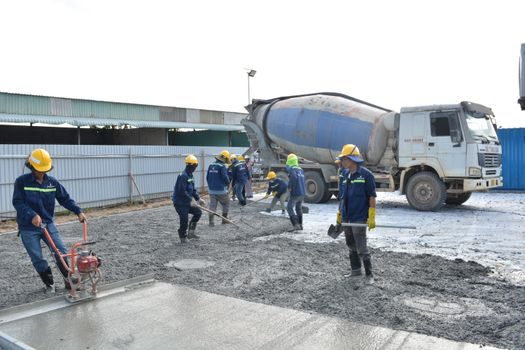
Across the main delivery options, the decision matrix in 2026 looks like this. Central-mix transit truck: high batch-to-batch consistency, full traceability, plant-controlled SCM and admixture dosing, but fixed mix class per load and slump loss in long hauls. Volumetric mobile mixer: flexible mix class, zero transit slump loss, no short-load fees, but on-site QC and testing are the buyer's burden. Shrink mix: useful only for short hauls and lower-spec pours, mostly a regional practice. For most structural pours above 4 m³, the central-mix transit truck remains the default. For small pours, multi-class sites, or remote locations, the volumetric mixer is a clean fit. [S3]
Buying discipline is straightforward: lock the strength class and exposure class to the drawing, lock the slump to the placement method, lock the aggregate size to cover and rebar spacing, then ask the supplier for a mix design sheet and a batch ticket format before signing the order. The cubic-meter price is the last question, not the first. For related selection logic on engineered cement systems, the Special Cement Selection Criteria: Five Engineering Gates That Lock the Spec in 2026 breakdown maps the cement-side choices that sit upstream of this RMC decision. The deeper six-gate framing of ready-mix concrete selection covers the QA and placement-side checks that should run alongside any order, and the concrete admixture line of decision points runs in parallel to the SCM and water-reducer choices discussed above.
Two trackable signals for the next buying cycle: the 2030 USD 704.2 billion global RMC forecast is anchored to the same three-segment typology Allied published in 2022 [S4] — when the next re-segmentation lands, the transit-versus-volumetric share is the number worth watching, because it tells you whether on-site batching is moving from niche to default. The second signal is regional supplier concentration: a supplier like Holcim rolling out configured, application-tied solutions [S1] indicates that the basic C25/30 commodity layer is being absorbed into engineered product lines, and the buyer's RFQ will need to call out performance criteria, not just strength and slump, to keep price discovery honest.