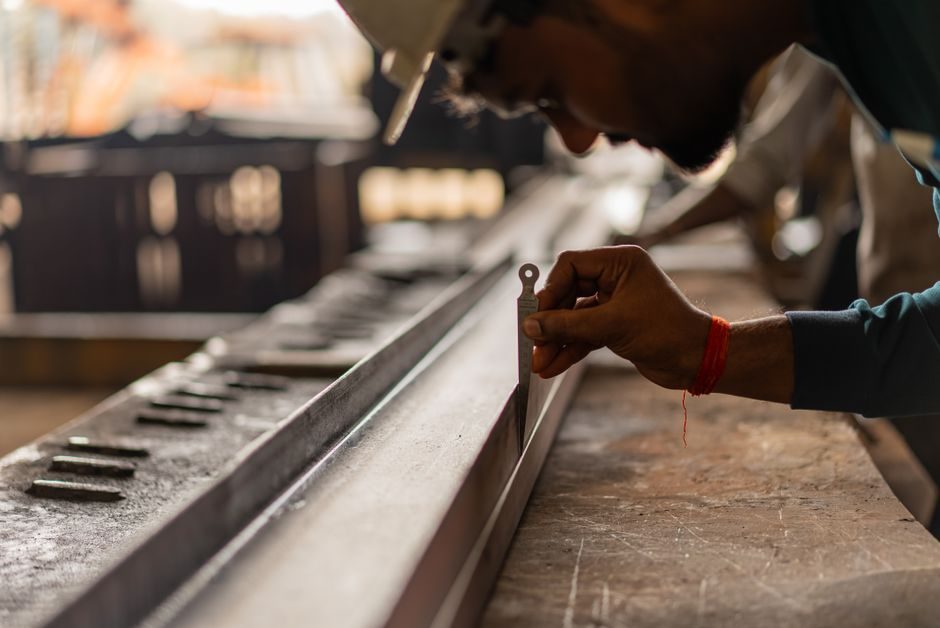
Spot-market carbon structural steel in China in late May 2026 sat at US$ 501-565 per tonne FOB at 1-28 t MOQ, while carbon steel pipe and tube cleared at US$ 500-580/t on 1-8 t orders and US$ 1,200-1,400/t on 1 t MOQ from Shandong mills [S4][S5].
Forged and casting carbon-steel forms carry the next price step: precision-forged die / tool-steel rounds in D2, D3, Cr12MoV, 5CrNiMo and 52100 grade families quoted US$ 500-999/t, and lost-wax carbon-alloy castings ranged US$ 32-35/pc at 100-pc MOQ up to four-figure moulded parts [S8][S9].
Round bar and structural section: the US$ 30-90 vs US$ 500-580 split
The two visible price floors for carbon steel products in the May 2026 snapshot come from very different forms: a Shandong-traded hot-rolled carbon structural plate sits at US$ 30-90 per 200 m² MOQ (Qingdao Ruly Steel), while a Shandong-milled 1-tonne MOQ of carbon structural billet clears at US$ 550-565/t and a 28-t MOQ drop of the same family drops to US$ 501-552/t [S4].
SCI99's ordinary carbon round-bar assessment is the cleanest public intraday benchmark for raw bar — a market-price methodology that strips extreme trades and runs multiple intraday updates plus a closing print, giving a dealing range rather than a single list number [S1]. For buyers comparing mills, the US$ 501-565/t band is the working floor for hot-rolled structural bar in the second half of May 2026 [S4].
Pipe and tube: US$ 500-1,400/t driven by schedule and MOQ
Carbon steel pipe and tube quotes cluster in two tiers: an entry tier at US$ 500-580/t for 1-8 t MOQ orders from three Shandong Diamond members (Zehao Metal, Zebra Steel, and a third audited supplier), and a heavy-wall / special-schedule tier at US$ 1,200-1,400/t for 1-t MOQ from Qingzhou Dooharvest, reflecting schedule step-up, test certification and finishing [S5].
For a working spec, the entry band covers ASTM A53 / A106-class line pipe in standard schedules; the US$ 1,200+ band typically maps to thick-wall, galvanised, or NACE-mr0175 service pipe. Separately, SMLS and welded carbon-stainless steel pipe Korea-sourced listings on tradeKorea remain a useful second-source comparator for Asian EPC buyers validating mill origin [S3].
Forged and cast forms: US$ 500-1,200/t with a US$ 32-35/pc casting floor
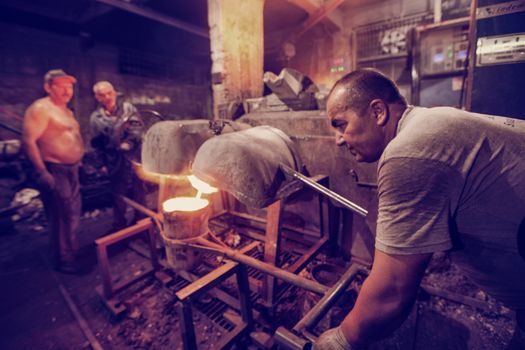
Forged carbon steel rounds in tool-steel grades (D2, D3, Cr12MoV, HMD5, 5CrNiMo, 52100) traded at US$ 500-999/t on 1-t MOQ from Hunan-based Yuxin Steel, with the same supplier quoting customised square mild-carbon bar at the same envelope [S8]. That is roughly a 1.0-1.7x premium over plain hot-rolled structural bar [S4][S8].
Lost-wax carbon-alloy castings open a lower per-piece floor: Wuxi Henderchan quotes US$ 32-35 per 100-piece MOQ frame/cover castings with Ts16949 / IATF16949 traceability, and a Shandong precision foundry quotes US$ 1,000-40,000 per 100-pc MOQ for machinery covers — the wide top-end reflects mould amortisation, not alloy premium [S9]. Buyers who need a carbon steel part with TS/IATF paperwork for auto-tier customers should expect to negotiate per drawing, not per tonne.
Low-tonnage consumables: chain US$ 0.585-50, pan US$ 1.05-16.80
For non-bulk carbon-steel consumables the per-unit price falls away from the tonnage bands: G80 carbon-steel link chain from Zhejiang Ocean Industry sits at US$ 0.585 per 100 ft MOQ, while Weifang First Rigging's G80 boom/anchor chain covers US$ 0.80-50 per metre MOQ depending on diameter and certification (CE/ISO/BV/CCS) [S7].
Carbon-steel saucepans and small stampings sit at consumer-tier pricing: Xiangtan Dana Technology quotes US$ 1.05-1.25 per piece at 1,000-piece MOQ for enamelware, and US$ 16.30-16.80 per set at 1,000-set MOQ for the wood-handled cookware set [S6]. These consumer-grade numbers are useful only as a low-end sanity check — industrial buyers should never cross-shop them against pipe or bar.
Selection criteria, MOQ gates and who pays more
Three decision gates dominate the 2026 carbon-steel price table. First, MOQ — 1-t orders carry a 5-15% premium over 28-t drops on the same grade [S4][S5]. Second, grade depth — plain Q235 / A36 structural bar at US$ 501-565/t is the floor; tool-steel-forged rounds at US$ 500-999/t and 5CrNiMo die-steel add 1.0-1.7x for hardenability, not for steel content [S4][S8]. Third, certification — Ts16949 / IATF16949 paperwork on castings and CE/ISO/BV/CCS chain certificates add a flat audit fee, not a per-tonne premium [S7][S9].
Buyers who need alloy steel performance on a carbon-steel budget should target forged rounds in 5CrNiMo or 52100 at the US$ 500-999/t band rather than chasing higher-cost stainless; buyers chasing structural plate for general fabrication should hold to the US$ 30-90 per 200 m² entry rather than over-spec'ing into pipe. For cross-material context, the stainless steel vs copper selection framework shows where moving off carbon steel is the right call (corrosion, conductivity) and where it is overkill.
Limitations, sourcing signals and 2026 cost-control levers
Two hard limits on this data. First, the snapshots are dated within 2026-04 to 2026-06; SCI99 ordinary carbon round-bar market prices update intraday, so any quote older than 24 hours is stale against the morning print [S1]. Second, MOQ is binding — US$ 30-90 per 200 m² plate [S4] is not a price you can get on a 1-t trial; the real entry for tonnage is US$ 500-580/t [S4][S5].
Trackable signals for the rest of 2026: SCI99 ordinary carbon round-bar intraday vs closing spread (widens when mills push offers); Shandong Diamond-member listed price refreshes on Made-in-China (the US$ 501-565/t band has held across the late-May window [S4]); and the next major carbon-steel chain / rigging catalogue drop, where G80 BOOM/anchor chain sits at US$ 0.80-50/m [S7]. For a deeper read on the steel-vs-alternative decision in adjacent forming and fastener categories, the steel strand vs welded mesh spec guide is the most directly comparable cost-mapping reference on the wire-products side.
For component-level specifications, see carbon fiber.