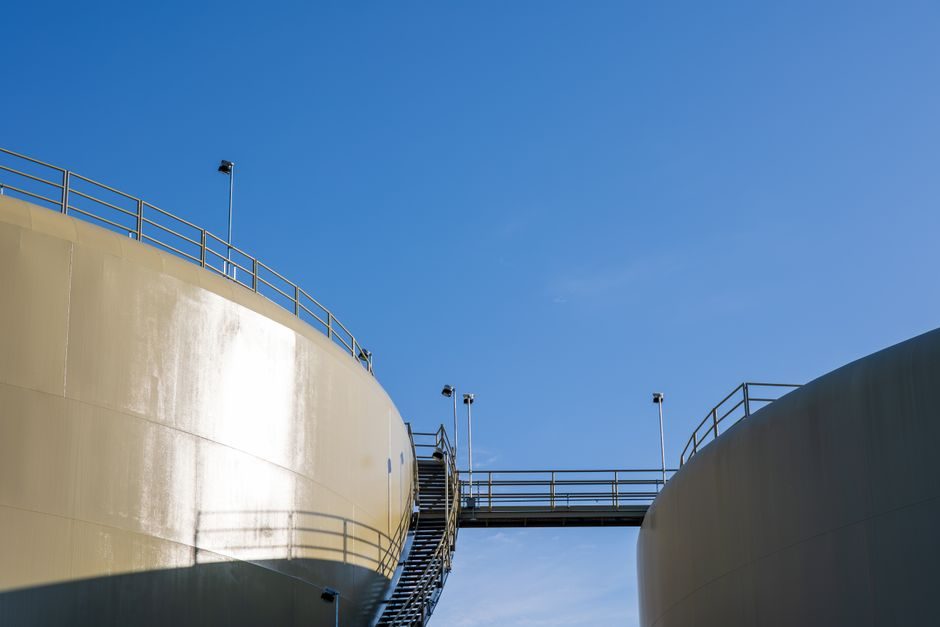
Storage racks and tank cleaning machines occupy different ends of the industrial equipment catalog — the first structures floor space in a warehouse, the second removes paraffin, rust and sediment from inside a 10,000 m³ crude tank. The 2026-06-24 buying frame treats them as separate spec domains, not comparable alternatives, with each tied to its own load or pressure envelope.
Storage rack demand remains driven by warehouse density targets and forklift-handled unit loads; tank cleaning machine demand is driven by petrochemical tank farm maintenance cycles, API 653 inspection intervals, and the regulatory push that effectively retired manual tank cleaning [S5]. For the 2026 spec frame, the overlap with the storage rack and tank cleaning machine catalogs sits in the materials-handling supply chain — one equips the warehouse that feeds the plant, the other equips the maintenance crew that services the plant's storage vessels.
Spec Domain 1 — Storage Rack Load, Geometry, Bay
Storage rack selection is anchored on per-bay load, beam length, frame height, and forklift aisle width. Selective pallet rack typically rates 1,000-4,000 kg per beam pair, with heavy-duty cantilever and drive-in configurations reaching 4,000-5,000 kg and above per bay for steel coil or long-goods storage. Upright frame heights commonly span 2,400-11,000 mm, and beam lengths 1,800-3,600 mm to fit standard 1,200 × 1,000 mm EUR-pallet footprints with 75-100 mm forklift clearances per side [S1].
For spec-driven buyers, the pallet rack sub-class is the most specified type in distribution centers, with boltless teardrop connections dominating North-American retrofit work. The catalog also differentiates storage cage units for loose-bulk and tool storage, with mesh-panel welded construction typically rated 500-1,500 kg per stack and four-way fork pockets for relocation.
Spec Domain 2 — Tank Cleaning Machine Pressure, Cycle, Geometry
Tank cleaning machine selection is anchored on operating pressure, cycle time, spray diameter, and minimum tank opening. High-pressure 3D rotary nozzles commonly operate at 500-1,000 bar cleaning pressure for heavy paraffin and coke removal, with 6-12 minute full cycles and 6-20 m effective spray diameters [S4]. Mid-range 50-200 bar units are standard for crude and diesel service tanks carrying fine rust, moisture and oil-bacteria contamination [S2].
Minimum tank opening drives nozzle choice: 100 mm openings accept the standard DG15 nozzle at 3-20 bar, while the 158 mm minimum opening class steps up to 4-20 bar with 6 m spray diameter for the smaller manways. The spec sheet's "cleaning cycle 2-4 min / 5-50 bar" range targets light-flush duty on smaller process vessels and IBC tote cleaning, complementing higher-pressure rotary heads used on refinery-scale tanks [S4].
Who Each Is FOR — Decision Logic by Site

Storage racks are specified for any site handling palletized, long, or loose-bulk goods that needs vertical density: distribution centers, auto-parts warehouses, cold stores, and the racking aisles behind a tank-farm blending warehouse. Tank cleaning machines are specified for petroleum, chemical, and food-bulk sites that own fixed-roof or floating-roof storage tanks scheduled for periodic cleanout between product switches or before internal inspection. [S1]
Selection rule: if your primary decision metric is kg-per-m² of floor area, you are buying storage rack. If your primary decision metric is bar pressure and time-to-clean a sealed vessel interior, you are buying a tank cleaning machine. The two rarely compete on the same RFQ; the IBC tank category is one of the few areas where the buyer encounters both — a 1,000 L IBC needs pallet-rack compatible footprint AND a tank-cleaning nozzle whose minimum opening fits the IBC top manway.
Comparison Table — Decision Criteria Across the Two Domains
Across the two equipment families, the buying criteria diverge sharply. A side-by-side spec frame for the 2026 buying cycle looks like this: [S2]
Selection criterion / storage rack / tank cleaning machine. Primary load metric: kg per beam pair (typically 1,000-4,000 kg) / bar of cleaning pressure (typically 3-1,000 bar). Geometry driver: bay width × frame height × forklift aisle / spray diameter × minimum tank opening. Standard frame: EN 15635 / FEM 10.2.14 (racking), manufacturer-stated cycles for cleaners. Safety driver: anchor pull-out, column protector, seismic bracing / ATEX 2014/34/EU zone rating for tank interior. Lead time: 2-6 weeks for stock selective rack; 4-12 weeks for engineered drive-in / 2-8 weeks for stock nozzles, 8-16 weeks for engineered rotary heads [S1][S4].
Use Cases and Field Placement
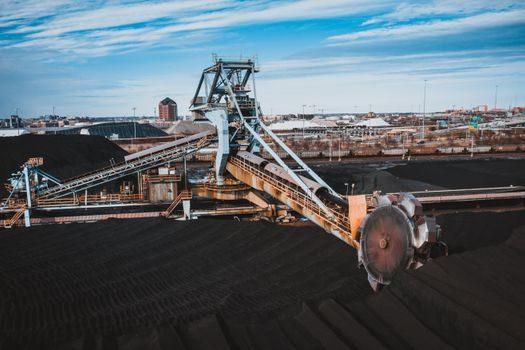
Storage rack field placement: a 10,000 m² distribution center commonly installs 2,500-4,000 selective rack bays with 6 m frame height and 2,700 mm beam length, served by reach or counterbalance forklifts on 3,000-3,300 mm aisles. Tank cleaning machine field placement: a 50,000 m³ tank farm typically rotates 1-2 high-pressure rotary heads per tank during API 653 inspection windows, with a 500-1,000 bar unit sized to 158 mm minimum opening for crude service and 100 mm opening for refined-product service [S2][S4].
For buyers cross-referencing adjacent spec domains, the 2026 buying guide on tank cleaning machine selection covers pressure, geometry and residue-class matching in detail, while the storage rack encyclopedia entry covers upright-frame, beam, and decking selection. Material handling buyers comparing conveying options for tank-farm feed stock can cross-check the screw conveyor vs pneumatic conveying frame, since dry-bulk transfer lines and storage racks are often co-specified in the same green-field tank-farm design.
Limits, Failure Modes, and Buyer Pitfalls
Storage rack failure modes concentrate in column-base plate anchor pull-out, beam-clip disengagement under fork impact, and frame sway under seismic load — all governed by EN 15635 inspection cycles and column protectors at the first 600 mm of upright. Tank cleaning machine failure modes concentrate in nozzle bearing wear (which lengthens cycle time past the 6-12 min window), high-pressure hose fatigue at the rotary joint, and ATEX non-compliance when a pneumatic-drive head is used inside a flammable-vapor tank without proper zoning [S2][S4].
Common buyer mistake in 2026: specifying a tank cleaning nozzle by spray diameter alone, ignoring the 158 mm or 100 mm minimum tank opening constraint that physically blocks installation. For racks, the symmetric mistake is specifying beam length without checking forklift turning radius and pallet overhang (typically 75 mm each side for standard EUR pallets) — both errors force retrofit cost that dwarfs the original price delta.
Standards, Sourcing, and Next Signals

Standards frame for storage rack procurement in 2026: EN 15635 for in-use rack inspection, FEM 10.2.14 for design loads, and EN 15512 for tolerances. Standards frame for tank cleaning machine procurement: ATEX 2014/34/EU for zone-rated cleaners used inside flammable-vapor service, manufacturer cycle-time certification, and the cleaning residue classification that drives nozzle selection between 3-20 bar wash and 500-1,000 bar descaling heads [S2][S4].
Trackable signals to watch in H2 2026: AWT World Trade's distribution of Saturn Rack drying-and-storage mobile racks (acquired 2012, still actively catalogued) [S3] and the continuing shift in Chinese tank cleaning catalogs toward 3D rotary heads with published cycle times rather than legacy manual-cleaning specifications [S5] — both data points confirm the spec-driven procurement trend on both sides of the equipment divide.