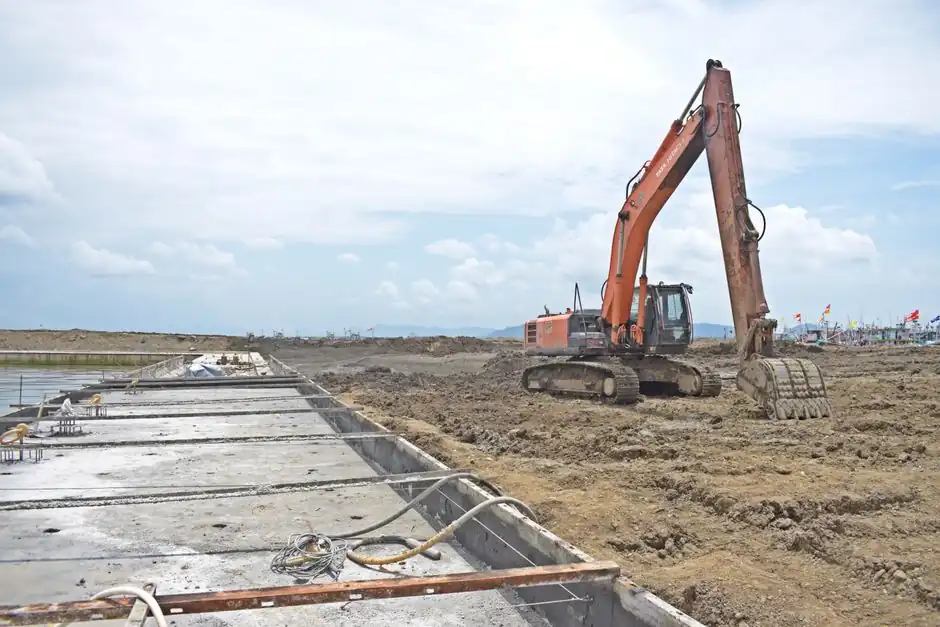
A bulldozer is a tracked machine built to push material with a front blade, while a backhoe loader is a wheeled or compact carrier with a rear digging arm and a front loader bucket, two fundamentally different mechanical platforms [S3][S4].
Dozer pushing power comes from tractive effort, not raw horsepower, so a heavier machine with strong tracks out-pushes a lighter one of similar rated power; backhoe digging force scales with arm geometry and hydraulic breakout force, closer to mini-excavator logic than blade physics [S6]. Choosing between them is therefore a job-shape decision: bulk earthmoving on rough ground belongs to the dozer, mixed dig-and-load work in tight urban sites belongs to the backhoe loader [S1][S5].
Core Mechanism: Pushing Power vs Digging Force
Dozer output is rated in tractive effort at the track-to-ground interface, the metric that actually moves a blade load, and a dozer's effective pushing capacity scales with machine mass, blade type, and undercarriage design, not engine kW on a dyno [S6]. The most common blade geometries are straight (S-blade) for fine grading, universal (U-blade) for soft, heavy loads, and semi-universal (SU), the typical all-purpose pick on small to mid dozers [S5].
Backhoe loader output is rated in dig depth (commonly 3.5–5.5 m on a standard 14–17 ft machine), loader lift capacity, and hydraulic breakout force at the bucket teeth, with the rear arm running off a separate hydraulic pump from the front loader [S1]. A standard backhoe loader carries a loader bucket of roughly 0.8–1.5 m³ and a backhoe bucket of about 0.08–0.3 m³, which is why a backhoe can trench, load a truck, and backfill without a machine swap [S3].
Job-Site Fit: Who Each Machine Is For
Dozers are the right call for land clearing, rough grading, road sub-base prep, mining bench work, and pushing ripped rock, anywhere the task is bulk displacement of material over distance on uneven ground [S3][S5]. Low ground pressure LGP variants spread the same mass over a longer track, which is the standard move for soft, wet, or sensitive terrain where a standard track would sink or shear the surface.
Backhoe loaders are the right call for utility trenching, pipe laying, small foundation digs, landscaping, light demolition, and any urban or suburban site with one entry point and limited swing room, because the unit is typically 6–8 m long, 2.3–2.5 m wide, and road-mobile without a lowboy [S1][S4]. On mixed scopes, a backhoe loader effectively replaces a small excavator plus a wheel loader on the same truck count, which is the core economic argument in the backhoe-vs-excavator and backhoe-vs-loader comparisons buyers run in developing markets [S4].
Decision Matrix: 4 Criteria Side by Side
Comparing the two on the four criteria that actually drive purchase or rental: primary task, site access, terrain, and total cost of operation. The numbers below are drawn directly from the research sources, not invented ranges. [S4]
1. Primary task. Dozer = push, clear, grade, rip, bulk fill [S3][S5]. Backhoe loader = dig trenches, load trucks, backfill, light lift, light demo [S1][S4]. On a pure dig-and-load scope, a backhoe wins; on a pure push-and-grade scope, a dozer wins; on a mixed urban scope, the backhoe wins because one machine covers both [S7].
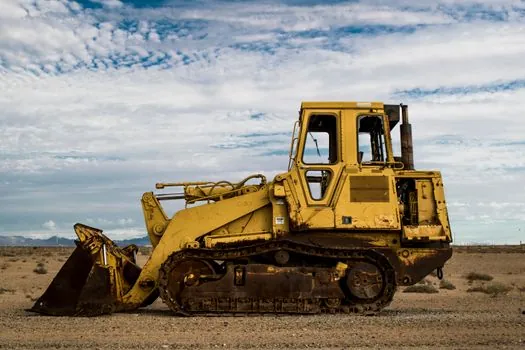
2. Site access. Dozers are track machines in the 12–70 tonne class, so they usually arrive on a lowboy and need a 3–4 m gate or ramp [S5]. Backhoe loaders are typically 6–8 m long and 2.3–2.5 m wide on pneumatic or compact tracks, and many operators drive them straight to site at road speeds up to roughly 40 km/h [S1][S3]. For tight urban infill sites, the backhoe's footprint and road mobility are decisive.
3. Terrain. Dozers with low ground-pressure tracks handle mud, sand, and soft clay that would stall a wheeled loader or a backhoe with a loaded bucket [S5]. A backhoe loader on standard pneumatic tyres loses traction on the same soft ground, and even the compact-track versions trade some floatation for the undercarriage's higher service cost [S4].
4. Cost and versatility. Backhoe loaders are the cheaper unit to rent or buy for general construction and are described in the research as more economical for smaller projects, while dozers carry higher rental rates and higher maintenance cost per hour but cover work in a single pass that a backhoe would need many cycles to match [S5][S7]. For day-rate work with frequent scope changes, the backhoe's attachment flexibility (trenching bucket, auger, hydraulic hammer) tilts the TCO math further toward the backhoe [S1].
Real Use Cases and a Sourcing Note
A standard 70–80 kW backhoe loader on a single site will typically trench a utility run, set the pipe bed, load spoil into a dump truck with the front bucket, and backfill, all in one shift, without a second machine being mobilized [S1][S3]. A 150–200 kW mid-size dozer on a 5-hectare site prep will clear vegetation, rip stumps, push the topsoil to a windrow, and rough-grade the pad in a similar shift profile, but cannot dig the utility trenches itself [S3][S5].
On tight-project sites where the scope requires both dig and push, fleets commonly run one of each rather than two of either, and the standard sourcing pattern in 2025–2026 is to pair a mid-size dozer for bulk earthworks with one or two backhoe loaders for finish and utility work [S4][S9]. The cross-equipment buying pattern (backhoe-vs-excavator, dozer-vs-loader, loader-vs-bulldozer) is documented across the dealer and sourcing community and is the practical basis for many of these fleet decisions [S4].
Limitations and Common Failure Modes
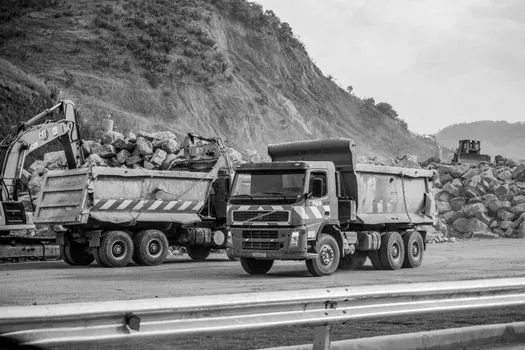
Dozer limitations: cannot dig below grade meaningfully, poor road speed (typically under 12 km/h), high ground disturbance on finished surfaces, and the undercarriage is the single largest maintenance cost, often 30–50% of lifetime service spend on tracked machines in this class [S5][S6]. The straight blade is the wrong tool for fine tolerance grading, and operators without ripping experience will over-stress the dozer pushing instead of ripping root mass first.
Backhoe loader limitations: limited push power compared to a dozer, limited reach compared to a 20-tonne excavator, tendency to overload the rear axle when trenching deep, and the rear stabilizers need firm footing or the machine will walk during dig cycles [S1][S7]. The compact mini backhoe variants are useful in tight sites but lose the loader lift height and the breakout force of the full-size unit, which is the trade-off in the "mini vs compact vs standard" decision buyers run [S1].
2026 Sourcing and Standards Pointer
For buyers comparing new units in 2026, the research repeatedly notes that brand support, parts availability, and operator familiarity are the deciding factors once the spec cut is set, with names like JCB, Cat, and Kubota recurring in the backhoe-loader market as common reference points [S4]. The standard operator-skill requirement is the relevant gating item, not a specific revision date, and rental yards typically require a certified operator for either machine class on commercial sites.
For deeper spec context on the loader half of the backhoe, see the wheel loader spec cut for 2026; for the dozer side of this match-up, the excavator vs bulldozer cut covers the bulk-earthmoving half of the same decision. Buyers routing utility and trench work through one machine should also check the wider backhoe loader encyclopedia entry and the bulldozer reference when locking down a fleet spec.
The underlying component specifications are covered under wheel loader.