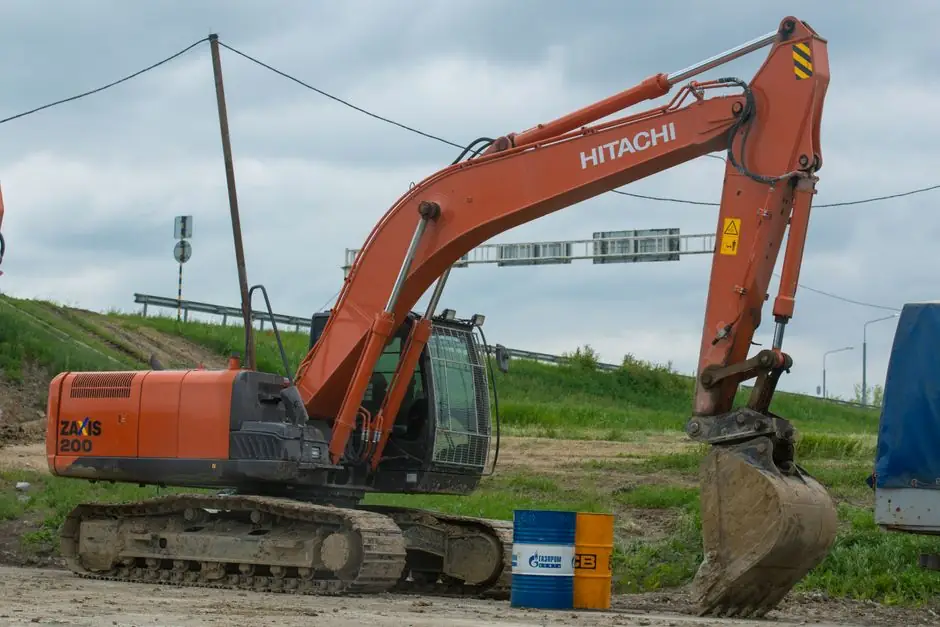
For bulk loading and stockpile work on firm ground, a wheel loader is purpose-built, with 20–40 km/h self-travel, continuous forward-drive loading cycles, and a new-machine price band of AUD 22,900–185,000+ in Australia [S4].
For digging trenches, footings, foundations and precision earthwork, an excavator's tracked undercarriage and 360° rotating hydraulic arm reach 1.5–7 m+ of dig depth depending on size, and the same Australia data bands new excavators from AUD 30,000–500,000+ [S4]. Across the first half of 2026, China's excavator sales reached 152,000 units, up 26% year-on-year, with exports above 61% of production, a market signal that excavator demand continues to outpace loader-only fleets globally [S2].
Primary Task First, Price Second
The dominant operating task resolves the wheel loader vs excavator choice faster than any spec sheet: a wheel loader cannot dig at depth and an excavator cannot self-travel between sites at speed, so picking the wrong primary tool is the most expensive equipment error on a small civil fleet [S4]. According to S1, the wheel loader's continuous forward-drive loading cycle is faster than the excavator's slower swing-and-place cycle for truck loading from stockpiles. When the operating hour breakdown is more than ~60% trenching, footing excavation, demolition, or pipe and cable laying, the excavator's hydraulic reach and bucket control are the only viable primary tool [S4].
Mobility, Terrain and Undercarriage
Wheel loaders run on four rubber tyres and post 20–40 km/h road speeds, which lets them self-move between job sites and removes low-loader hire on multi-site contracts across NSW, QLD and WA [S1]. Excavators run on tracked undercarriages and post 3–6 km/h travel, so any move between sites requires a low-loader at AUD 300–1,500 per move depending on distance, a cost that compounds fast on short-duration contracts [S1]. On soft, waterlogged or uneven ground the tracked excavator distributes weight over a larger footprint and keeps working where a wheeled loader loses traction, which is why sand and gravel operations working wet pits lean excavator-first [S3].
Capacity Bands and Tonnage Mapping
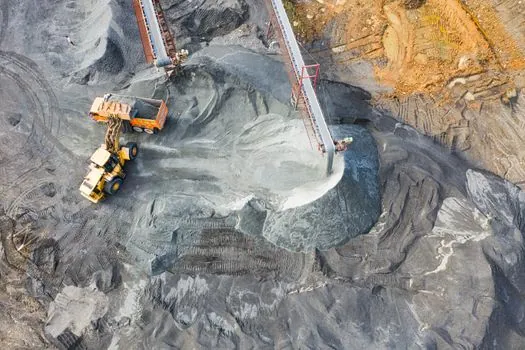
Excavator tonnage bands from a 2026 China-market reference run 1–6 t (mini, municipal and landscaping, ¥80,000–250,000), 6–15 t (small, rural construction, ¥250,000–600,000), 15–30 t (medium, highway and general earthwork, ¥600,000–1,500,000) and 30+ t (large, mining and major infrastructure, ¥1,500,000+), so capability scales roughly with mass [S2]. Wheel loader tonnage bands for the same 2026 reference map under 1 t to farms and landscaping, 3–5 t to municipal and small job sites, 5–8 t to highway and aggregate yards, and 8+ t to mining and large earthwork, with travel speeds typically 35–40 km/h on the wheeled chassis [S2]. A specialist sub-class, the long-reach excavator, adds extended boom and arm geometry for working deep trenches or reaching over obstacles that a standard boom geometry cannot clear [S10].
Decision Matrix: Wheel Loader vs Excavator
Four decision criteria line the two machines up cleanly: (1) primary function, where the wheel loader does loading, hauling and stockpile management while the excavator does digging, trenching and precision earthmoving; (2) travel speed, where the wheel loader posts 20–40 km/h and self-travels while the excavator posts 3–6 km/h and needs transport; (3) digging depth, where the wheel loader is surface-only and the excavator reaches 1.5–7 m+; (4) terrain, where the wheel loader wants firm, stable ground and the excavator takes soft, uneven or confined ground [S4]. On purchase price, a compact wheel loader and a compact excavator can overlap, but at equivalent operating size the excavator typically carries a higher sticker while posting lower fuel per hour on targeted dig tasks [S1]. For a full primer on wheel-loader mechanics and operating envelopes, see the wheel loader spec reference; for excavator hydraulics and dig-depth geometry, see the excavator spec reference.
When One Machine Is Not Enough: Backhoe Loaders and Two-Way Designs
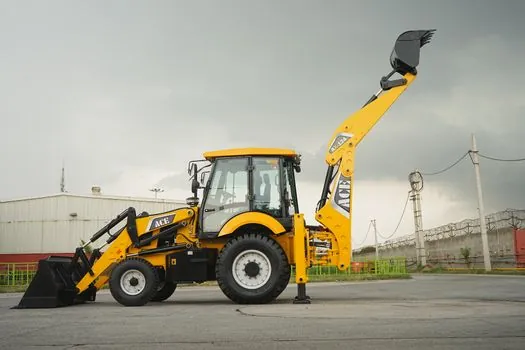
When a single small-tonnage machine (1–3 t class) has to cover both loading and excavation on a confined site, a backhoe loader or excavator-loader (two-way) machine substitutes for two separate units, trading some loader bucket capacity and arm-reach depth for combined functionality [S5]. A backhoe loader is the standard answer for utility trenching, road repair, farm ditching, feed loading and emergency-response deployment where one vehicle has to do both jobs, and it removes the cost of mobilising two separate machines to a small site [S2]. For background on the backhoe-loader class and its operating envelope, see the backhoe loader spec reference. Related comparison frameworks for adjacent earthmoving equipment are covered in Wheel Loader vs Bulldozer: 2026 Spec Cut and Job-Site Decision Map.
Selection Gates by Use Case
Use a wheel loader when the job is truck loading from stockpiles, bulk material transfer across a flat firm site within 500 m, sand and aggregate yard work, or site cleanup, because the faster continuous cycle and higher travel speed translate directly into more tons per shift [S2][S3]. Use an excavator when the job is foundation pits, trenching, demolition with hydraulic shears or breakers, sand extraction below grade, or any confined-space work where a mini excavator (1–6 t) can fit where a wheel loader physically cannot [S2][S3]. Use a mini excavator specifically for urban construction, landscaping and tight-space precision work, and use a long-reach excavator for deep trench or over-obstacle reach that standard boom geometry cannot deliver [S10].
Limits, Failure Modes and Common Mistakes
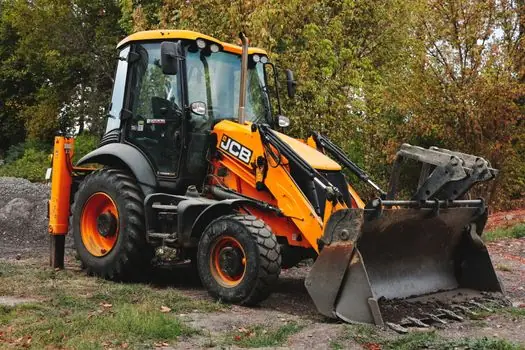
Three failure modes recur in the field: (1) buying a wheel loader for a trenching-dominant job, which forces a sub-hire of an excavator and wipes out the loader's mobility savings within the first quarter; (2) buying an excavator for a stockpile-dominant job, where the swing-and-place cycle and 3–6 km/h travel speed bleed fuel per ton and inflate cycle times; (3) ignoring undercarriage replacement cost, which is the largest lifecycle line on a tracked excavator and is frequently underestimated at purchase [S1][S4]. For sand and gravel work specifically, rough or uneven surfaces are workable on tracked excavators but push a wheel loader to the edge of traction, and a wheel loader on waterlogged ground will simply stop being productive [S3].
Track three signals before committing capital: the operator competency and site-induction paperwork required to run each class on your typical sites, the all-in cost per ton moved (purchase plus fuel plus undercarriage plus transport) rather than sticker price alone, and whether your contract mix over the next 12 months is loading-heavy or excavation-heavy, because that mix is the single strongest predictor of which machine earns its keep first [S1][S4].