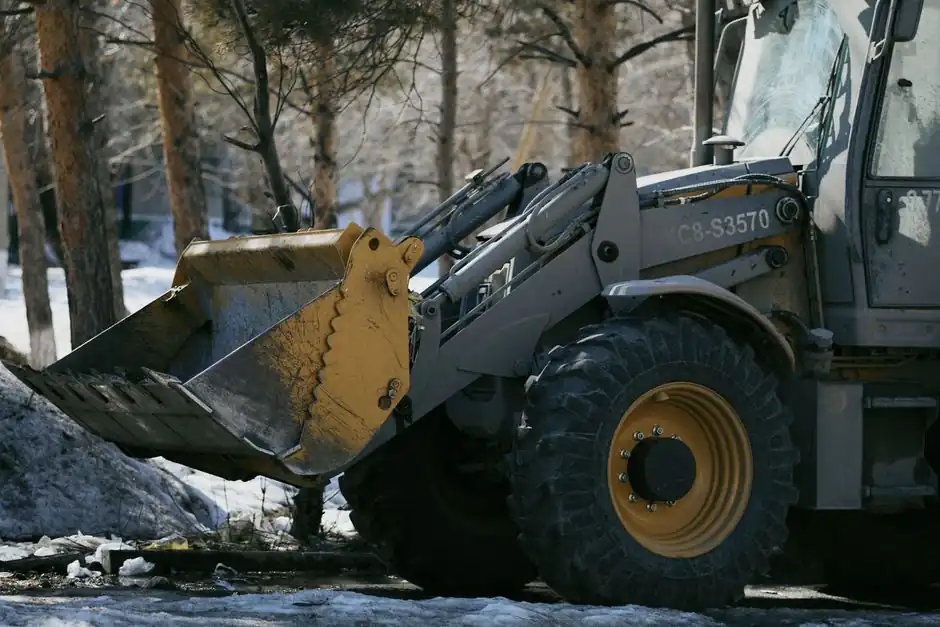
Bulldozers and excavators both move earth, but their mechanical DNA does not overlap: the dozer is a tracked push platform with a front blade and optional rear ripper, while the excavator is a hydraulic machine with a 360° rotating upper structure, boom, stick, and bucket [S1][S4].
Rental pricing published in October 2025 puts bulldozers at $300–$1,200/day and excavators at $200–$800/day, so the dozer carries a roughly 50% higher upper-bound daily rate but a comparable entry-level rate [S1]. Selection rarely comes down to sticker price, though. It comes down to whether the dominant task is push-and-grade or dig-and-lift, and whether the ground is soft cut-fill or hard trench [S1][S5].
Core Mechanism: Push Platform vs. Hydraulic Digging
A bulldozer's working tool is the front blade, which can be adjusted for angle, height, and tilt to control push direction and depth; high-end dozers add a rear ripper, a set of steel teeth that break up hard ground or rock before the blade pushes it away [S8].
An excavator's working tool is a hydraulic arm assembly (boom, stick, and bucket) driven by hydraulic cylinders fed from a pump; when the operator commands motion, pressurized working fluid moves each cylinder and articulates the arm, with the rotating upper house letting the cab and arm swing 360° independent of the tracks [S2][S4]. For a deeper walk-through of how the hydraulic circuit drives each joint, see the excavator reference page.
Selection Criteria: Five Gates That Decide the Machine
Five spec gates usually settle the choice: task type, precision requirement, ground condition, daily output, and attachment breadth [S1][S3][S5]. A side-by-side criteria view, drawn from rental-fleet and OEM guidance published in 2025 and 2026, lines the two machines up against those gates:
Criterion 1, primary function: dozer pushes soil, gravel, and debris for grading and clearing; excavator digs trenches, foundations, and holes, then loads the bucket [S1][S5]. Criterion 2, precision: dozer blade delivers bulk surface leveling with shallow, lower-precision cuts, while the excavator arm delivers deep, controlled digs and lifts [S1][S4]. Criterion 3, ground condition: dozers with up to 1,500 kg of pushing force excel on soft soils and loose fill [S10]; excavators prefer firm ground where tracks can develop tractive effort without spinning. Criterion 4, daily rental cost: $300–$1,200/day for dozers vs. $200–$800/day for excavators [S1]. Criterion 5, attachment range: excavators accept trenching buckets, breakers, thumbs, grapples, and augers; dozers stay specialized around blade plus ripper [S7].
For a baseline reading on the dozer's blade-and-track configuration, the bulldozer encyclopedia entry covers the variants (S, U, SU, angle) and their typical push envelopes.
Blade and Bucket Variants: Why a "Dozer" Is Not One Machine
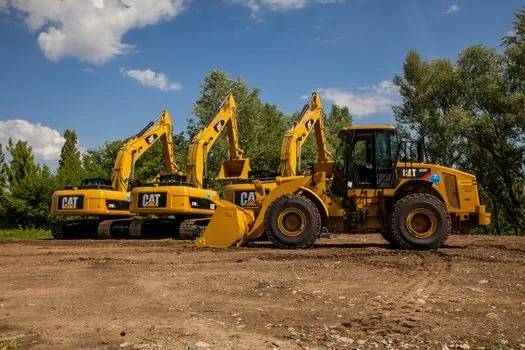
Not all dozer blades do the same job. The straight (S) blade pushes large loads straight ahead; the universal (U) blade has curved wings that carry material forward; the semi-universal (SU) splits the difference; the angle blade tilts left or right to windrow material off to one side, a common setup for road work and ditch cutting [S8]. Each blade type suits a different push pattern, so specifying "a dozer" without naming the blade is the most common rental mistake.
On the excavator side, the variables are operating weight class (mini, midi, large), stick length, bucket profile (digging vs. ditch-cleanout), and the quick-coupler that lets the operator swap attachments without leaving the cab [S4][S7]. A 20-ton class machine with a long stick reaches further but loses breakout force; a short-stick machine in the same class trades reach for higher bucket digging force. For comparison data on how a wheel loader slots in alongside these two, see Wheel Loader vs Excavator: Spec Cut and Job-Site Match.
Job-Site Match: Where Each Machine Wins
Bulldozers win on land clearing, rough grading, roadbed prep, and pushing debris on open ground; their wide blade and high-horsepower engine move large volumes per pass and compact loose material as they go [S1][S3][S10]. Excavators win on trenching, foundation digging, utility-line installation, demolition with hydraulic hammers, and material handling with thumbs or grapples; the rotating upper and reach let one machine dig, swing, and load a truck in a single setup [S4][S5][S7].
For road-building specifically, a tandem is standard practice: the excavator digs the cuts and trench sections, then the dozer spreads and compacts the fill and shapes the subgrade. That pairing shows up consistently in OEM selection guidance and on rental-fleet pages, including the cost-comparison note that renting both in parallel often beats a single-machine workflow on multi-phase earthwork [S1][S4]. The related Excavator vs Road Roller: 2026 Spec Cut and Job-Site Split article covers how the roller then takes the compaction step after the dozer finishes the grade.
Limitations and Failure Modes
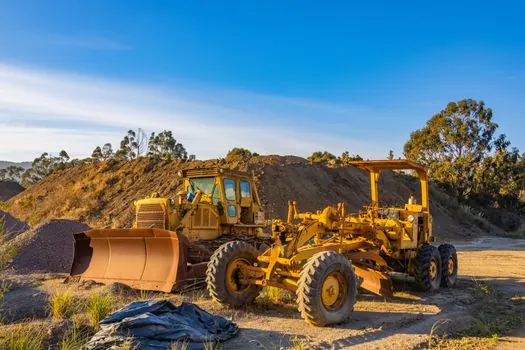
A dozer fails on three fronts: it cannot dig below blade depth efficiently, it has no meaningful lift height, and it is slow in reverse cycles. Forcing a dozer to excavate below its blade envelope wastes fuel and stalls the tracks [S1][S4].
An excavator fails on different fronts: it cannot grade a wide surface to a tight tolerance in a single pass the way a dozer blade can, it compacts poorly because track pressure is concentrated, and on very soft ground its tracks pump the subgrade instead of building on it [S1][S3][S10]. The mechanical limits are why neither machine fully replaces the other on a real site, and why rental guidance consistently recommends pairing them on earthwork above roughly 5,000 m³ of cut-and-fill [S1][S4].
Sourcing, Standards, and Total Cost
Daily rental data published in 2025 frames the cost gap: bulldozers at $300–$1,200/day and excavators at $200–$800/day, with the dozer's higher ceiling driven by larger machine classes and the need for ripper-equipped units on harder ground [S1]. For used or second-hand units, leading Chinese OEMs including SANY publish buyer-facing comparison material that confirms the same functional split and adds operating-cost guidance: dozers carry lower upfront cost but higher operating cost on large jobs, while excavators carry a higher initial cost offset by hydraulic versatility [S3][S4].
Track down two signals before committing: confirm the dozer's ripper availability and blade type for the ground class on site, and confirm the excavator's hydraulic flow (L/min) and pressure (bar) for the breaker or attachment the job requires. These two specs gate whether the chosen machine can actually perform the named task, and they are the specs rental-house reps and OEM application engineers both lead with on quote reviews [S1][S4][S7].
Spec-level background on the components involved: pressure transmitter.