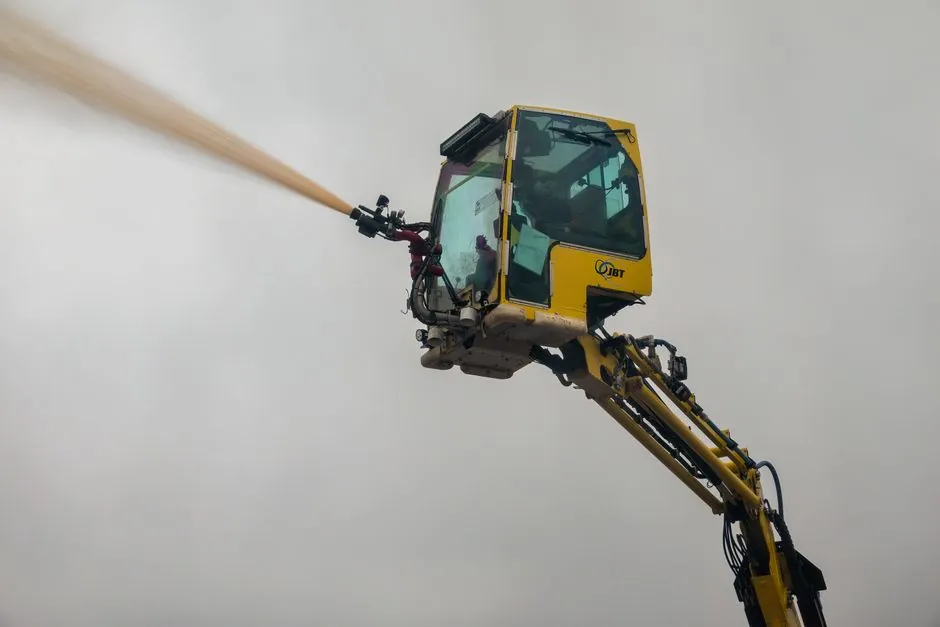
On a boom truck or aerial work truck, cab-to-axle (CA) is the single dimension that decides whether the boom pedestal sits directly behind the cab, centered over the rear axle, or hung off the tail frame, and that decision cascades into payload, lift capacity, and travel height [S2][S4].
Utility bucket trucks with higher working heights and side reach require greater gross vehicle capacity, which pushes buyers toward longer CA and either single or tandem rear-axle chassis depending on payload after the boom subframe is installed [S3].
Cab-to-Axle Reference Values by Body Type
Standard upfit reference tables for work truck bodies show that a 36 in CA supports a 7 ft service or platform body, a 60 in CA supports a 9 ft body in any of the four common configurations, an 84 in CA opens up 11-12 ft bodies, and 108 in CA is the entry point for 13 ft gooseneck and dump bodies [S2].
For aerial work platforms, those reference values are a starting baseline only, because the boom pedestal and turret subframe consume 24-40 in of frame rail behind the cab, so a bucket truck specified for 11 ft of body still needs a CA longer than the equivalent flatbed [S2][S3].
Three Boom Mount Positions and Their Trade-offs
Standard mount (SM) puts the boom immediately behind the cab and is the most common boom truck configuration because it preserves the longest possible flat bed for materials, but a crane in that position requires a front stabilizer for 360-degree operation since the chassis ahead of the boom cannot act as counterweight [S1][S4].
Rear-axle mount (also called over-rear-axle or pedestal mount) sets the boom turret over the centerline of the rear axle so the chassis aft of the turret becomes live counterweight, which is why this layout supports a full 360-degree load chart without a front stabilizer on most 10-50 ton Elliott-class boom trucks [S1].
Rear-mount aerials in the fire service typically use three ladder sections and lay the device across the top of the cab, which raises travel height noticeably compared with midmounts, and the boom overhang forward of the cab also increases overall vehicle length and reduces maneuverability on tight fireground positioning [S5].
Standard Mount vs Rear-Axle Mount: Decision Matrix
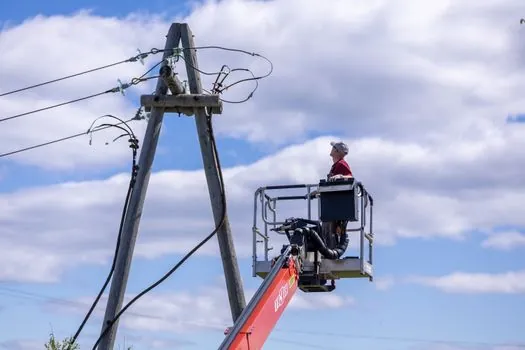
Comparing the two layouts against four decision criteria: (1) counterweight, a rear-axle mount uses 8-14 ft of chassis frame plus body as live ballast while a standard mount relies on outriggers and often a front stabilizer; (2) bed space, standard mount preserves more flatbed length for pipe, lumber, or a man-basket, an important factor for aerial work platform upfits that share the chassis with materials; (3) travel height, rear-axle booms on bucket trucks sit lower in the frame while rear-mount aerial ladders sit higher over the cab; (4) 360-degree capability, a crane over the rear axle typically keeps a full 180-degree-plus load chart on the working side without front stabilizers, a standard mount unit does not [S1][S4][S5].
For higher bucket heights and greater side reach, many investor-owned utilities now prefer all-wheel drive chassis with larger CA, which both extends the wheelbase for stability and creates the pedestal space for overcenter boom configurations that can deliver up to five feet more side reach on the field side of the pole [S3].
Chassis Cab Wheelbase and CA Interaction
Wheelbase selection on a chassis cab interacts with CA because the same nominal wheelbase can produce different CA values depending on cab style: a regular cab with a short BBC (bumper-to-back-of-cab) will yield a longer CA for a given wheelbase, while a crew cab with a long BBC consumes frame rail and reduces the available CA for the same wheelbase [S7].
In practice, fleet specifiers ordering a tandem-axle boom truck or an articulating aerial work platform will start from the desired CA pulled from the body table, then back-calculate the wheelbase and cab style that produces it, since CA is the dimension the upfitter cuts the subframe to, not the wheelbase the OEM publishes [S2][S7].
Use Cases: Who Needs Which Mount

Electrical line contractors running distribution work that requires reaching both sides of the pole from a single set-up are the primary audience for overcenter boom configurations, which need the long CA and the higher GVW that goes with it [S3].
Roofing, HVAC, and sign crews that lift people into a boom-supported work platform but also carry significant material loads benefit more from a standard mount with a front stabilizer, because that layout keeps the flatbed usable for materials between lifts [S1][S4].
Fire departments that need elevated master stream capability from an apparatus stored in a low-bay or short-apparatus station should weigh midmount aerials against rear-mounts, since rear-mounts typically carry a higher travel height and longer overall length driven by the boom overhanging the cab [S5].
For more on how wind ratings on the elevated platform interact with chassis stability at long CA, see the comparison of aerial work platform wind speed rating design versus OSHA triggers, which addresses the platform side of the same stability envelope.
Limitations and Common Failure Modes
The most common spec error is ordering a chassis with a CA that is too short to clear the boom turret and the subframe crossmembers, which forces the upfitter to either relocate the body, shorten the bed, or move the boom rearward, all of which shift the load center and invalidate the published load chart [S2][S4].
Rear-mount aerial fire apparatus carry an operational penalty that is rarely visible on the spec sheet: drivers consistently report reduced forward visibility from the boom or platform hanging over the cab, and the leading edge of the platform is regularly marked by contact with roadside tree limbs, which is a maintenance cost owner-operators should price in [S5].
A standard-mount boom truck ordered for full 360-degree work without a front stabilizer is the third classic failure mode, because the chassis ahead of the boom contributes almost no counterweight and the unit will lift its own front wheels on heavy rear-quarter loads [S1].
Sourcing, Standards, and Trackable Signals

Cab-to-axle is a body-builder convention, not a regulated dimension, so published reference values from upfitters like Knapheide (36, 40, 42, 56, 60, 84, 108 in) are the working baseline that aligns body length to chassis frame space, while the boom side of the same chassis is governed by the OEM's load chart and the ASME B30.5 mobile-crane-locomotive rules that most North American boom-truck builders reference for stability and outrigger sizing [S2].
Trackable signals to watch: (1) whether more utilities shift to overcenter booms as side-reach requirements grow, which would push CA upward industry-wide; (2) whether all-wheel-drive chassis become the default for higher bucket heights as the 2023 Terex guidance already anticipates [S3].
Component reference pages worth checking: displacement position.