
Total cost of ownership stretches well past sticker: chassis drivetrain choice, lift mechanism, electrification and OSHA-rated safety options each move the number independently, and the AWP truck market sits inside a USD 19.7 billion 2026 global segment growing at 11.2% CAGR through 2033 [S1]. A senior fleet buyer who treats chassis and boom as a single line item usually overpays on at least one side; this guide breaks down how each cost driver actually moves in 2026.
Chassis package: where the 45–55% goes
The chassis block is the single largest line on any 2026 truck-mounted AWP quote, and it is also the most variable. A Class 7 diesel cab-chassis with PTO provisions, dual rear wheels, hydraulic reservoir mounting and an outrigger-ready frame rails sits at the bottom of the cost band; the same chassis in an all-electric configuration (motive battery + e-PTO) typically adds a four-figure premium per percentage point of electrification [S10]. Behind-the-cab mount designs held a 58.4% revenue share of boom-truck installations in 2025, confirming that the conventional cab-chassis layout still dominates the chassis conversation [S4].
Outriggers, body, platform stowage and the hydraulic system are bundled into the chassis-side number by most 2026 OEMs, because the body builder usually sources the chassis directly from the truck OEM. Buyers who spec heavier outriggers to lift a 217 ft crane-aerial hybrid (Altec's CONEXPO 2026 launch [S3]) push this block toward the upper end of the range, while buyers who stay under 50 ft working height stay near the floor. The electric AWP segment is forecast to lead the 2026 market at 58% share, and battery integration costs sit inside this chassis block on electrified units [S1].
Boom, turret and platform: the 30–40% block
The boom assembly is where spec sheets diverge fastest. Articulating booms, telescopic booms and the rare crane-aerial hybrid each carry different steel, welding and pin-cost profiles, and the segment data shows articulating boom lifts alone are used by more than 40% of U.S. construction companies [S1]. Globally, boom lifts held a 43.24% revenue share of the AWP market in 2025, the largest product-type band, confirming the boom block is the second-largest cost line on essentially every truck-mounted unit [S5].
For working heights above 100 ft, the boom-side cost curve steepens sharply: that band is the fastest-growing height segment at 9.28% CAGR through 2031, and it is dominated by truck-mounted telescopic platforms from manufacturers such as Bronto Skylift, Altec and Manitowoc's NTC80 introduced at CONEXPO 2026 [S3][S5]. The 21–50 ft band, by contrast, captured 52.36% of 2025 AWP revenue and stays inside the lower end of the boom-side range, because shorter booms use less high-yield steel and fewer hydraulic cylinders [S5]. Insulation for live-line utility work (Bronto platforms rated up to 765 kV) is a separate boom-side adder, not a chassis-side cost [S3].
Propulsion choice: how it shifts the split
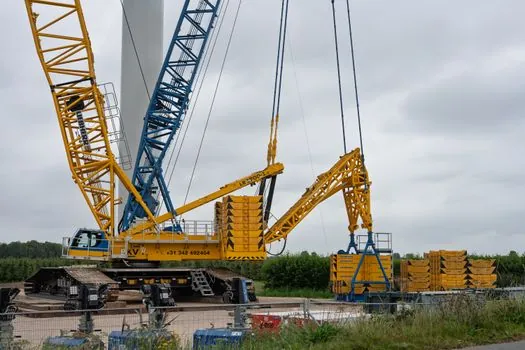
Internal-combustion drivetrains still held 61.74% of the 2025 AWP market by unit, but electric models are projected to grow at 10.26% CAGR through 2031, and that mix shift is moving money between the chassis and the boom blocks rather than adding equal cost to each [S5]. On a 2026 battery-electric AWP truck, the motive battery, e-PTO and battery management hardware sit on the chassis side, while the boom-side lift pump and hydraulic valving become simpler (one electric motor, fewer mechanical interfaces).
The 2026 generation of battery systems delivers 40% longer runtime than 2025 units, with 80% charge in two hours and operation down to minus 20°C across more than 3,000 charge cycles, parameters that OEMs such as Dingli's E series, Zoomlion's Green Line and Genie's ePower are publishing into 2026 quote sheets [S1]. For a buyer, the practical takeaway is that an electric truck-mounted AWP typically narrows the chassis-side cost lead (less diesel engine and aftertreatment, more battery), while leaving the boom-side percentage roughly steady, so the cost split moves toward 50/35 rather than the diesel 45/40 balance [S10].
Height, capacity and application: the spec that picks the price tier
Two specifications drive the most cost separation inside the 2026 truck-mounted AWP market: working height and lifting capacity. In the boom-truck segment, the 10–20 metric ton lifting capacity band held 26.3% of 2025 revenue and the under-20 m boom length band held 37.7%, both indicating that mid-spec utility and infrastructure work is the volume sweet spot [S4]. Infrastructure applications overall accounted for 38.2% of 2025 boom-truck revenue, which is also where most truck-mounted AWPs are deployed [S4].
Construction, the largest end-use for the broader AWP market, took 57.28% of 2025 revenue; logistics and transportation is the fastest-growing use case at 8.78% CAGR through 2031, driven by warehouse mezzanines above 32 ft in e-commerce facilities [S5]. For a fleet spec'ing against these applications, the working-height band is the single biggest lever: units under 50 ft stay inside the lower end of both the chassis and boom ranges, while 100 ft-plus units require heavier outriggers, larger hydraulic reservoirs and more boom steel, and they concentrate inside the highest-cost tier [S5].
Standards, safety and the hidden 5–15%
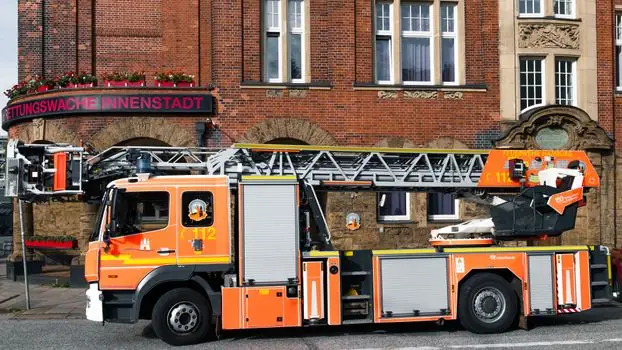
OSHA 1926.453 governs aerial lift operator training and the 20 mph wind trigger that effectively caps outdoor operation for most truck-mounted units; designs are typically rated to 28 mph, a margin that buyers should verify on the data plate rather than trust from marketing copy. Buyers comparing working-height ranges for construction sites will find the design rating, OSHA trigger and platform capacity printed on every compliant unit. [S3]
The remaining 5–15% of the 2026 sticker covers certification documentation, ANSI A92.22 / A92.24 self-propelled / elevating standard compliance where applicable, factory telematics hardware, paint, decals and dealer PDI. Annual U.S. aerial-lift fatalities averaged 26 in recent years, which is why liability insurance has become a real adder on quote sheets; some carriers now require telematics evidence of pre-use inspections as a precondition of coverage [S5]. For buyers who want the line item to disappear, it cannot, but it can be benchmarked: ask the OEM for a written breakdown of certification labour hours, telematics subscription year one, and the inspection-and-test package cost as separate line items [S10].
Total cost of ownership beyond the sticker
Purchase price is roughly 60–70% of the five-year total cost of ownership on a 2026 truck-mounted AWP; the remainder sits in insurance, preventive maintenance, battery replacement on electric units and operator certification. Higher liability premiums tied to the 26 annual U.S. aerial-lift fatalities are now a line item on most fleet quotes, not a hidden overhead [S5]. Telematics-enabled predictive maintenance adds an estimated 0.8% to the AWP market CAGR through 2031, which is the OEM-blessed way to push maintenance cost back down [S5].
For buyers cross-shopping a towable boom lift against a bucket truck, the 2026 spread runs from USD 34,145 to USD 53,045 cheaper for the towable on equivalent listings, but the truck-mounted AWP delivers higher travel speed, on-road mobility and a larger platform envelope, so the comparison only works when the application does not require driving between distant job sites at highway speed [S2]. A useful rule of thumb from the 2026 price guide: chassis-side spend should be benchmarked against a commercial cab-chassis quote independent of the boom, and the boom-side spend should be benchmarked against a stand-alone articulating or telescopic unit of the same working height, then the delta between the two is the integration premium the body builder is actually charging [S10].
Buyer-side decision matrix for 2026

For a fleet specifying a 2026 truck-mounted AWP, the cost split is not a fixed ratio but the result of three independent choices. Chassis-side: diesel Class 7 vs electric e-PTO, behind-cab vs center-mount, single vs dual rear wheels. Boom-side: articulating vs telescopic, working-height band (under 50 ft vs 50–100 ft vs above 100 ft), insulated vs non-insulated platform. Compliance-side: OSHA wind rating margin, telematics package, ANSI compliance documentation depth. Each lever moves one block of the 45–55 / 30–40 / 5–15 split without much cross-bleed, which is why a chassis-heavy spec and a boom-heavy spec of the same working height can land within 8% of each other on total cost but allocate money very differently between maintenance, fuel/electricity and insurance [S1][S5][S10].
Trackable 2026 signals worth watching: quarterly updates to the truck-mounted AWP price guide [S10], revised OSHA enforcement data on aerial-lift fatalities (running baseline 26 per year [S5]), and any new CONEXPO 2026 follow-on launches in the 100 ft-plus telescopic band where Altec, Manitowoc and Bronto are currently competing [S3]. For a separate but adjacent cost benchmark, fleet buyers running both aerial work platforms and warehouse lift trucks will recognise the same chassis-side vs mechanism-side cost logic in the three-unit VLM pod, one operator sizing conversation.
Component reference pages worth checking: aerial work truck, aerial work platform, and checking and testing apparatus.
For related coverage, see Float Glass Price Trends 2026: Regional Spread, Solar Pull, and Cost Drivers.