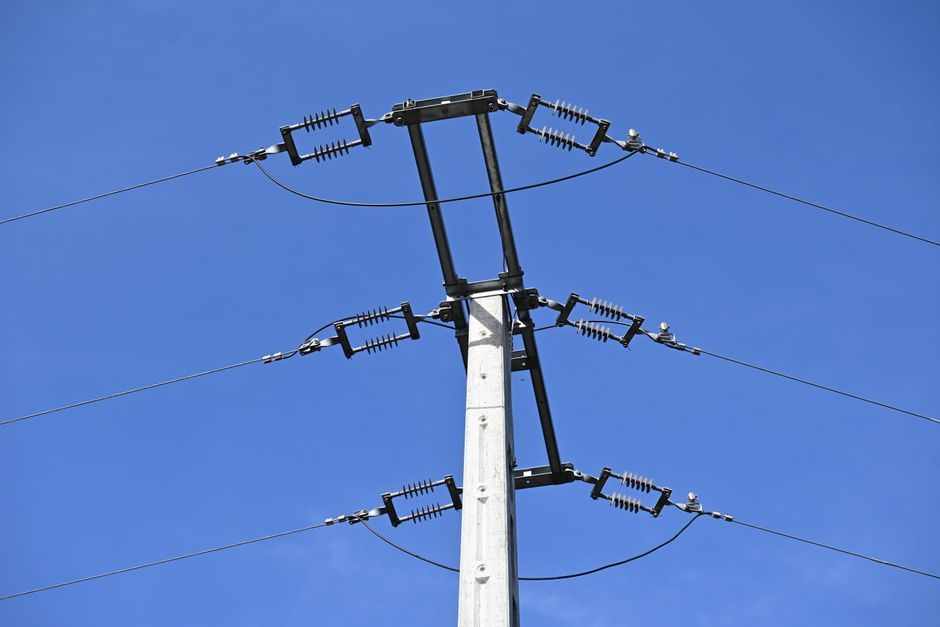
Conductor-grade copper and aluminium availability is the binding constraint on global wire and cable supply in mid-2026, with the CRU Wire & Cable Connections Summit marking 20 years as the industry's leading global value-chain gathering in 2026 [S1].
Procurement teams now face a market where conductor pricing, fire-performance compound allocation and project-driven demand spikes are pulling lead times in opposite directions, and where route-to-market is split between full-OEM mill rolls, distributor cut-to-length and trade-fair one-off allocations.
Conductor-metal availability: copper, aluminium and the 2026 supply bands
Wire and cable is a tonnage-driven industry: roughly 60-65% of a low-voltage power cable's bill of materials sits in the copper or aluminium conductor, so any squeeze on refined cathode or rod output propagates almost one-for-one into conductor price and allocation. Procurement-facing distributors in 2026 are still quoting cut-to-length on reels of PVC-insulated test lead (e.g. Caltest CT2143-100-0 listed at a $15.96 CAD sale against a $21.00 CAD regular price) where stock is available, but roll lengths above 100 m and special compounds (LSZH, CPE, XLPE) carry visibly longer lead times on the same channels [S2].
The practical consequence for buyers is that conductor supply has become a portfolio decision, not a single-SKU PO. Plants that dual-source between copper and aluminium for fixed-install power runs, between Class B stranded and IEC 60228 Class 5 flexible conductors for moving equipment, and between PVC and LSZH jackets for tunnel and tunnel-adjacent runs, are the ones that survive a 6-12 week cathode allocation cut without a line stop.
What the 2026 value-chain summit signals for buyers
CRU's Wire & Cable Connections Summit, held 2026-07-03 in its 20th-anniversary edition, is positioned as the leading global event for the electric wire and cable value chain, bringing together raw-material suppliers, compounders, extruders, distributors and end-buyers under one roof [S1].
For a process engineer, the relevant signal from a 20-year-running value-chain event is not the agenda but the structural fact it confirms: conductor allocation, compound availability and project-pipeline demand are now negotiated in the same room, by the same counter-parties, in a tighter cycle than the 12-month contract cadence that worked in the 2010s.
Lead-time reality: how the squeeze shows up in PO data
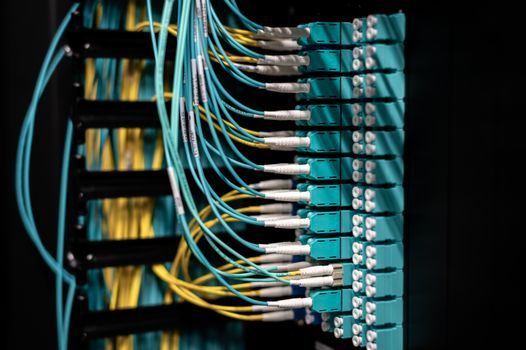
Distributor evidence from 2026 shows cut-to-length test-lead reels moving on 1-2 week lead times at advertised price, but the same channel advertises availability counts as low as 2 units on commodity SKUs, indicating that distributor buffer stock on commodity wire has thinned [S2]. A separate UK B2B directory continues to publish a national cable-and-wire-supply list as a fallback channel for buyers who cannot reach the mill-direct allocation window [S3].
For a process buyer, the actionable pattern in 2026 is: stock items (PVC test lead, off-the-shelf patch cord, standard 2.5 mm² tri-rated) move on advertised price with thin buffer, while anything project-specific (custom drum length, special compound, fire-rated to IEC 60332-3, low-smoke halogen-free to IEC 61034 / IEC 60754) sits on a mill-rolling queue. The correct internal metric is no longer unit price but price-per-metre-delivered-on-need-date, which is dominated by queue position, not the headline reel price.
Standards and specs that decide which cable is even quotable
For fixed-install power cable, the governing reference family is IEC 60502-1 for low-voltage extruded constructions and IEC 60092-350/351/353/354 for shipboard and offshore units, with conductors to IEC 60228 Class 1/2 (solid/stranded) or Class 5 (flexible). Fire performance is split across IEC 60332-1 / -3 for flame spread, IEC 61034 for smoke density and IEC 60754 for halogen/acidity of evolved gases. CPR Euroclass ratings (B2ca, Cca, Dca, Eca) then translate those IEC tests into a CE-marking envelope for construction products sold into the EU. None of those standards have been relaxed for the 2026 squeeze, so a buyer who lets compound down-spec to chase delivery is taking on a compliance delta that will show up at the next audit, not at goods-in. [S1]
The 2026 procurement pattern is therefore: hold the standard, hold the compound grade, and only then negotiate conductor cross-section, drum length and delivery window. The opposite order — start with conductor, then ask what fire rating the same reel can carry — is the path that has burned several EU panel builders in the last 18 months.
Risk map: which cable categories are tightest, which have slack
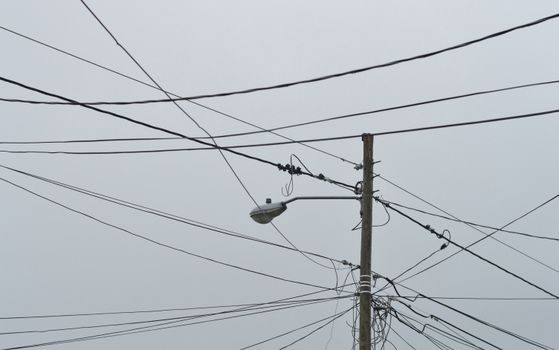
Comparing the main 2026 cable categories against four decision criteria — conductor availability, compound tightness, lead-time drift and qualification effort — the ranking is consistent: data-communication copper (Cat6A / Cat7 twisted pair, fibre-optic tight-buffer) is tightest on conductor and compound, with the longest qualification lead time, while commodity PVC tri-rated hook-up wire, single-core PVC house-wire and standard PVC test lead sit on the looser end, with off-the-shelf availability and shortest qualification cycle. Medium-voltage (6-35 kV XLPE) and fire-survival (FR-LSZH to IEC 60331) cable sit in the middle: the conductor allocation is workable but the compound queue is the bottleneck. [S2]
The useful detail is not the rank order but the gap between categories. A buyer who treats all wire and cable as one spend category will under-resource the data-comm and FR-LSZH lines and over-resource the commodity hook-up line. Splitting the spend into at least three buckets — critical/fire-rated, project-spec MV, and commodity hook-up — is the structural fix that aligns the PO behaviour to the actual supply curve.
Where the squeeze meets the cluster: routing by route-to-market
For a B2B buyer, the 2026 cable market is best read as three overlapping channels. First, the mill-direct channel (Nexans, Prysmian, Sumitomo and their regional peers) handles project tonnage on rolling schedules that are now set 9-12 months ahead. Second, the authorised distributor channel (Caltest-type test-and-measurement specialists, electrical wholesalers, industrial catalogues) handles cut-to-length and small-quantity orders on stock SKUs, with pricing visible on the public channel [S2]. Third, the trade-fair and B2B-directory channel, including UK national supplier lists, covers spot buys and sub-100 m lengths where neither the mill nor the authorised distributor will quote [S3].
The procurement principle that has held up through 2025-2026 is that each channel is a different product, not a different price. Buying a 500 m reel of LSZH from a B2B directory in week 26 to cover a Q3 commissioning slot is paying a 2-4x multiple on the mill price, but it is buying a delivery date, not a cable — and the delivery date is the variable that has been moving.
What to track in H2 2026
Two nodes are trackable for the rest of 2026. The first is the post-summit CRU coverage of conductor-metal price settlements and compound allocation for Q3-Q4 2026, which historically follows the 20-year-running global summit within 4-6 weeks [S1]. The second is the published availability counts on commodity SKUs at major authorised distributors, where a recovery in the 2-unit stock flag back to a 10+ unit buffer is a leading indicator that the mill-side queue has started to drain [S2].
For a process engineer with a fixed plant to run, the 2026 rule is straightforward: secure the conductor allocation through the mill channel for everything that touches a 12-month project schedule, route cut-to-length and emergency top-up through the authorised distributor channel, and reserve the trade-fair and B2B-directory channel for sub-100 m spot buys only. None of that changes the underlying supply curve — but it does keep the production line running while the curve sorts itself out.
For component-level specifications, see dc power supply, switching power supply, and wire rod.
For related coverage, see Articulated Robot vs SCARA Robot: Spec, Envelope and Sourcing Map 2026.