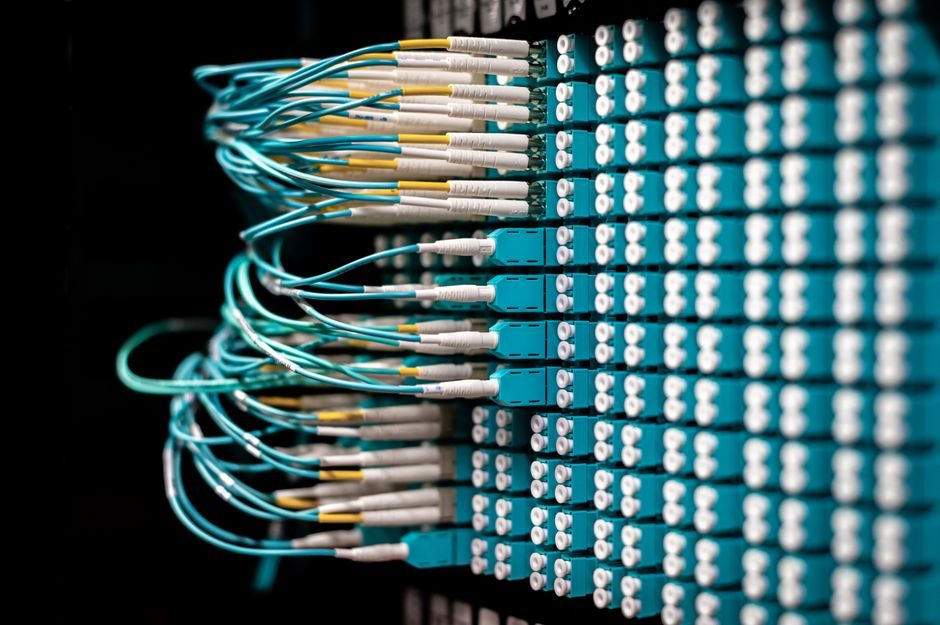
Industrial cable and wire buyers entering H2 2026 face a compressed supplier map: the B99 UK business directory indexes roughly 165 entities under the Cable and Wire Supply category as of 4 July 2026, with the public list truncated to the top 100 [S2]. The implication is a market where mid-tier distributors and stockists are concentrated enough to matter locally but fragmented enough that lead times diverge by region.
Procurement teams handling low-voltage power, control and instrumentation cable should expect the analysis function supporting them to be paid accordingly: Glassdoor data surfaced by Coursera puts the US supply chain analyst median at $107,000/year in its 2026 guide, with manufacturing and wholesale trade sitting at the higher end of the pay band [S1]. That cost basis is part of the spread that gets baked into distributor overheads on every spool shipped.
Supplier Map: Density, Geography and the Distributor Tier
The 165-entity UK figure [S2] is a useful baseline for what a "thin" but mature industrial wire market looks like: most buyers are within one or two stockist hops of a regional warehouse, but the long tail of cabling — specialised fire-performance, shipboard, or rail-rated — is held by a handful of importers rather than the broad distributor base. Buyers specifying drag chain cable for continuous-flex applications cannot rely on the long tail; stock is held by motion-cable specialists and their authorised distributors, not by general electrical wholesalers.
For comparison, the 2026 analyst-salary data [S1] shows the buying organisations themselves are concentrated: manufacturing and wholesale trade pay above the $107k median because their purchasing teams carry P&L responsibility for material categories like copper conductor, PVC compound and XLPE insulation — all of which price off different commodity cycles.
Material Cost Drivers in H2 2026
Three inputs set cable pricing in the current cycle: copper cathode (LME), polymer compound (PE/PVC/XLPE/LSZH), and energy for the extrusion + cure step. The research material does not give current LME copper or polymer index quotes for July 2026, so any number quoted on the spot would be unsourced. What can be said is that the salary overhead of the buying function — $107k US median per the 2026 guide [S1] — tracks the volume and complexity of the basket being managed, not the price of copper itself.
Buyers pairing power conductors with motion control should treat cable drag chain systems as a separate cost stack: the carrier itself is mechanical, the cables inside are electrical, and the engineering hours to specify both eat into the same analyst-time budget that the Coursera data describes [S1]. The point is that "cable" is not a single line item; it is at least three (conductor metal, polymer insulation, carrier hardware) that move on different clocks.
Spec Gates That Cut Through Pricing Noise
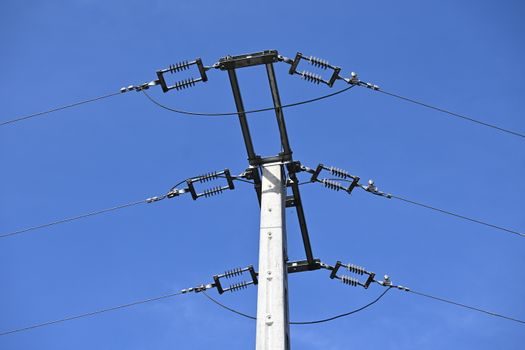
For industrial buyers, four spec gates reliably separate conforming from non-conforming supply, regardless of who is on the B99 list [S2]: conductor class (Class 2 stranded vs Class 5/6 flexible per IEC 60228), voltage rating (0.6/1 kV power vs 300/500 V control), flame performance (IEC 60332-1, IEC 60332-3, or LSZH to IEC 60754-1/2 for halogen/smoke), and temperature rating of the insulation system (70 °C PVC, 90 °C XLPE, 105 °C EPR, 125 °C silicone for higher-ambient runs). Each gate has a price step; stacking them is how a generic stock cable becomes a specified cable.
For motion applications, a fifth gate opens: cycle rating. Cables qualified for a chain conveyor or conveyor chain flex service are typically tested to ≥5 million cycles at a defined bend radius, and the test report is the only credible way to compare one supplier's "flex" claim against another's. The B99 directory [S2] will list both categories, but the technical differentiator sits in the datasheet, not the listing.
Lead-Time Reality: Where the Queue Forms
Where research allows a specific call, the queue forms at custom compounds, not at standard conductor: standard 0.6/1 kV XLPE armoured power cable is widely held in UK regional stock, but LSZH variants with project-specific drum lengths and third-party witness testing push lead times out. Buyers sourcing cable to terminate into a DC power supply rack or switching power supply cubicle typically need 600/1000 V DC-rated conductor for battery-backed DC distribution, and that variant is held by fewer stockists than the equivalent AC cable. [S1]
For buyers under a hard install window, two practical levers exist: (1) standardise on conductor cross-sections that match common drum sizes (e.g. 4 mm², 10 mm², 16 mm², 35 mm², 95 mm²) so stock is interchangeable between phases, and (2) accept a longer lead on the first spool in exchange for cut-to-length subsequent spools, which most UK distributors in the B99 list [S2] will arrange without surcharge if the spec is locked at enquiry.
What the 2026 Analyst Salary Says About Procurement Risk
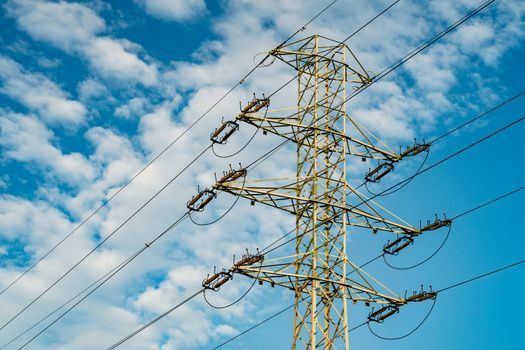
Glassdoor's $107k median for US supply chain analysts, as reported in the Coursera 2026 guide [S1], is a proxy for the cost of the function that absorbs cable-supply volatility. The fact that manufacturing and wholesale trade sit at the top of the pay band is itself a signal: those sectors carry the most material exposure and therefore the most analytical load per dollar of cable purchased. Smaller buyers — workshops, MRO accounts, single-site operators — tend to pay less for the function because they outsource the volatility to a distributor's stockist.
That trade-off — insource the analysis cost vs outsource the volatility — is the strategic question for a 2026 cable buyer. Outsourcing works for standard conductor classes and common voltage ratings; insourcing pays back when the spec stack includes flex, LSZH, low-temperature, or rail/marine approvals, where the long tail of the B99 list [S2] cannot be relied on.
Sourcing Levers That Work in the Current Cycle
Three levers hold up in the 2026 market as documented in the research: (1) consolidate spend with two or three approved stockists from the approximately 165-entity UK base [S2] rather than spreading orders across the long tail, which earns better cut-to-length service and faster RMA handling; (2) freeze the spec stack — conductor class, voltage, flame, temperature, flex cycle — at enquiry, because every relaxed gate after order placement is a stockist having to re-quote against a different drum; (3) keep safety stock of the highest-rotation cross-sections, because the lead-time queue forms at the compound stage, not at the conductor stage, and the cost of carrying stock is small compared to a stalled install.
For a buyer already navigating motion control, the same discipline applies to drag chain cable selection, where the cycle-life and bend-radius data are the gates that stop a cheap cable failing inside a cable drag chain carrier well before the rated mechanical life of the chain itself. The supplier map is wide; the engineering map is narrower.
Trackable Signals for H2 2026
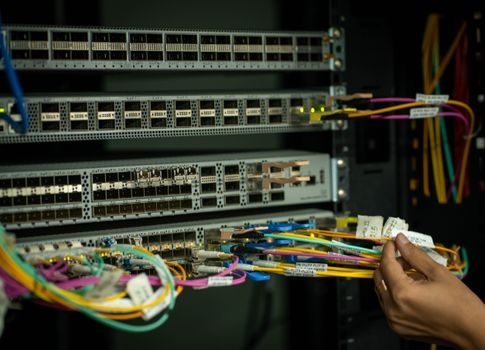
Two signals are worth monitoring through the rest of 2026: the size of the B99 Cable and Wire Supply category as it is updated past the current 165-entity snapshot [S2], since additions or deletions are a leading indicator of distributor consolidation; and any update to the Glassdoor / Coursera supply chain analyst pay band [S1], which moves with hiring demand in manufacturing and wholesale trade and therefore with the volume of cable-related requisitions being opened. Cross-reference both against project-level lead times at the next PO cycle, and the spec stack from this article can be re-priced without re-engineering.
For related coverage, see Rotary Encoder Price 2026: Cost Bands, Spec Levers and Sourcing Reality.