A variable frequency drive can reduce annual energy cost from $8,616 to $1,856 in a modeled 10 hp pump application, producing $6,760 in savings and an 8.46-month payback [S2].
The analysis covers fans, pumps, conveyors, crushers and kilns, and must include equipment, cabling, installation, cooling, maintenance and avoided mechanical or electrical costs, not the drive price alone [S1].
What VFD Total Cost of Ownership Includes
A variable frequency drive adjusts motor speed to match process demand rather than leaving the motor at a fixed speed, making energy consumption the largest controllable operating-cost lever in many systems [S2][S10]. For fans and pumps, the cubic relationship between flow and speed means that reducing speed can lower delivered flow and associated shaft power without redesigning the process [S2].
The VFD cost model has 7 cost-bearing areas: initial drive cost, electrical installation, cabling, initial cooling-system cost, electricity, cooling-system operation and maintenance [S1]. A complete analysis also adds avoided costs from mechanical wear, motor reliability, emissions, process performance and electrical-system impacts [S1].
That structure separates cash purchase price from life-cycle cost. It also prevents an attractive energy-saving estimate from masking installation downtime, unsupported cooling requirements or maintenance expenses. Further selection criteria for a variable frequency drive include motor compatibility, load profile and required control functions.
Energy Savings Dominate the Operating Case
Speed optimization on pumps or fans can reduce energy consumption, but the excerpt provides no quantified savings.
A qualified engineering model should evaluate the factors that vary among individual applications rather than treat any calculator result as a universal forecast.
The annual run count is an audit point, and 8,760 hours equals 24 hours multiplied by 365 days.
Compare VFD Options Against Four Decision Criteria
Variable-speed control should be compared with fixed-speed operation using 4 criteria: electricity cost, mechanical stress, installed cost and operating risk [S1][S2]. A VFD adds electronic control, cabling and often cooling, while fixed-speed operation may require throttles, dampers or valves and can expose the motor and driven equipment to start-up stress [S2].
The comparison matters because a lower purchase price does not establish the lower life-cycle cost. The IEEE cement-industry study identifies cooling topology, electrical installation and maintenance as separate TCO determinants, while the modeled pump application assigns $2,000 to the drive but excludes installation and downtime [S1][S2].
Installation, Cooling and Maintenance Set the Real Cost
Installation can include protective coordination, motor and cable work, commissioning and process interlocks, while the drive cabinet may require a cooling system whose initial and operating costs remain with the asset throughout service [S1]. A TCO that lists only the drive and omits cooling can overstate savings, especially where ambient conditions or cabinet losses require additional thermal management.
Soft starts and stops also change downstream maintenance economics. Reducing current shock and mechanical stress can extend bearing life, reduce repair frequency and defer equipment replacement, although each avoided-cost claim requires site-specific evidence [S1][S2].
For procurement, installation readiness, spare-part strategy, firmware support and commissioning skill should be priced as operating commitments, not treated as free implementation. The procurement framework links TCO directly to sourcing decisions and long-term value rather than bid price alone.
Use a Discounted Cash Flow and Payback Test
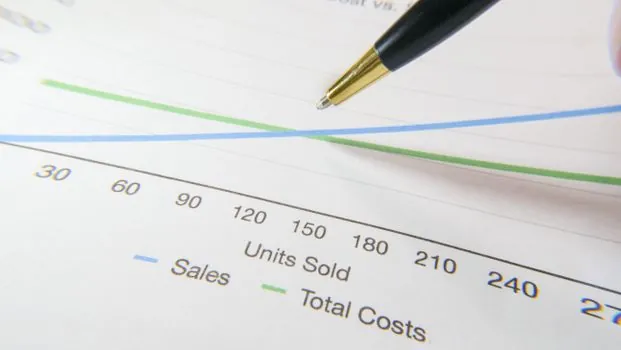
The decision should be expressed as discounted cash flow over the planned ownership period, with annual energy, maintenance, cooling and downtime effects converted to present value [S1][S5]. A simple payback calculation can be used as a screening method, but it does not discount future savings or account for the timing of maintenance and energy payments.
Recalculate the case with metered tariffs, measured load profiles, actual motor efficiency, installation cost, downtime cost and equipment life before approval.
A complete model should also test sensitivity to 3 variables with the greatest leverage: energy price, operating hours and achievable speed reduction. It should then add the fixed capital and installation effect of a medium-voltage VFD, or use the AC motor efficiency in the energy model. This prevents a valid low-voltage pump calculation from being transferred to a materially different system.
Know the Limits and Failure Modes
VFD economics weaken when a process does not permit useful speed reduction, when the load runs continuously at full output, or when added control produces little reduction in consumed power [S1][S2]. A calculator cannot be 100% accurate because operating profiles, equipment condition and tariffs differ between sites [S2].
Economic conclusions are also sensitive to motor and drive compatibility, harmonic effects, braking requirements, cable construction, enclosure temperature, protection coordination and maintenance access [S1]. A motor that cannot start without a reduced-voltage method may require additional engineering cost before the VFD investment can operate as modeled.
The environmental benefit follows the energy result rather than replacing it. Lower electricity consumption reduces associated greenhouse-gas emissions, but the financial case still depends on measured energy, avoided maintenance and the installed cost of the complete system [S2].
Build the Bid Around Lifecycle Commitments

A defensible VFD procurement request should state motor power in kW or hp, operating hours, duty-cycle profile, tariff in $/kWh, speed range, cable length, ambient temperature, cooling method, harmonics, braking duty, required control functions and target analysis period [S1][S2]. That data set permits bidders to compare servo drives or stepper drives only where their motion duty cycles genuinely match the application.
The IEEE conference publication is titled “Study of Total Cost of Ownership of Variable Frequency Drives,” but the supplied excerpt does not expose its findings. Track the 2 verification signals after commissioning: metered kWh against the baseline and actual maintenance hours against the pre-project record. Those measurements convert the modeled VFD TCO into a defensible operating result.