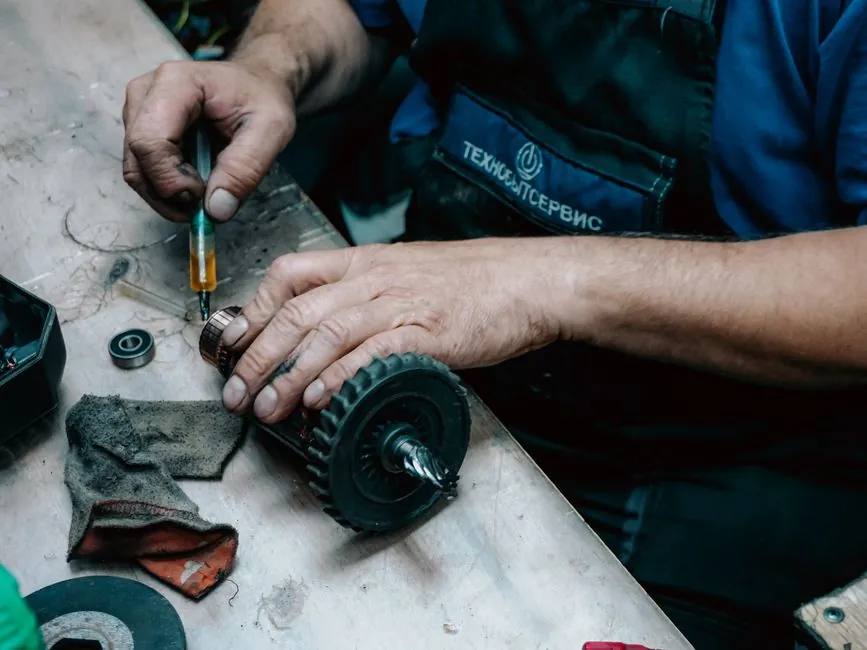
A servo motor decision based only on purchase price understates the economic commitment: a robotic system’s hardware typically represents 25–40% of the investment required for a functioning production cell [S2].
The calculation applies to industrial servo motors and their matching servo drives, covering acquisition, commissioning, operation, maintenance, replacement, and end-of-life costs [S2][S3][S4].
Servo Motor TCO Scope and Cost Model
Servo motor total cost of ownership is a life-cycle financial estimate combining capital acquisition with operating and ownership costs [S4]. For an industrial motion system, acquisition includes the motor, drive, controller, cables, mounting hardware, tooling, safety equipment, and software; integration adds engineering, programming, installation, commissioning, and acceptance testing [S2].
A manufacturing TCO model can include purchase cost, setup, operating costs such as power, materials, and labor, routine maintenance, training, outside support, and depreciation [S3].
For a servo motor comparison, the ownership horizon must be fixed before calculations begin. Fleet Forum treats TCO as covering purchase and operation through maintenance, repair, replacement or upgrade, and disposal [S4]. Without a defined horizon, a motor with lower acquisition cost can appear cheaper while producing a higher discounted life-cycle cost.
Acquisition and Integration Cost Drivers
The motor price is only one acquisition input. A six-axis industrial robot might list for $50,000–$150,000 depending on payload and reach, while the robot hardware typically represents only 25–40% of the total investment required for a functioning production cell [S2]. This ratio concerns complete robotic cells, not standalone servo motors, so it should not be transferred mechanically to a motor quotation.
Volume tier changes the price structure of the servo motor. Certification and supplier support can also affect the quotation, but no percentage premium should be assumed without a supplier-specific offer.
Energy, Maintenance, and Downtime Exposure
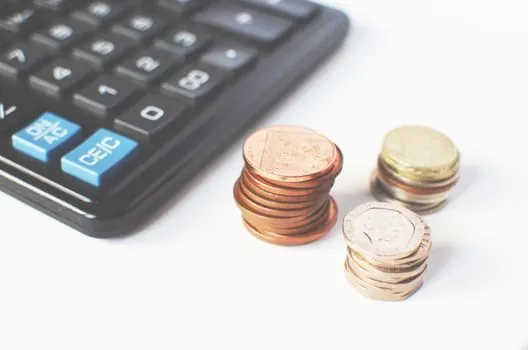
Energy cost is driven by electrical input, operating hours, duty cycle, and electricity price. The figure is a robot-cell benchmark, so an individual servo motor requires measured kW at the relevant operating points rather than that range.
Maintenance exposure depends on bearings, lubrication, seals, feedback devices, coupling alignment, contamination, thermal conditions, and duty profile. Manufacturing TCO guidance explicitly includes routine maintenance, repair, training, support, calibration, and depreciation [S3]. These costs should be estimated from the motor’s duty cycle and the plant’s actual maintenance rates, not from generic savings claims.
Downtime can exceed the repair invoice. The figures are specific to robotic applications and should not be represented as universal servo motor repair prices. For high-duty joints, validate replacement time, parts lead time, technician access, and lost production before assigning a downtime rate.
Motor Technology Comparison for TCO
The comparison should use the same duty, shaft-load requirement, accuracy target, and control architecture. A servo motor suits closed-loop positioning, speed control, and torque control where the servo drive and feedback arrangement match the application; it is less suitable when a fixed-speed machine can meet output, duty, and cost requirements without closed-loop control. [S5]
Across the principal options, servo motors offer precise closed-loop motion at the cost of a more complex electrical, mechanical, and maintenance system. Stepper motors reduce drive complexity and can suit low-to-medium-speed positioning, but open-loop systems do not detect lost steps, while closed-loop variants add feedback and drive cost. AC motors generally fit continuous-duty applications where precise closed-loop positioning is unnecessary, with ownership dominated by efficiency, load matching, controls, and maintenance.
The decision criteria are lifecycle complexity, controllability, energy exposure, and maintenance burden. Servo systems rank highest in controllability, while AC systems can rank lower in control complexity. Stepper systems can simplify the drive, but their operating envelope and low-speed torque behavior must be checked against the machine. No option is automatically cheapest: the lower-complexity motor can be more expensive over life if it causes mechanical redesign, extra cooling, or process rejection.
Applications, Suitability, and Failure Modes
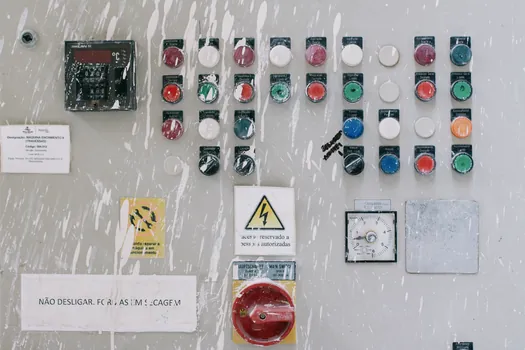
Servo-motor TCO is most relevant in robotics, packaging, material handling, electronics assembly, machine tools, and other applications where positioning accuracy, repeatability, cycle time, and coordinated motion affect product value [S2][S3]. In high-volume lines, a small improvement in repeatability or recovery time can outweigh a higher motor quotation, provided the gain can be measured against rejected product and downtime.
The technology is not a sound default for every shaft. Continuous pumps, fans, and conveyors may be better served by an AC motor when the load is stable and speed control is modest. A stepper motor can be appropriate for simpler positioning systems, provided holding torque, speed, resonance risk, and step-loss behavior are included in the comparison.
Common cost-driving failures include coupling misalignment, contamination, bearing wear, cable damage, thermal overload, encoder-related faults, incorrect drive settings, and loss of cooling. Preventive inspection cannot justify a specific reserve without condition data, but downtime history, mean time between failures, repair turnaround, and spare-part lead time should be captured in the model [S2][S3].
Discounted Cash Flow and Procurement Evidence
The financial calculation should separate cash outflows from depreciation and add residual value only when a sale or reuse value is supportable. Fleet Forum defines capital costs as purchasing and placing an asset into service, operating costs as expenses such as energy, staffing, insurance, maintenance, and repair, and disposal value as sale proceeds [S4]. The same logic applies to a servo system: installation and commissioning belong in acquisition, while training and support belong in operating or life-cycle costs.
Use the plant’s actual acquisition date as time zero, forecast annual energy, maintenance, spares, labour, and downtime cash flows, and discount them consistently. The International Council on Clean Transportation TCO calculator demonstrates the method by aggregating capital, energy, maintenance, and insurance over an asset’s lifetime [S6]. Domel states that efficient motors can have such low maintenance expense that initial motor price approaches total ownership cost [S5].
For capital equipment, the calculation should also account for financing, tax, working capital, overhead, and risk, as reflected in the Reshoring Initiative TCO estimator [S9]. Cross-departmental review is practical: engineering can define duty and failure exposure, maintenance can price service interventions, and finance can apply the company’s discount rate and depreciation policy [S3][S4].
What to Measure After Installation
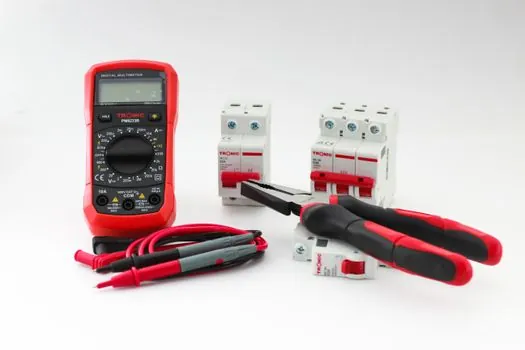
Validate the model with four operating signals: average electrical kW during production, annual motor and drive maintenance hours, unplanned downtime per motor or axis, and quality loss attributed to motion performance. Also track the replacement cost of the motor, encoder, drive, cables, and mounting hardware because spare-part prices define future repair exposure [S2].
Measure acceptance-test results, including repeatability and cycle time, against the original business case. If the selected motor produces a purchase saving but raises energy or downtime by more than that saving, the apparent acquisition advantage has not survived TCO. The Motion Controller TCO lifecycle guide extends this method to the controller and its integration scope.
Review the first 12 months of operating data against the approved model, then recalculate replacement reserves and residual value at the planned ownership horizon. This closes the loop between quoted cost and observed life-cycle cost.