
Specifying a capping and sealing machine comes down to three numbers: closure type, applied torque window in inch-pounds or Newton-meters, and steady-state throughput in bottles per minute (BPM). Get any one wrong and the line either back-pressures the filler or ships loose caps [S1][S3].
Closure families divide cleanly into four mechanical classes, each with its own capper architecture: continuous-thread screw caps (28–63 mm neck finish are common), Roll-On Pilfer-Proof (ROPP) aluminum blanks, press-on snap lids, and crimp or vacuum seals for metal cans and vials [S1][S4]. Cappers are sized, not just selected, because spindle, chuck, and rotary head geometries change the floor footprint and the upstream cap-feeder bowl diameter [S3].
Closure Class vs. Capper Architecture
Spindle cappers drive three or four spinning discs against the cap skirt to apply torque; they handle flat screw caps, flip-tops, and trigger sprayers at up to roughly 60 BPM on a single head, scaling by adding spindles rather than enlarging the head [S4]. Chuck cappers use a star wheel to index bottles under rotating chucks and run faster, typically 80–150 BPM, because the chuck descends, torques, and retracts in a fixed cycle independent of the conveyor pitch [S4].
ROPP cappers do not transmit torque through a clutch at all: they form the thread by rolling an aluminum blank against the bottle finish with forming rollers, then seam the tamper-evident band. This is why ROPP is the default for spirits and pharmaceuticals, where tamper evidence plus thread consistency matter more than raw speed [S1][S4]. Snap-on and press-on cappers apply vertical force only, and are typically limited to about 105 caps per minute per head because the press stroke, not rotary motion, sets the cycle [S4].
Torque, Container Diameter, and Material Pairings
Applied torque must fall inside the closure supplier's window; under-torque leaks, over-torque strips the thread or cracks the cap. For a standard 28–400 PET screw cap on a 28 mm neck, applied torque is typically held in the 8–14 in-lb (0.9–1.6 N·m) band, while a 38–400 cap on a 38 mm HDPE bottle usually needs 12–20 in-lb (1.4–2.3 N·m) [S3]. Wider closures, child-resistant closures, and pump or trigger sprayers push the upper end of the range toward 25–30 in-lb (2.8–3.4 N·m) and require a chuck capper with a higher-torque servo or magnetic clutch [S3][S4].
Container and cap material both shift the safe torque band. Glass bottles tolerate higher torque but demand softer cap liners to keep the seal flat; HDPE bottles flex under excess torque, so the capper needs a torque-feedback cutoff, not a fixed mechanical slip clutch, when the bottle itself is the limiting member [S1][S5]. A servo-driven chuck head with closed-loop torque control is the typical upgrade path once the line runs more than one SKU or moves from PET to glass [S3].
Throughput Sizing in Bottles Per Minute
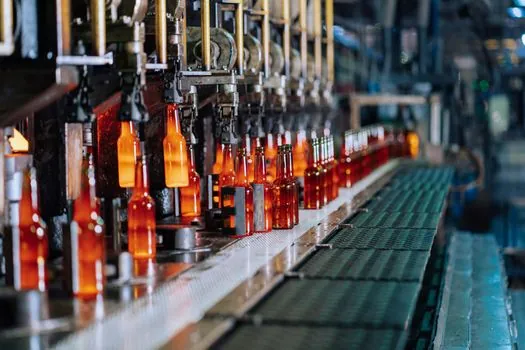
Size the capper to the filler, not the other way around. If the filler is rated at 60 BPM on a 500 ml fill and the capper on the same line is a single-spindle screw capper rated 50 BPM, the capper is the bottleneck and the line runs at 50 BPM regardless of the filler's nameplate [S3][S6]. The usual fix is either a multi-spindle spindle capper (two or four spindles on one frame) or a step up to a rotary chuck capper with an eight- or twelve-head star wheel.
For new lines, three throughput tiers cover most plants: under 30 BPM is a semi-automatic bench capper with an operator placing each cap; 30–80 BPM is a single-spindle automatic; 80 BPM and above is a rotary chuck or multi-spindle spindle capper, with ROPP rotary cappers commonly used above 100 BPM for spirits and pharma [S2][S6]. Changeover time between bottle formats on a rotary capper typically runs 15–30 minutes when change parts are pre-staged, which is why custom cappers for one SKU rarely pay back in a contract-pack environment [S3][S5].
Integration: Filling, Capping, and the Sealing Step
Capping is the last station before labeling, so the capper's inlet and outlet conveyor height, star-wheel pitch, and reject logic must match the filler and labeler. Induction sealing with a foil liner is frequently added inline after the cap is torqued: an induction coil heats the foil, the foil melts the wax and bonds to the bottle lip, and the cap is held under the coil for 0.5–2.0 seconds depending on cap diameter and liner mass [S3].
For jar and can formats, the matching step is a sealing washer or gasket under a twist-off lug cap, applied by a spindle capper set to a lower torque than a screw cap because the cap compresses the gasket rather than cutting a thread [S4]. Carton sealing at the end of the line is a different machine class, typically a uniform or random case sealer sized to the case length-width-height range and tape width (usually 48–72 mm) [S8].
Selection Criteria: A Side-by-Side Comparison
Four real-world options lined up against the decision criteria that actually change a purchase order:
Spindle screw capper, single head: best for screw caps 20–50 mm at 20–50 BPM, low changeover cost around a few hundred USD per SKU, and a soft footprint around 1.0 × 0.8 m. Limits: no real torque feedback on most economy units, and a single spindle caps the line if a second SKU is added [S3][S4].
Chuck capper, rotary 4–8 head: best for 28–63 mm screw caps including pumps and triggers at 80–200 BPM, supports servo torque control, and handles mixed-SKU runs when change parts are pre-staged. Limits: higher entry price, and the star wheel pitch must be matched to the bottle diameter or changeover drags past 30 minutes [S3][S4].
ROPP rotary capper: best for 18–38 mm ROPP aluminum blanks on glass at 100–300 BPM, used by distilled spirits, wine, and injectable pharma where tamper evidence and a formed thread are non-negotiable. Limits: format change is slow because the forming rollers are cap-specific, and the bottle finish must be heavy enough to take the rolling force without cracking [S1][S4].
Snap / press-on capper: best for press-on lids and snap-fit closures at up to about 105 BPM per head, simple mechanics, and low maintenance. Limits: closure must be a true press-fit; soft-threaded or child-resistant caps that look like snap caps will pop off in distribution, and the press force must be tuned to the cap material or HDPE caps will crack [S3][S4].
Who Should Not Pick the Mainstream Option
If the line is dominated by short-run contract packaging with frequent SKU changes, a single-spindle automatic capper is usually a better fit than a rotary chuck capper, because the rotary's star-wheel and cap-feeder changeover eats the time savings within a few changeovers per week [S3][S5]. Likewise, a pharmaceutical or diagnostic line that runs sterile wash, fill, and seal inside an isolator should not spec a general-purpose capper off the catalog; the capper has to enter the isolator through a transfer port, and the head has to survive VPHP or H2O2 decon cycles, which most economy chuck heads will not [S2].
If torque is a regulated parameter (child-resistant closures, USP <659> packaging, or any line shipping to the EU with a child-resistant fastener standard), a capper without a calibrated torque readout and a reject station for out-of-window bottles should be ruled out, regardless of price [S3][S5]. For comparison, the broader packaging equipment spec landscape follows the same logic, and the Wrapping Machine Selection for E-Commerce Fulfillment spec map covers the same selection-by-throughput-then-changeover pattern for the end of the line.
Hygiene, Materials, and Electrical Class

Food, beverage, and pharma cappers are typically built in 304 stainless for general washdown and 316 stainless for acidic or saline products, with contact parts polished to a documented Ra finish (often Ra ≤ 0.8 µm) and seals in EPDM, Viton, or silicone rated for the product chemistry [S1][S2]. For corrosive products such as acids, janitorial concentrates, and certain cosmetics, the capper frame, cap chute, and feeder bowl all need to be specified for the chemistry, not the generic washdown rating, or the machine will pit within months [S1].
Electrical class matters as soon as the capper sits in a flammable or dust atmosphere: a capper running inside a Zone 1 area for solvent-based products needs an ATEX-rated drive enclosure, intrinsically safe sensors, and a purged control panel, which is a different vendor quote from the washdown-rated unit [S1][S3]. The same spec discipline that governs capper selection shows up in construction machinery and equipment selection, where operating environment and duty cycle drive the model rather than nameplate capacity.
Common Failure Modes and How to Avoid Them
Three failure patterns show up on most new capper installations. First, cross-threaded caps, caused by a cap feeder that drops caps at the wrong orientation or a missing alignment rail at the capping head; the fix is a vibratory bowl feeder matched to the cap diameter and a sensor that confirms cap presence before the spindle or chuck descends [S2][S3]. Second, inconsistent torque, caused by a worn mechanical slip clutch on a spindle capper; the cure is a periodic clutch calibration or a step up to a servo-driven chuck head with closed-loop feedback [S3][S4].
Third, capper jams at the star wheel on a rotary chuck capper, almost always caused by bottle diameter drift after a changeover to a new preform supplier; the cure is a re-pitch of the star wheel pockets and a check of the bottle-height spec, not a larger motor [S4][S5]. For the cross-line view, a useful reference is the Oil and Gas Capping and Sealing Machines spec map, which covers the high-pressure and high-torque end of the same machine family.
Shortlist Logic and Trackable Signals
The cleanest shortlist is built in three steps: lock the closure type and torque window from the cap supplier's drawing, set the throughput in BPM at the filler's nameplate, and confirm the environment class (washdown, sanitary, ATEX, or sterile). With those three numbers, a spindle screw capper, a rotary chuck capper, an ROPP rotary, and a snap-on capper each become either a fit or a ruled-out option, and the capper head count, feeder bowl diameter, and conveyor pitch follow from the closure spec [S1][S3][S4].
Trackable signals over the next planning cycle: servo-driven torque control moving from premium to standard builds on rotary chuck cappers; cap-feed vision systems replacing simple bowl feeders on pharma lines; and more capper OEMs offering ATEX-rated frames as stock rather than custom options. Any of these landing in vendor catalogs by the end of 2026 will shift the shortlist math on lines being specced today [S2][S3][S7].